Class 10 Social Science Chapter 7 – Environment and Environmental Problems Complete Question Answer | ASSEB / SEBA
Class 10 Social Science (Geography) Chapter 7 – Environment and Environmental Problems Complete Question Answers and Exam Solutions (ASSEB / SEBA Assam – English Medium)
The seventh chapter of the Class 10 Social Science syllabus (Geography section), ‘Environment and Environmental Problems’, is a highly scoring and globally relevant chapter. For the upcoming HSLC 2027 board examinations, we have thoughtfully curated a complete set of question answers (Class 10 Social Science Chapter 7 Question Answer) strictly following the New ASSEB (Assam State School Education Board) Syllabus 2026-27 and the newest exam blueprint. This exhaustive Question Bank provides in-text Very Short Answers (VSA), Short Questions, Long Answers, and complete solutions to Previous Years’ Board Exam Questions (PYQ). At Ospin Academy, we ensure these notes are crisp, accurate, and completely exam-ready.
This chapter offers vital insights into the concept of the environment, its various spheres (lithosphere, hydrosphere, atmosphere, biosphere), and pressing global issues like pollution, global warming, the greenhouse effect, and desertification. Understanding these ecological challenges and their mitigation strategies is crucial for matric students. Our Question Bank goes beyond standard textbook exercises, encompassing the Extra Board Questions and Answers that examiners frequently use to test a student’s conceptual clarity.
What you will learn and get from this chapter:
- A clear understanding of the environment and the complex interrelationship between its spheres.
- Detailed explanations of major environmental problems including air, water, and soil pollution.
- In-depth analysis of global ecological threats like global warming, the greenhouse effect, and desertification.
- Perfectly framed answers for 1-mark objective questions (VSA/MCQ) and 2-3 marks short explanatory questions.
- Standardized and point-wise solutions for 4-5 marks long descriptive questions focusing on environmental conservation.
Special benefits from Ospin Academy for the HSLC 2027 Exam:
- A fully updated Chapter 7 Question Bank perfectly aligned with the new ASSEB blueprint for HSLC 2027.
- Verified, detailed solutions for Previous 10 Years’ Questions (PYQ) along with Pre-Board papers from multiple districts of Assam.
- 100% accurate, high-quality study materials (Class 10 Geography Notes) written in simple English for rapid memorization.
- Easily downloadable PDF format (PDF Download) optimized for smart, last-minute revision before the board exam.
- An expertly curated list of 100% Common Board Suggestion questions to maximize your scoring potential.
Empower your HSLC 2027 exam preparation today and step confidently toward securing the Highest Marks in Social Science with Ospin Academy’s reliable resources.

Class 10 Social Science Question Bank ASSEB HSLC 2027 | English Medium Chapter-wise Solutions PDF

Class 10: Social Science
Environment and Environmental Problems
HSLC English PYQs (2024–2026): Important MCQs with Answers
1. Two statements are given below, one as Assertion (A) and the other as Reason (R). Based on these statements, choose the most appropriate answer. {2026}
Assertion (A) : The application of insecticide and weedicide does not change natural properties of the land.
Reason (R) : Application of these destroys only the harmful insects and weeds.
(A) (A) is true, (R) is false.
(B) (A) is false, (R) is true.
(C) Both (A) and (R) are true.
(D) Both (A) and (R) are false.
Answer: D
2. A social science teacher asked the students to submit a project on water pollution. One group of students noticed a polluted public pond in a village. What is their duty as students of Social Science ? {2026}
(i) Since it is a local problem, they don’t care about it.
(ii) They will collect photos and submit the project.
(iii) They will share the information about water pollution with the villagers.
(iv) With the help of Social Science teacher they will help the villagers to clean the pond and try to create awareness among them.
(A) Only (ii)
(B) Only (iii)
(C) (i) and (ii)
(D) (iii) and (iv)
Answer: D
3. Which of the following set of gases is responsible for absorbing solar energy reflected back from the earth’s surface ? {2026}
(A) Carbon-di-Oxide and Nitrogen
(B) Carbon-di-Oxide and Oxygen
(C) Carbon-di-Oxide and Methane
(D) Nitrogen and Methane
Answer: C
4. The percentage of areas affected by desertification in five continents are mentioned below. Choose the correct order. {2026}
(A) North America : 27% →Asia : 22% → South America : 20% → Africa : 18% → Australia : 8%
(B) South America : 27% → North America : 22% → Africa : 20% → Asia : 18% → Australia : 8%
(C) Asia : 27% →Africa : 22% → North America : 20% → South America : 18% → Australia : 8%
(D) North America : 27% → South America : 22% → Asia : 20% → Africa : 18% → Australia : 8%
Answer: C
5. Flood problem in the Brahmaputra Valley is an example of – {2026}
(A) Global environmental problem
(B) National environmental problem
(C) Regional environmental problem
(D) Local environmental problem
Answer: C
6. Consider the statements (i) and (ii) about the pollution of urban centres located on the banks of rivers, and choose the correct answer. {2025}
(i) Urban garbage and industrial waste pollute the water of the rivers flowing through or by the side of urban centres.
(ii) About 55% of the total length of America’s river is polluted by agriculture related pollutants like chemical fertilizers.
(A) Both (i) and (ii) are true
(B) Both (i) and (ii) are false
(C) (i) is true, (ii) is false
(D) (i) is false, (ii) is true
Answer: A
7. Consider the following statements in terms of regional environmental problems and choose the correct answer from the options given below. {2025}
(i) Cities like Delhi, Bengaluru, Guwahati, Pune, etc., are facing shortage of underground water.
(ii) River bank soil erosion is a serious environ- mental problem in the states like West Bengal and Assam.
(A) (i) is true, (ii) is false
(B) (i) is false, (ii) is true
(C) Both (i) and (ii) are true
(D) Both (i) and (ii) are false
Answer: C
8. In the following question, a statement of Asser- tion (A) is followed by a statement of Reason (R). Considering these statements, choose the correct answer from the given alternatives. {2025}
Assertion (A) : Acid rain occurs when there is maximum concentration of Sulphur dioxide and Nitrogen dioxide in the atmosphere.
Reason (R) : Such rains destroy forests and pollute water in the wetlands.
(A) Both (A) and (R) are true, and (R) is the correct explanation of (A).
(B) (A) is true, (R) is false.
(C) (A) is false, (R) is true.
(D) Both (A) and (R) are true; but (R) is not the correct explanation of (A).
Answer: A
9. What will be the adverse.effect of melting of glaciers in the high altitude mountains and polar regions? {2025}
(i) Rise of sea level
(ii) Large extent of coastal areas will be sub- merged
(iii) Issues of water scarcity will be resolved
(iv) Biodiversity will be protected
(A) (i), (ii), (iii), (iv)
(B) (i), (iii)
(C) (ii), (iii)
(D) (i), (ii)
Answer: D
10. Which of the following sources of energy do/ does not produce carbon dioxide? {2025}
(i) Wind energy
(iii) Geothermal energy
(iii) Hydroelectric energy
(iv) Fossil fuel
(A) (i)
(C) (i), (iv)
(B) (i), (ii), (iii)
(D) (i), (iii), (iv)
Answer: B
11. Which one of the following animals is about to be extinct? {2024}
(A) One horned rhino
(B) Gayal (Mithun)
(C) Greater Adjutant Stork
(D) Elephant
Answer: C
12. Which of the following is not an example of green- house gas? {2024}
(A) Carbon dioxide
(B) Methane
(C) Nitrous Oxide
(D) Oxygen
Answer: D
13. An example of local environmental problem is: {2024}
(A) Rise of sea level
(B) Flood problem of Brahmaputra Valley
(C) Limited land pollution caused by a small-scale Industry.
(D) Problem of desertification in North America continent.
Answer: C
14. The two gases responsible for air pollution caused by volcanic eruptions are- {2024}
(A) Carbon-di-oxide and Oxygen
(B) Nitrogen and Oxygen
(C) Sulphur-di-Oxide and Carbon-di-Oxide
(D) Sulphur-di-Oxide and Hydrogen
Answer: C
Assam’s Various District Pre‑Board (2025–26) MCQs With Answers
1. Soil pollution can be controlled by- {Bajali}
(A) Reducing, reusing and recycling of waste.
(B) Production of Biogas from agricultural waste and animal re-use.
(C) Conducting awareness programme to propagate organic farming.
(D) All the above.
Answer: D
2. Assertion (A) : Modern farming practice, expanding industries and increasing population are responsible for land pollution. {Bajali}
Reason (R) : The industrial waste and chemical substances pollute land.
(A) (A) and (R) are correct and (R) is correct explanation of (A)
(B) (A) and (R) are correct but (R) is not correct explanation of (A)
(C) (A) is correct but (R) is incorrect
(D) (A) is incorrect but (R) is correct
Answer: B
3. IUCN belongs to which international organization…? {Baksa}
(A) UNESCO
(B) WWF
(C) UNO
(D) UNEP
Answer: A
4. Which of the following is an example of a regional problem? {Baksa}
(A) Problem of underground water shortage in an urban area.
(B) Bank erosion problem created by a river in a locality.
(C) Land pollution created by a small scale industry.
(D) Water scarcity in winter due to shallowing of a wetland .
Answer: B
5. Which one is not correct regarding greenhouse effect? {Baksa}
(A) These gases consist only 1% of the total volume of gases in the atmosphere.
(B) Some variation occurs in the proportion of these gases in the atmosphere, the natural state of temperature will change.
(C) These gases absorbd Solar energy reflected from the earth.
(D) These gases help in increasing the atmospheric temperature.
Answer: A
6. Which of the following are greenhouse gas? {Barpeta}
(i) Mithane (CH4)
(ii) Nitraus Oxide (N2O)
(iii) Nitrogen (N2)
(iv) Oxygen (O2)
(v) Water vapour
(A) i, ii, v
(B) ii, iii
(C) iii, iv
(D) ii, iii, v
Answer: A
7. Identify the correct sequence of continents most affected by desertification- {Barpeta}
(A) North America – Asia – South America – Africa – Australia
(B) North America – South America – Asia – Africa – Australia
(C) South America – North America – Asia – Africa – Australia
(D) South America – North America – Africa – Asia – Australia
Answer: A
8. Who said that the environment is an outcome of the interaction among land, water, air and life. {Barpeta}
(A) Carl Ritter
(B) George Chisholm
(C) Peter Haggett
(D) C.F.Jones
Answer: C
9. Assertion (A) : Carbon diaxide (CO₂), Methane (CH₄), Nitrous Oxide (N₂O) water Vapour etc are the green house gases. {Biswanath}
Reason (R) : These gases naturally help in maintaining a balance in the temperature on the earth’s surface and the atmosphere.
(A) (A) and (R) both are true, (R) is the correct explanation of (A)
(B) (A) is true and (R) is false.
(C) (A) is false and (R) is true
(D) (A) and (R) both are true but (R) is not correct explanation of (A)
Answer: A
10. The above picture is an example of which environmental Problem? {Biswanath}
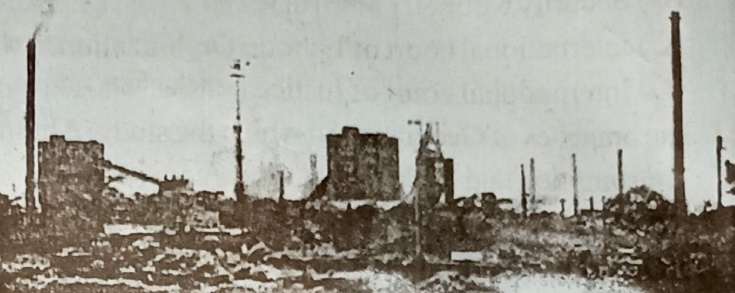
(A) Local problem
(B) Regional problem
(C) Global problem
(D) Global warming problem
Answer: A
11. The factor in the image below did what gas 15-20 million tonnes was released in the air in 1991? {Bongaigaon}
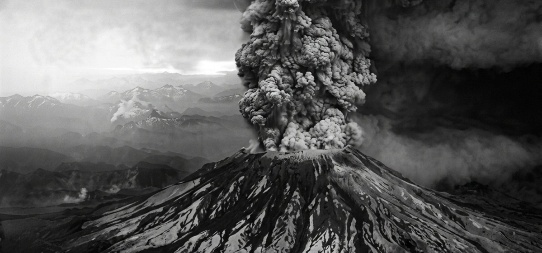
(A) Carbon di-oxide
(B) Sulphur dioxide
(C) Carbon Monoxide
(D) Nitrogen
Answer: B
12. The organisation IUCN is under which of the following organisation? {Bongaigaon}
(A) UNESCO
(B) UNDP
(C) WWF
(D) UNEP
Answer: A
13. The two maximum gases in the atmosphere are – {Bongaigaon}
(i) Helium
(ii) Nitrogen
(iii) Oxygen
(iv) Carbon di-oxide
(A) (i) and (iii)
(B) (ii) and (iii)
(C) (iii) and (iv)
(D) (i) and (iv)
Answer: B
14. The ‘Indian Council of Forestry Research and Education’ was formed in – {Bongaigaon}
(A) 1946
(B) 1965
(C) 1986
(D) 1996
Answer: C
15. Global temperatures began increasing after the industrial revolution. Why? {Cachar}
(A) Burning of fossil fuel.
(B) Pollution of urban areas
(C) Rise in volcanic eruptions.
(D) Creation of acid rain
Answer: A
16. What can have a negative impact on the biosphere? {Cachar}
(A) Increase in agricultural fields
(B) Awareness regarding environment
(C) Setting up of national parks.
(D) Shrinkage of wetlands
Answer: D
17. Assertion (A): The parts of the river flowing through urban areas are heavily polluted. {Cachar}
Reason (R): Urbanization and Industrialization are hugely responsible for pollution of rivers.
(A) Assertion (A) is correct but Reason (R) is incorrect.
(B) Assertion (A) is incorrect but Reason (R) is correct.
(C) Assertion (A) and Reason (R) are both correct and (R) correctly explains (A).
(D) Assertion (A) and Reason (R) are both correct but (R) is not correctly explains
Answer: C
18. Which one of the following animal is about to be extinct? {Dhubri}
(A) One horned Rhino
(B) Giraff
(C) Pygmi Hog
(D) Elephant
Answer: C
19. The World Environmental Day is observed on – {Dhubri}
(A) 5 September
(B) 15 September
(C) 5 June
(D) 21 June
Answer: C
20. Match the following and choose the correct option: {Goalpara}
Observation day
Date of observation
(a) World Environment Day
(i) 10th December
(b) UN Day
(ii) 21st June
(c) International Yoga Day
(iii) 5th June
(d) Human Rights Day
(iv) 24th October
(A) (a) – (i). (b) – (ii), (c) – (iii), (d)-(iv)
(B) (a) – (iii). (b) – (iv), (c) – (ii). (d) – (i)
(C) (a) – (iii), (b) – (iv), (c) – (i), (d) – (ii)
(D) (a) – (iv), (b) – (iii), (c) – (ii), (d) – (i)
Answer: B
21. Which government organisation is responsible for formulation of laws related to Environment Protection and Conservation of natural resources in India? {Goalpara}
(A) Centre for Science and Environment
(B) Wild Life Trust of India
(C) Greenpeace India
(D) Indian Council of Forestry Research and Education
Answer: D
22. Which of the following statements are true about desertification? {Goalpara}
(i) Desertification refers to the natural formation of deserts in specific areas of the world.
(ii) The process of desertification reduces land productivity and contributes to the expansion of deserts into neighbouring areas.
(iii) Global warming and drought are important natural factors contributing to desertification.
(A) (i) and (ii)
(B) (ii) and (iii)
(C) (i) and (iii)
(D) (i), (ii) and (iii)
Answer: D
23. North Sea ice has fallen by 30% in the last three decades as a result of global warming, consequently an ice dwelling animal in the region is in crisis of food and habit and the animal is increasingly like to become extinct. The animal is- {Goalpara}
(A) Rhino
(B) Polar bear
(C) Elephant
(D) Giraffe
Answer: B
24. A farmer in a semi-arid region of Rajasthan practices intensive irrigation and overgrazing. Over time, he notices that his fertile land is turning into a dry, sandy patch where no crops can grow. The transformation of fertile land into a desert-like state due to human activities is known as: {Hailakandi}
(A) Deforestation
(B) Soil Erosion
(C) Desertification
(D) Siltation
Answer: C
25. Read the following statements and choose the correct answer: {Hailakandi}
Assertion(A): The melting of polar ice caps is a direct consequence of global warming.
Reason (R). An increase in greenhouse gases like carbon-di-oxide and Methane eads to an increase in the global average temperature.
(A) Both A and R are true, and R is the correct explanation of A.
(B) Both A and R are true, but R is not the correct explanation of A.
(C) A is true, but R is false.
(D) A is false, but R is true.
Answer: A
26. The “Biosphere” cannot exist as an independent component. Which of the following statements best explains this? {Hailakandi}
(A) It is only found deep within the Earth’s crust.
(B) It is the layer of gases that protects the Earth from UV’rays.
(C) It is a zone formed by the interaction of the Lithosphere, Hydrosphere, and Atmosphere.
(D) It is composed entirely of non-living or abiotic factors.
Answer: C
27. Identify the correct set of statements regarding the components of the environment. {Hailakandi}
1.The Atmosphere is composed of approximately 78% Nitrogen and 21% Oxygen.
2.The Hydrosphere covers about 71% of the Earth’s surface.
28. The Biosphere includes the deepest parts of the Earth’s mantle where no Oxygen exists.
29. All four components are constantly exchanging matter and energy.
(A) 1, 2, and 3
(B) 2, 3, and 4
(C) 1, 2, and 4
(D) All of the above
Answer: C
30. Air quality Index (AQI) of major Indian cities are (AQI-2024}{Jorhat}
The following table:
City (AQI)
Delhi 320
Mumbai 190
Guwahati 140
Bengaluru 110
Based on the date, which of the following is the most likely environmental problem faced residents of Delhi?
A) Water Scarcity
B) Air Pollution
C) Noise Pollution
D) Soil erosion
Answer: B
31. Arrange the following causes of air pollution in the correct sequence from Natural to fully Human made sources. {Jorhat}
i) Forest fire
ii) Dust Storm
iii) Vehicular emissions
iv) Industrial smoke
(A) ii-iv-i-iii
(B) i-ii-jii-iv
(C) ii-i-iii-iv
(D) i-iv-ii-iii
Answer: C
32. Match the effects of Global Warming with their Outcomes. {Jorhat}
Match the Following
Column A:
a. Melting glaciers
b. Rise in Sea level
c. Extreme Weather events
d. Loss of Biodiversity
Column B:
i) Flooding of Coastal area
ii) Many Species becoming extinct
iii) Occurrence of cyclones and heatwaves
iv) Decrease in ice caps and snow cover
Options
(A) a-iv, b-i, c-iii, d-ii
(B) a-ii, b-iii, c-iv, d-i
(C) a-iii, b-ii, c-i, d-iv
(D) a-iv, b-ii, c-i, d-iii
Answer: A
33. Choose the correct statements form the following about IUCN. {Kamrup M}
(i) The IUCN was formed under the leadership of Julian Hucksole.
(ii) The main objective of IUCN is to carry out study and research on conservation of global natural environment and natural resources including biodiversity and to take appropriate measures.
(iii) WWF is established by IUCN.
(iv) Under IUCN a ministry of Environment, Forests and Climate change has been formed at government level in India.
(A) (i), (ii), (iv) correct
(B) (i), (ii), (iii) correct
(C) (ii), (iii), (iv) correct
(D) (iii), (iv) correct
Answer: B
34. Which of the following statements are true about Green house gases. {Kamrup M}
(i) These gases control the heat of the atmosphere by absorbing the reflecting energy from the earth.
(ii) The volume of the Green house gases in atmosphere is 0.1%.
(iii) The main cause of global warming is the increase of green house gases.
(iv) The change in the volume of the green house gases in atmosphere does not make any change in the temperature of the atmosphere.
(A) (i), (ii), (iii) correct
(B) (i), (iii), (iv) correct
(C) (i), (ii), (iv) correct
(D) (ii), (iii), (iv) correct
Answer: A
35. Which of the following are the main causes of soil pollution? {Kamrup M}
(i) Modern agriculture practices
(ii) Overgrazing
(iii) Extension of industries
(iv) Desertification
(A) Only (i) & (iii)
(B) Only (i) & (iv)
(C) Only (i), (ii) & (iii)
(D) Only (i), (iii) & (iv)
Answer: D
36. Statement I: Global warming results from the accumulation of Greenhouse gases in the atmosphere. {Kamrup R}
Statement II: Deforestation and burning of fossil fuels are major contributors to Greenhouse gas emissions.
(A) Both statement I and II are true
(B) Both statement I and II are false
(C) Statement I is true, II is false
(D) Statement I is false, II is true
Answer: A
37. What is the full form of WWFN? {Kamrup R}
(A) World wide fund for Nature
(B) World wide find for Natural
(C) World wide find in Nature
(D) World wide found for Natural
Answer: A
38. The continent which is highly affected by desertification is- {Kamrup R}
(A) Asia
(B) Africa
(C) North America
(D) South America
Answer: B
39. The organisation IUCN is under which of the following organisation- {Kokrajhar}
(A) UNESCO
(B) UNDP
(C) WWF
(D) UNEP
Answer: A
40. A gaseous layer composed of Oxygen, Nitrogen, Hydrogen, Carbon-di-oxide, Argon etc. is called- {Kokrajhar}
(A) Lithosphere
(B) Hydrosphere
(C) Atmosphere
(D) Biosphere
Answer: C
41. The example of Green House gas is- {Kokrajhar}
(A) Oxygen
(B) Nitrogen
(C) Argon
(D) Mithen
Answer: D
42. Which of the following statements about world Environment day (5 june) are correct. {Lakhimpur}
(A) One the invitation of the United Nation this day is observed the world.
(B) The aim of the day is to inerease environment awarness among people across the world.
(C) This day is observed on the initiative of the Assam science and Environment Centre.
(D) This day is celebrated with great enthusiasm in india and Assam.
Answer: A
43. Which of the following is not a cause of increase in atmospheric temperature) {Lakhimpur}
(A) Increase in food production
(B) Rise in sea level
(C) Desertification
(D) Massive ice melting in the polar regions
Answer: B
44. Which of the following animals are not included among the exinct animals? {Lakhimpur}
(i) Golden Langar, Hoolock Gibbon
(ii) Wild Buffalo, Pygmy hog, River, Dolphin
(iii) White – Winged Duck, Hacnbill, Greater Adjutant Stork
(iv) Cow, Buffalo, Pig
(A) Only iv true
(B) Only i and ii true
(C) Only ii and iii true
(D) Only i, ii and iii true
Answer: A
45. Which international organization does the IUCN belong to- {Lakhimpur}
(A) UNESCO
(B) UNDP
(C) WWF
(D) UNEP
Answer: A
46. The meeting concerned with the problem of desertification held in 1977 under the patronage of United Nations was held at – {Nagaon}
(A) Brazil
(B) Nairobi
(C) Mexico
(D) Rome
Answer: B
47. Which gas absorbs the solar energy reflected from the earth surface- {Nagaon}
(A) Oxygen
(B) Nitrogen
(C) Hydrogen
(D) Carbon-di-Oxide
Answer: D
48. Which of the following gases absorb the heat reflected from earth’s surface? {Nalbari}
(i) Carbon-di-oxide
(ii) Nitrogen
(iii) Nitrous oxide
(iv) Hydrogen
(A) I, II
(B) I, III
(C) II, III
(D) II, IV
Answer: B
49. Consider the statements (1) and (II) regarding land pollution and choose the correct option- {Nalbari}
Statement-I : Modern farming practices are a major cause of land pollution.
Statement-II: Application of chemical fertilizers and insecticides improves the natural properties of soil.
(A) I is true, II is false
(B) I is false, Il is true
(C) Both are true
(D) Both are false
Answer: (A)
50. The increase of carbon-di-oxide (CO2) levels in the atmosphere is primarily attributed to which of the following activities? {Nalbari}
(i) Urbanization
(ii) Expansion of Agriculture
(iii) Use of fossil fuels
(iv) Volcanic Eruptions
(A) i, ii
(B) ii, iii
(C) iii, iv
(D) i, ii, iii
Answer: D
51. On the basis of the information given in (A) and (R), choose the right options – {Nalbari}
Assertion (A): About 35% of the world’s land surface is already affected by desertification.
Reason (R) : Rapid population growth has increased pressure in the desert and semi-desert regions, helping the expansion of deserts.
(A) (A) is correct, (R) is incorrect
(B) (A) is incorrect, (R) is correct
(C) Both (A) and (R) are correct and (R) is the correct explanation of (A)
(D) Both (A) and (R) are correct, but (R) is not the correct explanation of (A)
Answer: C
52. Which of the following animals is about to be extinct? {Sibsagar}
(i) Pygmy Hog
(ii) Mithun
(iii) River’s Dolphin
(iv) Wild Buffalo
(A) i, ii and iii
(B) ii, iii and iv
(C) i, ii and iv
(D) i, iii and iv
Answer: D
53. Choose the correct answer: {Sibsagar}
(a) Land Pollution
(b) Water Pollution
(c) Desertification
(d) Air Pollution
(i) Nuclear explosions
(ii) Overgrazing
(iii) Urban wastes
(iv) Use of underground water in agriculture
(A) a – i, b – ii, c – iii, d – iv
(B) a – iv, b – iii, c – ii, d – i
(C) a – iii, b – i, c – iv, d – ii
(D) a – ii, b – iv, c – i, d – iii
Answer: B
54. Choose the correct sequence of the following continents based on the amount of land affected by desertification. {Sibsagar}
(a) Asia
(b) Africa
(c) North America
(d) South America
(A) a – b – c – d
(B) b – c – d – a
(C) c – d – a – b
(D) d – a – b – c
Answer: A
55. A: The green house gases help in increasing the atmospheric temperature by traping the energy reflected back by the earth {Sibsagar}
B: The greenhouse gases constitute only 1.1% of the total volume of gases in atmosphere.
(A) A and B both are true
(B) A and B both are false
(C) A is true, B is false
(D) A is false, B is true
Answer: C
56. Which two of the following gases, when accumulated in the atmosphere, create acid rain? {Sibsagar}
(a) Carbon dioxide
(b) Sulphur dioxide
(c) Nitrogen dioxide
(d) Hydro carbon
(A) a and b
(B) b and c
(C) c and d
(D) a and d
Answer: B
57. An example of regional environmental problem is- {Sibsagar}
(A) The land pollution created by a small-scale industry.
(B) Problem of soil erosion in a river basin.
(C) Water scarcity in winter due to shallowing of a wetland.
(D) The problem of global warming.
Answer: B
58. The green house gas responsible for global warming is – {Sonitpur}
(A) Nitrogen
(B) Argon
(C) Carbon-di-oxide
(D) Oxygen
Answer: C
59. What are the causes of bio diversity crisis? {Sonitpur}
ⅰ) Climate change
ii) Emergence of new species
iii) Deforestation.
iv) Illegal wildlife hunting.
(A) (i), (ii), (iii)
(C) (i), (iii), (iv)
(C) (ii), (ii), (iv)
(D) (i), (ii), (iii), (iv)
Answer: B
60. Which situation best represent a localized environmental problem rather than a global one? {Sonitpur}
(A) Climate Change
(B) Ozone Lager depletion
(C) River pollution due to nearby factories.
(D) Global Warming
Answer: C
61. Assertion (A): Global warming increases due to the rise in greenhouse gases in the atmosphere. {Sribhumi}
Reason (R): Greenhouse gases absorb heat and increase atmospheric temperature.
(A) Both (A) and (R) are true and ‘R’ is the correct explanation of ‘A’.
(B) Both (A) and (R) are true, but ‘R’ is not the correct explanation of ‘A’
(C) ‘A’ is true but ‘R’ is false.
(D) ‘A’ is false but ‘R’ is true.
Answer: A
62. The highest rate of desertification is found in which continent? {Sribhumi}
(A) Africa
(B) Europe
(C) North America
(D) Australia
Answer: A
63. An example of Global Environmental problem is – {Sribhumi}
(A) Flood in Assam
(B) Global warming
(C) Water pollution
(D) Soil erosion
Answer: B
64. Assertion (A): The source of temperature for the Earth’s surface and atmosphere is the solar energy. {Sribhumi}
Reason (R) : The atmosphere absorbs 19% of the solar energy and remaining 51% is released by the Earth to the atmosphere as latent heat.
(A) Both ‘A’ and ‘R’ are true and R is the correct explanation of A.
(B) Both A and R are true but R is not the correct explanation of A.
(C) A is true but R is false.
(D) A is false but R is true.
Answer: A
65. Which one of the following animals is about to be extinct . {Salmara}
(A) One horned Rhino
(B) Pygmi Hog
(C) Giraff
(D) Mithun
Answer: B
66. Indian council of forestry Research and education was formed in- {Salmara}
(A) 1947
(B) 1964
(C) 1986
(D) 1991
Answer: C
67. Which gas contributes 50% to global warming? {Salmara}
(A) Methane
(B) Carbon-di-oxide
(C) Chlorofloro-Carbon
(D) Nitrous oxide
Answer: B
68. Choose the correct set of statements about the Green house gases from the option given below. {Salmara}
i. Atmospheric temperature generally increases with the increases of green house gasses in the atmosphere
ii. These gases constitute only 0.01% of the total volume of gases in the atmosphere.
iii. These gases include CO2, CH4, N2O etc.
(A) i, ii, iii
(B) i, ii
(C) ii, iii
(D) i, iii
Answer: D (Note: Green house gases constitute 0.1% of the atmosphere, so ii is false)
69. What continent is experiencing desertification very badly now a days? {Salmara}
(A) North America
(B) South America
(C) Asia
(D) Africa
Answer: D
70. Which of the environmental hazard in the future is shown in the picture given below? {Salmara}
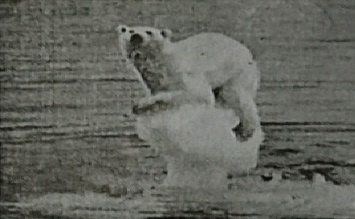
(A) Soil Pollution
(B) Air Pollution
(C) Global Warming
(D) Water Pollution
Answer: C
71. Which of the following pollutants creates ‘Pollution’ which helps in destruction of environment {Udalguri}
(A) Infertile soil
(B) LPG
(C) Lead
(D) Manure fertilizer
Answer: C
72. Which of the following phenomena involves as the natural cause of air pollution? {Udalguri}
(A) Earthquake in Gujarat, 2000.
(B) African Desertification in the early seventies.
(C) Volcanic eruption of Mount Pinatubo in 1991.
(D) Flood in Punjab in 2025.
Answer: C
73. The heat that the earth gives back into the atmosphere through the process of evaporation is called – {Udalguri}
(A) Solar heat energy
(B) Global warming
(C) Latent heat
(D) Earth Surface heat
Answer: C
74. Which of the following aspect does the global problem of Environmental issues consider? {Udalguri}
(A) Problems are limited to one specific small unit/area.
(B) Problems arise across all geographical areas.
(C) There are no geographical boundaries of areas of the problem.
(D) None of the above.
Answer: C
Probable Multiple Choice Questions with Answers for HSLC 2027
1. How many major spheres are there in the Earth’s environment?
(A) Two
(B) Three
(C) Four
(D) Five
Answer: C
2. What is the most abundant gas in the atmosphere?
(A) Oxygen
(B) Nitrogen
(C) Carbon dioxide
(D) Argon
Answer: B
3. Which of the following is NOT considered a ‘Greenhouse gas’?
(A) Carbon dioxide
(B) Methane
(C) Oxygen
(D) Nitrous oxide
Answer: C
4. The water-covered portion of the Earth’s surface is called the:
(A) Atmosphere
(B) Lithosphere
(C) Hydrosphere
(D) Biosphere
Answer: C
5. Which two gases are primarily responsible for Acid Rain?
(A) Sulphur dioxide and Nitrogen dioxide
(B) Carbon monoxide and Methane
(C) Carbon dioxide and Ozone
(D) Chlorofluorocarbons and Hydrogen
Answer: A
6. On which date is World Environment Day celebrated?
(A) 22 April
(B) 5 June
(C) 16 September
(D) 1 December
Answer: B
7. Which of the following is an example of a ‘Local Environmental Problem’?
(A) Global warming
(B) Depletion of the ozone layer
(C) Traffic congestion and waste management in a city
(D) Rise in sea level
Answer: C
8. Where is the Biosphere primarily located?
(A) Only in the hydrosphere
(B) In the parts of the lithosphere, hydrosphere, and atmosphere where life exists
(C) In the uppermost layer of the atmosphere
(D) At the center of the Earth
Answer: B
9. What is the primary source of Chlorofluorocarbon (CFC) gas?
(A) Vehicular exhaust
(B) Paddy fields
(C) Refrigerators and air conditioners
(D) Volcanic eruptions
Answer: C
10. Which of the following factors causes soil pollution?
(A) Excessive noise
(B) Excessive application of chemical fertilizers and pesticides
(C) Use of wind energy
(D) Rainwater
Answer: B
11. Where is the process of Desertification mostly seen?
(A) Equatorial rainforest regions
(B) Polar regions
(C) Arid and semi-arid regions
(D) Coastal regions of the ocean
Answer: C
12. What change has occurred on Earth due to the Greenhouse effect?
(A) The atmospheric temperature has abnormally decreased
(B) The average atmospheric temperature is gradually increasing
(C) The amount of oxygen in the atmosphere has increased
(D) The amount of rainfall has increased
Answer: B
13. What is the most abundant element in the composition of the Lithosphere?
(A) Iron
(B) Silicon
(C) Oxygen
(D) Aluminium
Answer: C
14. If the surface temperature of the ocean increases, the probability of which natural disaster increases?
(A) Earthquake
(B) Tsunami
(C) Cyclone
(D) Volcano
Answer: C
15. The Ozone layer prevents which harmful rays of the sun from reaching the Earth?
(A) Infrared rays
(B) Ultraviolet (UV) rays
(C) Gamma rays
(D) X-rays
Answer: B
16. Which of the following phenomena is most likely to occur due to global warming?
(A) Disappearance of deserts
(B) Melting of polar ice and a rise in sea level
(C) Equal length of day and night on Earth
(D) Rapid growth of forests
Answer: B
17. What is the percentage of Carbon dioxide gas in the atmosphere?
(A) 0.035%
(B) 0.93%
(C) 20.94%
(D) 78.08%
Answer: A
18. Which of the following is a ‘Biotic Component’ of the environment?
(A) Soil
(B) Sunlight
(C) Microorganisms
(D) Water
Answer: C
19. What is the main source of energy in an ecosystem?
(A) Green plants
(B) The Sun
(C) Wind
(D) Soil
Answer: B
20. What type of pollution occurs when hot water from industries is directly discharged into rivers?
(A) Thermal Pollution
(B) Air Pollution
(C) Noise Pollution
(D) Radioactive Pollution
Answer: A
21. What is the major negative impact of deforestation?
(A) Decrease in soil erosion
(B) Increase in the amount of carbon dioxide in the atmosphere
(C) Increase in biodiversity
(D) Increase in the amount of rainfall
Answer: B
22. How does rapid population growth affect the environment?
(A) It decreases the demand for natural resources
(B) It increases the extent of forests and agricultural lands
(C) It causes rapid depletion of natural resources and increases pollution
(D) It establishes a balance in the environment
Answer: C
23. What is a primary characteristic of a ‘Global Problem’?
(A) It affects only a specific country
(B) Its impact falls on the entire Earth and requires international efforts for a solution
(C) It disappears automatically very soon
(D) It affects only animals
Answer: B
24. Which of the following processes is considered a man-made cause of desertification?
(A) Lack of rainfall
(B) Overgrazing
(C) Excessive temperature
(D) Dusty winds
Answer: B
25. What change occurs in the soil as a result of acid rain?
(A) Soil fertility increases
(B) Soil acidity increases and its fertility decreases
(C) The water retention capacity of the soil increases
(D) The amount of nitrogen in the soil increases
Answer: B
26. Consider the following statements and choose the correct answer:
(i) The area covered by water on Earth is greater than the landmass.
(ii) 97% of the total water in the hydrosphere is salty ocean water.
(iii) All the water on Earth is suitable for human use.
(A) Only (i) and (ii) are correct
(B) Only (ii) and (iii) are correct
(C) Only (i) and (iii) are correct
(D) All (i), (ii), and (iii) are correct
Answer: A
27. Match Column A with Column B and select the correct option:
Column A (Pollutant)
(a) Chemical fertilizers
(b) Chlorofluorocarbons
(c) Carbon monoxide
Column B (Impact)
(i) Depletion of the ozone layer
(ii) Vehicular smoke
(iii) Soil and water pollution
(A) (a)-iii, (b)-ii, (c)-i
(B) (a)-iii, (b)-i, (c)-ii
(C) (a)-i, (b)-ii, (c)-iii
(D) (a)-ii, (b)-iii, (c)-i
Answer: B
28. What is the most effective measure that can be taken to prevent desertification?
(A) Afforestation and tree plantation
(B) Establishing more industries
(C) Completely stopping agricultural activities
(D) Applying excessive chemical fertilizers
Answer: A
29. Which of the following factors maximizes water pollution in urban areas?
(A) Discharging domestic waste and industrial effluents into rivers
(B) Construction of roads
(C) Vehicular noise
(D) Planting saplings
Answer: A
30. Read the following statements and select the INCORRECT statement:
(A) All weather changes occur in the Troposphere layer of the atmosphere.
(B) The Biosphere is the largest sphere among the four spheres of the Earth.
(C) The landmass of the Earth is called the Lithosphere.
(D) Without the greenhouse effect, the Earth’s temperature would have been much lower than it is today.
Answer: B
31. Which of the following is NOT a natural environmental problem, but rather a man-made problem?
(A) Earthquakes
(B) Volcanic eruptions
(C) Increase in plastic waste
(D) Tsunamis
Answer: C
32. How has modern technology impacted the environment?
(A) It has only improved the environment.
(B) It has had no impact on the environment.
(C) It has made human life easier but has disrupted the balance of the natural environment.
(D) It has increased the extent of forest areas.
Answer: C
33. Which gaseous envelope surrounds the Earth like a blanket?
(A) Lithosphere
(B) Atmosphere
(C) Biosphere
(D) Hydrosphere
Answer: B
34. A major environmental problem caused by Urbanization is:
(A) Deforestation and the shrinkage of forest areas
(B) Increase in the fertility of agricultural lands
(C) Increase in the population of wild animals
(D) Improvement in water quality
Answer: A
35. How does acid rain damage historical monuments (like the Taj Mahal)?
(A) It brightens the color of the monuments.
(B) It damages the monuments by corroding marble and stone.
(C) It makes the monuments stronger.
(D) It has no effect.
Answer: B
36. What should we do to control global warming?
(A) Increase the use of fossil fuels
(B) Destroy forests
(C) Increase the use of renewable energy (like solar energy)
(D) Increase the use of plastic
Answer: C
37. In which layer of the atmosphere is the Ozone layer found?
(A) Troposphere
(B) Stratosphere
(C) Mesosphere
(D) Thermosphere
Answer: B
38. Wastes that are decomposed by microbes and mixed with the soil are called:
(A) Non-biodegradable waste
(B) Biodegradable waste
(C) Radioactive waste
(D) Solid waste
Answer: B
39. Which of the following factors directly contributes to the increase in the amount of carbon dioxide in the air?
(A) Use of solar panels
(B) Afforestation
(C) Burning of coal and petroleum
(D) Organic farming
Answer: C
40. What is the main difference between a desert and desertification?
(A) Both are the exact same process.
(B) A desert is a natural condition, but desertification is the process of the spread of desert-like conditions due to human activities.
(C) Desertification only occurs in cold regions.
(D) A desert is man-made, and desertification is natural.
Answer: B
41. Assertion (A): Global warming has caused climate change.
Reason (R): Due to the increase in the amount of greenhouse gases in the atmosphere, the heat reflected from the Earth cannot escape into space, thus raising the atmospheric temperature.
(A) Both (A) and (R) are true, and (R) is the correct explanation of (A).
(B) Both (A) and (R) are true, but (R) is not the correct explanation of (A).
(C) (A) is true, but (R) is false.
(D) (A) is false, but (R) is true.
Answer: A
42. Assertion (A): Acid rain is highly harmful to agriculture.
Reason (R): Acid rain alters the soil’s pH (acidity), thereby destroying soil fertility and useful microorganisms.
(A) Both (A) and (R) are true, and (R) is the correct explanation of (A).
(B) Both (A) and (R) are true, but (R) is not the correct explanation of (A).
(C) (A) is true, but (R) is false.
(D) (A) is false, but (R) is true.
Answer: A
43. Assertion (A): Industrialization and urbanization have degraded the environment.
Reason (R): Smoke and chemicals emitted from industries and vehicles have polluted the air, water, and soil.
(A) Both (A) and (R) are true, and (R) is the correct explanation of (A).
(B) Both (A) and (R) are true, but (R) is not the correct explanation of (A).
(C) (A) is true, but (R) is false.
(D) (A) is false, but (R) is true.
Answer: A
44. Assertion (A): The Biosphere on Earth is an amalgamation of the elements of the lithosphere, hydrosphere, and atmosphere.
Reason (R): For life to exist, soil (shelter), water, and air are essential.
(A) Both (A) and (R) are true, and (R) is the correct explanation of (A).
(B) Both (A) and (R) are true, but (R) is not the correct explanation of (A).
(C) (A) is true, but (R) is false.
(D) (A) is false, but (R) is true.
Answer: A
45. Assertion (A): Waste materials like plastic are a major threat to the environment.
Reason (R): Plastic is a biodegradable material and decomposes very easily in the soil.
(A) Both (A) and (R) are true, and (R) is the correct explanation of (A).
(B) Both (A) and (R) are true, but (R) is not the correct explanation of (A).
(C) (A) is true, but (R) is false.
(D) Both (A) and (R) are false.
Answer: C
46. Assertion (A): The amount of carbon dioxide in the atmosphere has increased as a result of cutting down and destroying trees.
Reason (R): Trees absorb carbon dioxide from the atmosphere during the process of photosynthesis.
(A) Both (A) and (R) are true, and (R) is the correct explanation of (A).
(B) Both (A) and (R) are true, but (R) is not the correct explanation of (A).
(C) (A) is true, but (R) is false.
(D) (A) is false, but (R) is true.
Answer: A
47. Assertion (A): Desertification occurs only in areas adjacent to existing deserts.
Reason (R): Desertification can occur in any semi-arid region due to a lack of rainfall and unscientific human activities.
(A) Both (A) and (R) are true, and (R) is the correct explanation of (A).
(B) Both (A) and (R) are true, but (R) is not the correct explanation of (A).
(C) (A) is true, but (R) is false.
(D) (A) is false, but (R) is true.
Answer: D
48. Assertion (A): The greenhouse effect is entirely a harmful man-made phenomenon.
Reason (R): Without the natural greenhouse effect, the Earth would have turned into a cold planet covered with ice.
(A) Both (A) and (R) are true, and (R) is the correct explanation of (A).
(B) Both (A) and (R) are true, but (R) is not the correct explanation of (A).
(C) (A) is true, but (R) is false.
(D) (A) is false, but (R) is true.
Answer: D
49. Assertion (A): The population explosion disrupts environmental balance.
Reason (R): To meet the housing and food needs of the growing population, activities like deforestation and filling up of wetlands are carried out.
(A) Both (A) and (R) are true, and (R) is the correct explanation of (A).
(B) Both (A) and (R) are true, but (R) is not the correct explanation of (A).
(C) (A) is true, but (R) is false.
(D) (A) is false, but (R) is true.
Answer: A
50. Assertion (A): Global warming has brought danger to the coastal areas of oceans and seas.
Reason (R): Due to the rise in temperature, polar ice is melting, leading to a rise in sea levels, which creates the possibility of coastal areas being submerged.
(A) Both (A) and (R) are true, and (R) is the correct explanation of (A).
(B) Both (A) and (R) are true, but (R) is not the correct explanation of (A).
(C) (A) is true, but (R) is false.
(D) (A) is false, but (R) is true.
Answer: A
HSLC PYQs (2016–2026): Important 2/3 Marks Short Questions
HSLC PYQs (2016–2026): Important 2‑ and 3‑Mark Short Questions
1. Look at the picture below and answer the question that follows : {2026}
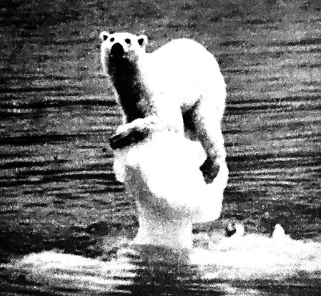
What kind of dangers can this future result bring to your town? Suggest any two measures that can be taken to reduce the root cause behind this result
2. Read the following news headline of The Assam Tribune (29 December, 2022) and answer the question that follows: “Guwahati named among top 5 slowest cities in terms of average vehicle speed.”
– Mention three environmental problems being faced by Guwahati due to slow vehicle speed. {2025}
3. How is land polluted? {2022}
4. What is desertification? Mention its two causes. {2022}
5. How does Water Pollution occur? {2020}
6. What do you mean by Pollution State how soil is polluted? {2019}
7. Write in brief the main causes of desertification. {2018}
8. What is Global Warming? Write how to control Global warming? {2018}
9. Mention three major causes of environmental change. {2018}
10. What is Dessertification? Give two reasons for dessertification. {2017}
11. What is landslide? State two main causes of landslide is Assam? {2016}
HSLC PYQs (2016–2026): Important 4/5 Marks Long Questions
HSLC PYQs (2016–2026): Important 2‑ and 3‑Mark Short Questions
1. What is meant by land pollution? Briefly describe the causes of land pollution. {2024}
2. What types of problems can be created by Global Warming? Give four examples. {2023}
3. Discuss briefly the relation among the four major components of the Earth’s environment. {2018}
4. What is Pollution? State how air is polluted? {2017}
5. What are the environmental problems? Explain the Geographical divisions of the environmental problems. {2017}

District Pre Board (2025–26): Important 2 Marks Short Questions
1. What are the probable consequences of global Warming? {Jorhat}
2. Mention some of the biotic and abiotic elements of environment. {Kokrajhar}
3. Suggest two measures to control air pollution caused by human activities. {Nalbari}
District Pre Board (2025–26): Important 3 Marks Long Questions
4. What is called cold desert ? What are the probable consiquences of global warming on the cold desert. {Bajali}
5. How has increasing population affected natural resources ? {Barpeta}
6. What is global warming? Write two consequences of global warming. {Bongaigaon}
7. Study the case and answer the following questions. {Hailakandi}
A semi-arid region near a growing city experienced rapid urbanization. Forest land was cleared for housing and industries. Groundwater extraction increased sharply, lowering the water table. Over time, the land became dry and barren.
(i) How does deforestation contribute to desertification?
(ii) Explain how urbanization can indirectly cause desertification.
8. “The process of destruction of the environment by harmful substance is simply called pollution.” Write briefly about the problem that predominate in our country. {Lakhimpur}
9. Mention three factors that cause desertification. {Majuli}
10. How does air pollution like acid rain eventually lead to water and land pollution? {Morigaon}
11. Which future consequence of the environmental problem is exposed in the above image? Please make two suggestions to prevent problem. {Sibsagar}

12. Observe the given data on the Pie Chart and answer the following questions: {Sribhumi}
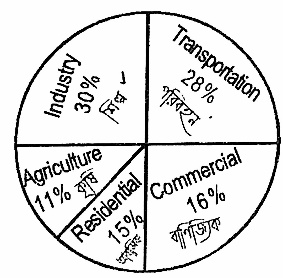
i) Which sector is the largest contributor to the greenhouse gas emissions?
ii) Find the percentage of emissions produced by the industry and transportation sector.
iii) If a government wanted to reduce emission based on this data, which two sector would be the highest priority ?
13. Is there any environmental problem in your own locality. If yes, mention their causes and indicate, one measure for their solution. {Salmara}
District Pre Board (2025–26): Important 4/5 Marks Long Questions
14. What does the word “desertification” actually mean? What are the factors that contribute to desertification? Write briefly. {Baksa}
15. Discuss briefly the relation of four components of environment. {Baksa}
16. ‘Desert and desertification do not mean the same thing’ Explain. {Biswanath}
17. “Modern technology has improved human life, but has harmed the environment. Give your opinion. {Cachar}
18. Mention two causes of global warming and two appropriate measures to control global warming. {Darrang}
19. What do you understand by ‘Environment’? State the main factors of environmental changes. {Sonitpur}
20. What is global warming? suggest three ways to prevent global warming. {Sonitpur}
21. “Desertification has badly affected the continents” – If you think this sentence is true, prove its truth with facts. {Tamulpur}
22. Discuss how regional environmental problems can transform into global problem. Illustrate your answer with example. {Nalbari}
23. Draw a sketch map of Assam and locate there in any three of the following names. {Nalbari}
(i) Silk town
(ii) The first oil refinery of India
(iii) State capital
(iv) The world’s largest river island
Some Important Most Probable 2 Marks Questions for HSLC 2027
1. What do you understand by the environment? What are its two main components?
2. What are Greenhouse gases? Name any two greenhouse gases.
3. Give two examples of global environmental problems.
4. What is Desertification?
5. What does the Lithosphere mean? What is its primary function?
6. Mention two major man-made causes of air pollution.
7. What is the significance of the Biosphere?
8. Write two major consequences of Global Warming.
9. How is acid rain formed?
10. Name two environmental problems observed in your own locality.
Some Important Most Probable 3 Mark Questions for HSLC 2027
11. Why is deforestation one of the major causes of global warming? Explain.
12. Write three differences between a Desert and Desertification.
13. Mention any three effective measures that can be taken to prevent water pollution.
14. How has rapid population growth adversely affected the natural environment? Discuss briefly.
15. Explain the difference between a local environmental problem and a global environmental problem with examples.
16. What are the main causes of the depletion of the ozone layer? What harm can it cause to the living world?
17. Would the existence of life on Earth be possible without the Greenhouse Effect? Provide your opinion.
18. What is soil pollution? How do agricultural activities contribute to soil pollution?
19. As a responsible student, what steps would you take to prevent environmental degradation?
20. Why has solid waste management become a massive challenge in recent times?
Some Important Most Probable 4 Mark Questions for HSLC 2027
21. Briefly discuss the four major spheres of the Earth’s environment and explain the interrelationship among them.
22. What is Global Warming? Write about four major measures the global community should adopt to control it.
23. What are the factors causing desertification? What kind of measures should be undertaken to prevent the process of desertification?
24. “Modern technology is both a blessing and a curse for the environment.” – Analyze this statement logically.
25. Discuss in detail how industrialization and urbanization have damaged the environment.
26. Provide a comparative discussion on the causes and remedies of water pollution and air pollution.
27. Suppose you are a resident of an industrial area. What suggestions would you give to the government and the public to prevent environmental pollution in that area? Write in the format of a report.
28. What are the causes of acid rain? Describe how it impacts human health, agriculture, and the aquatic environment.
29. What is the position of humans in the biosphere? Analyze how the balance of the biosphere has been disrupted due to the selfish activities of human beings.
30. “Environmental protection is not only the responsibility of the government; it is the duty of every citizen.” – Prepare an essay on the role of the general public and the importance of awareness in environmental conservation.

Class 10 Social Science (Geography) Chapter 7 – Environment and Environmental Problems Complete Question Answers and Exam Solutions (ASSEB / SEBA Assam – English Medium)
The seventh chapter of the Class 10 Social Science syllabus (Geography section), ‘Environment and Environmental Problems’, is a highly scoring and globally relevant chapter. For the upcoming HSLC 2027 board examinations, we have thoughtfully curated a complete set of question answers (Class 10 Social Science Chapter 7 Question Answer) strictly following the New ASSEB (Assam State School Education Board) Syllabus 2026-27 and the newest exam blueprint. This exhaustive Question Bank provides in-text Very Short Answers (VSA), Short Questions, Long Answers, and complete solutions to Previous Years’ Board Exam Questions (PYQ). At Ospin Academy, we ensure these notes are crisp, accurate, and completely exam-ready.
This chapter offers vital insights into the concept of the environment, its various spheres (lithosphere, hydrosphere, atmosphere, biosphere), and pressing global issues like pollution, global warming, the greenhouse effect, and desertification. Understanding these ecological challenges and their mitigation strategies is crucial for matric students. Our Question Bank goes beyond standard textbook exercises, encompassing the Extra Board Questions and Answers that examiners frequently use to test a student’s conceptual clarity.
What you will learn and get from this chapter:
- A clear understanding of the environment and the complex interrelationship between its spheres.
- Detailed explanations of major environmental problems including air, water, and soil pollution.
- In-depth analysis of global ecological threats like global warming, the greenhouse effect, and desertification.
- Perfectly framed answers for 1-mark objective questions (VSA/MCQ) and 2-3 marks short explanatory questions.
- Standardized and point-wise solutions for 4-5 marks long descriptive questions focusing on environmental conservation.
Special benefits from Ospin Academy for the HSLC 2027 Exam:
- A fully updated Chapter 7 Question Bank perfectly aligned with the new ASSEB blueprint for HSLC 2027.
- Verified, detailed solutions for Previous 10 Years’ Questions (PYQ) along with Pre-Board papers from multiple districts of Assam.
- 100% accurate, high-quality study materials (Class 10 Geography Notes) written in simple English for rapid memorization.
- Easily downloadable PDF format (PDF Download) optimized for smart, last-minute revision before the board exam.
- An expertly curated list of 100% Common Board Suggestion questions to maximize your scoring potential.
Empower your HSLC 2027 exam preparation today and step confidently toward securing the Highest Marks in Social Science with Ospin Academy’s reliable resources.