Class 10 Social Science Chapter 13 – Economic Development Complete Question Answer | ASSEB / SEBA
Class 10 Social Science (Economics) Chapter 13 – Economic Development Complete Question Answers and Exam Solutions (ASSEB / SEBA Assam – English Medium)
The thirteenth chapter of the Class 10 Social Science syllabus (Economics section), ‘Economic Development’, is a vital chapter that helps students understand the dynamics of a country’s growth and planning. For the upcoming HSLC 2027 board examinations, we have meticulously formulated a complete set of question answers (Class 10 Social Science Chapter 13 Question Answer) entirely based on the New ASSEB (Assam State School Education Board) Syllabus 2026-27 and the newest exam blueprint. This exhaustive Question Bank includes in-text Very Short Answers (VSA), Short Questions, Long Answers, and complete solutions to Previous Years’ Board Exam Questions (PYQ). Ospin Academy provides these notes with absolute accuracy to secure your exam success.
This chapter offers an essential comparative study between Economic Growth and Economic Development. It also delves into the concept of the Human Development Index (HDI), democratic planning, and the history of the Five-Year Plans in India. Crucially, it covers the replacement of the Planning Commission by the NITI Aayog and its functions in modern India. Grasping these contemporary economic concepts is essential for matric students. Our Question Bank ensures that you not only cover textbook exercises but also confidently tackle the Extra Board Questions and Answers that examiners frequently prioritize.
What you will learn and get from this chapter:
- A clear conceptual distinction between Economic Growth and Economic Development.
- Detailed explanations of the Human Development Index (HDI) and the core indicators used to measure it.
- In-depth insights into India’s economic planning system, the history of Five-Year Plans, and the establishment of NITI Aayog.
- Accurate, board-ready answers for 1-mark objective questions (VSA/MCQ) related to economic indicators and planning dates.
- Well-structured, comprehensive solutions for 4-5 marks long descriptive questions regarding the functions of NITI Aayog and the goals of economic planning.
Special benefits from Ospin Academy for the HSLC 2027 Exam:
- A fully updated Chapter 13 Question Bank perfectly mapped to the new ASSEB blueprint for HSLC 2027.
- Verified and complete solutions for Previous 10 Years’ Questions (PYQ) as well as Pre-Board question papers from diverse districts of Assam.
- 100% precise, premium quality study materials (Class 10 Economics Notes) written in lucid English to facilitate rapid learning.
- Easily downloadable PDF format (PDF Download) optimized for smart, on-the-go revision prior to the final exam.
- An expertly formulated list of 100% Common Board Suggestion questions to maximize your scoring potential in Economics.
Complete your Social Science syllabus preparation and secure the Highest Marks by mastering the concepts of economic development with Ospin Academy today.
Class 10 Social Science Question Bank ASSEB HSLC 2027 | English Medium Chapter-wise Solutions PDF

Class 10: Social Science
Economic Development
HSLC English PYQs (2024–2026): Important MCQs with Answers
1. Choose the correct option to fill in the blanks given below about the structure of the NITI Aayog Committee (Some parts) {2026}
(i) Chairman → Prime Minister
(ii) Ex-officio Members → ?
(iii) Chief Executive Officer → ?
(iv) Executive Council → All Chief Ministers and ?
(A) (ii) One IAS Officer
(iii) Maximum four Cabinet Ministers
(iv) Lt. Governor of Union Territories
(B) (ii) Maximum four Cabinet Ministers
(iii) One IAS Officer
(iv) Lt. Governor of Union Territories
(C) (ii) Lt. Governor of Union Territories
(iii) Maximum four Cabinet Ministers
(iv) One IAS Officer
(D) (ii) One IAS Officer
(iii) Lt. Governor of Union Territories
(iv) Maximum four Cabinet Ministers
Answer: B
2. Find out the incorrect statement: {2026}
(A) Liberalisation means lessening of the degree of state control in the economic system of a country.
(B) Privatisation means the opening up of the public sector units to the private sector
(C) The New Industrial Policy of the Government of India, 1991 has opened up 9 (nine) public sector units to the private sector.
(D) The process of liberalization and privatization obstruct the process of globalization.
Answer: D
3. By dividing national income by the total population of a country, we get {2026}
(A) Life expectancy
(B) Human Development Index
(C) Per Capita Income
(D) Gross Domestic Product (GDP)
Answer: C
4. Statement based MCQ (True/False). {2025}
Consider the statements (i) and (ii) about economic growth and development and choose the correct answer from the alternatives given below.
(i) Economic development is a qualitative concept, but economic growth is a quantitative concept.
(ii) Economic development is a narrow concept, whereas economic growth is a broader concept.
(A) (i) is true, (ii) is true
(B) (i) is true, (ii) is false
(C) (i) is false, (ii) is false
(D) (i) is false, (ii) is true
Answer: B
5. Match the following and find out the correct answer: {2025}
(i) Democratic Planning
(ii) Economic Planning
(iii) Grassroot Planning
(a) Involves lowest level of administration in planning
(b) People participate at different stages of plan making
(c) To attain a set of well-defined developmental objectives
(A) (i)→(a), (ii)→(c), (iii)→(b)
(B) (i)→(c), (ii)→(a), (iii)→(b)
(C) (i)→(c), (ii)→(b), (iii)→(a)
(D) (i)→(b), (ii)→(c), (iii)→(a)
Answer: D
6. The Chairman of ‘NITI Aayog’ is: {2025}
(A) The President
(B) The Union Finance Minister
(C) The Prime Minister
(D) The Vice President
Answer: C
7. The period covered by the First Five-Year Plan in India is: {2024}
(A) 1st April, 1951 to 31st March, 1956
(B) 1st April, 1950 to 31st March, 1955
(C) 1st April, 1956 to 31st March, 1961
(D) 1st April, 1961 to 31st March, 1966
Answer: A
8. Who is the Chairman of the NITI Aayog, which was formed in 2015? {2024}
(A) The President of India
(B) The Prime Minister of India
(C) The Governor of the Reserve Bank
(D) The Vice-President of India
Answer: B
9. The act of lessening of the degree of states control in the economic system of a country is called: {2024}
(A) Financial inclusion
(B) Privatisation
(C) Liberalisation
(D) Globalisation
Answer: C
10. Privatisation means: {2024}
(A) The policy of opening up of the government sector units to the private sector.
(B) The integration of the economy of a nation with the economics of the rest of the world.
(C) The lessening of the degree of state control in the economic system of a country.
(D) A process in which the benefits of economic growth and development are ensured to each and every section of people in the society.
Answer: A
11. By dividing national income by the total population of a country, we get: {2024}
(A) Per capita income
(B) Human Development Index
(C) Life expectancy
(D) Gross Domestic Product (GDP)
Answer: A
Assam’s Various District Pre‑Board (2025–26) MCQs With Answers
1. Sustainable development is – {Bajali}
(A) Global development
(B) Economic development
(C) Environmental development
(D) Considerable development
Answer: C
2. Privatization is – {Bajali}
(A) A policy to open up public sector institutions to the private sector.
(B) Linking the economy of one country with the economics of other countries.
(C) Relaxation of state control over the countries financial system.
(D) A process to ensure economics development benefits reach all in society.
Answer: A
3. Which of the following factors are the main ones for the success of democratic planning? {Bajali}
(i) Free and fair constitution.
(ii) Rule of the constitution.
(iii) Absolute power of political parties
(iv) Protection of the fundamental rights of citizens.
(A) i, ii, iv
(B) i, iii, iv
(C) ii, iii, iv
(D) i, ii, iii, iv
Answer: A
4. Assertion (A) : Economic growth does not mean economic development but if there is to be economic development, there must be economic growth. {Bajali}
Reason (R) : Economic development is a part of economic growth only.
(A) (A) and (R) are correct and (R) is correct explanation of (A)
(B) (A) and (R) are correct but (R) is not correct explanation of (A)
(C) (A) is correct but (R) is incorrect
(D) (A) is incorrect but (R) is correct
Answer: C
5. Assertion (A) : Assam has great potential to advance in human resource. {Bajali}
Reason (R) : More than one third of the total population of Assam represent the youth age group 15-34.
(A) (A) and (R) are correct and (R) is correct explanation of (A)
(B) (A) and (R) are correct but (R) is not correct explanation of (A)
(C) (A) is correct but (R) is incorrect
(D) (A) is incorrect but (R) is correct
Answer: A
6. Assertion (A) : Our country’s planning is based on Five years plan. {Bajali}
Reason (R) : Our country’s planning is revised every five years.
(A) (A) and (R) are correct and (R) is correct explanation of (A)
(B) (A) and (R) are correct but (R) is not correct explanation of (A)
(C) (A) is correct but (R) is incorrect
(D) (A) is incorrect but (R) is correct
Answer: A
7. The chairman of NITI Aayog is ……..? {Baksa}
(A) The Prime Minister
(B) Chief Minister
(C) Finance Minister
(D) Education Minister
Answer: A
8. Which of the following is not an indicator of human development? {Baksa}
(A) Life expectancy
(B) Literacy
(C) Standard of living
(D) National income
Answer: D
9. Which option is correct in terms of economic development? {Baksa}
(i) Economic development is the increase in national and per capita income of a country.
(ii) Economic development means economic growth.
(iii) Economic development is the only part of economic growth.
(iv) Economic development is necessary for economic growth.
(A) (i) and (iii) are correct, (ii) and (iv) are incorrect.
(B) (i) and (ii) are correct and (iii), (iv) are incorrect.
(C) (i), (ii) and (iii) are correct and (iv) is incorrect.
(D) (i), (ii) and (iv) are correct and (ii) is incorrect.
Answer: A
10. Below are two statements marked one as assertion (A) and the other as reason (R). Choose the correct answer based on these statements. {Baksa}
Assertion (A): The economy of India is a mixed economy.
Reason (R): The economic system of India is a co-existence of the public sector and private sector.
(A) Claim (A) is correct and (R) is incorrect.
(B) (A) is incorrect and (R) is correct.
(C) Both (A) and (R) are correct (A) and (R) is the correct analysis of(A)
(D) Both (A) and (R) are correct but (R) is not correct analysis of A
Answer: C
11. The Union government led by P.V. Narasimha Rao introduced the economic reform measures …….. the benefit of the reforms measures are – {Baksa}
(i) There has been a rise in the rate of growth of economy.
(ii) The wholesale price index has shown downward trend
(iii) The retail price has shown a downward trend.
(iv) The foreign currency reserves with Reserves Bank of India has increased.
(A) (i), (ii) (iii) are correct and (iv) is incorrect.
(B) (i) and (ii) are correct and (iii) and (iv) are incorrect.
(C) (i), (ii) and (iv) are correct and (iv) is incorrect.
(D) (i), (ii), (iii) and (iv) all are correct.
Answer: D
12. The following table: {Baksa}
|
Year |
Percentage of Indians Population |
Decadal Growth rate (in percentage) |
|
1971 1981 1991 2001 2011 |
2.66 2.64 265 2.59 25.8 |
38.98 23.36 24.24 18.92 17.07 |
Looking at the table, it can be seen that the growth rate has been declining steadily since 1971. The reasons for this-
(A) The birth rate has declined.
(B) The death rate is increasing related to the birth rate.
(C) The awareness of public and the government has reduced the birth rate.
(D) All of the above are correct.
Answer: A
13. When was the first meeting of the NITI Aayog held? {Barpeta}
(A) In 1st January 2015
(B) In 8th February 2015
(C) In 1st February 2015
(D) In 15st August 2015
Answer: B
14. Identify the main objectives of the Indian economy during the period of Five Years plans from the alternatives given below – {Barpeta}
(i) To remove socio-economic and regional inequalities
(ii) To attain self-reliance
(iii) To raise the rate of economic growth
(iv) To remove poverty
(A) i, ii, iv
(B) i, iii, iv
(C) i, ii, iii, iv
(D) i, ii, iii
Answer: C
15. Consider the statements (I) and (II) about the problems of economic development in Assam – {Barpeta}
Statement I – Irrigation systems are not improved and Irrigation facilities are inadequate.
Statement II – Lack of proper planning to increase enterprising zeal among the local people.
(A) (I) is false, (II) is true
(B) (I) is true, (II) is false
(C) Both (I) and (II) are true
(D) Both (I) and (II) are false
Answer: C
16. Which of the following means the lessening of state control in the economic system of a nation ? {Barpeta}
(A) Privatisation
(B) Globalisationt
(C) Liberalisation
(D) Disinvestment
Answer: C
17. Result of Liberalisation and Privatisation is {Biswanath}
(A) Economic growth
(B) Globalisation
(C) Economic Development
(D) Social Growth
Answer: B
18. The 2010 Human Development Report includes which there concepts human development? {Biswanath}
(i) Standard of living
(ii) The inequality adjusted Human Development index
(iii) Gender Inequality Index
(iv) Multi dimensional poverty Index
(A) (i), (iii), (iv)
(B) (i), (ii), (iii)
(C) (ii), (iii), (iv)
(D) (i), (ii), (iv)
Answer: C
19. In which economy the public sector and the private sector co-exist? {Biswanath}
(A) Liberadisation
(B) Privatization
(C) Human Development
(D) Mixed Economy
Answer: D
20. Two statements are given in the question below as Assertion (A) and Reason (R). Read the statements and choose the correct option. {Biswanath}
Assertion (A) : Economic development is a part of growth only.
Reason (R) : Economic development is a part of growth only.
(A) Both (A) and (R) are correct
(B) Both (A) and (R) are incorrect
(C) Only (A) is correct
(D) Only (R) is correct
Answer: B
21. The two states which have enjoyed the benefit of Green Revolution are – {Biswanath}
(A) Assam and West Bengal
(B) Punjab and Haryana
(C) Assam and Punjab
(D) Punjab and west Bengal
Answer: B
22. The Period coverd by the First Five Year plan in India is {Bongaigaon}
(A) 1st April, 1951 – 31st March, 1956
(B) 1st April, 1950 – 31st March, 1950
(C) 1st April, 1956 – 31st March, 1961
(D) 1st April, 1961 – 31st March, 1966
Answer: A
23. Globalisation means – {Bongaigaon}
(A) The policy of opening up of the government sector units to the private sector
(B) The lessening of the degree of state control in the economic system of a country
(C) A process in which the benefits of Economic growth and development are ensured to each and every section of people in the society
(D) The integration of the economy of a nation with the economic of the rest of the world
Answer: D
24. Read the statements given below and choose the correct answers : {Cachar}
Statement 1: Establishing a connection between the economy of a country with the rest of the world is called Globalization.
Statement 2: Globalization can also be called a result of privatization and globalization.
(A) Both the statement are correct
(B) Both the statement are incorrect
(C) Statement 1 is correct, but statement 2 is incorrect
(D) Statement 1 is incorrect, but statement 2 is correct
Answer: C
25. When was the first Human Development Report Published? {Cachar}
(A) 1983
(B) 1987
(C) 1990
(D) 1996
Answer: C
26. Read the following statement and choose the correct option: {Cachar}
Statement 1 : Human development means the expansion of collective choices of the people.
Statement 2: Economic growth is enough for human development.
Statement 3 :Human Development is not merely the rise in the output produced but overall development.
(A) Statement 2 correctly explains statement 1
(B) Only Statement 2 is correct
(C) Statement 3 proves that statement 2 is wrong
(D) Only Statement 3 is correct among the three Statements.
Answer: C
27. Why is India known as Mixed Economy? {Cachar}
(A) Co-existance of public and private sector.
(B) The common people and the government work together.
(C) The Indian Government works in association with the government of the U.S.A.
(D) In India the public sector works with the common people.
Answer: A
28. When did liberalisation start in India? {Cachar}
(A) 1947
(B) 1983
(C) 1991
(D) 2001
Answer: C
29. Sustainable development is – {Dhubri}
(A) Economic development
(B) Environmental development
(C) Global development
(D) Conssidered development
Answer: B
30. The indicators of Human Development are – {Dhubri}
(i) Life expectancy
(ii) Literacy
(iii) Standard of living
(iv) Economic development
(A) i and ii correct
(B) ii and iii correct
(C) i, ii and iii correct
(D) i, ii, iii and iv correct
Answer: C
31. A financial year means – {Dhubri}
(A) 1 January to 31 December
(B) 1 March to 29 February
(C) 1 April to 31 March
(D) 1 June to 31 May
Answer: C
32. In first period of economic planning in India, the growth of Indian economy was not satisfactory. The main causes were {Dhubri}
(i) War with China
(ii) Poor rainfal
(iii) Impact of privatisation
(iv) Increase in foreign exchange
(A) Only i is correct
(B) i and ii correct
(C) i, ii, iii correct
(D) i, ii, iii, iv correct
Answer: B
33. The relaxation of State control over the financial system of the country is called- {Dhubri}
(A) Liberalisation
(B) Privatisation
(C) Globalization
(D) Economic Planning
Answer: A
34. Full time member of NITI Aayog – {Dhubri}
(A) Prime minster
(B) Three experts
(C) Four cabinet minister
(D) All chief minister
Answer: B
35. Government of India adopted economic reform policy in – {Dhubri}
(A) 1990
(B) 1991
(C) 2000
(D) 2001
Answer: B
36. If Rs. 20250000 is National income of a country having total population 50000, then the per capita income of the country will be – {Goalpara}
(A) Rs. 450
(B) Rs. 405
(C) Rs. 410
(D) Rs. 45
Answer: B
37. The three indexes of human development are- {Goalpara}
(A) Liberalisation. Privatisation, Globalisation
(B) Life expectancy, Education. The quality of life
(C) Economic growth, Economic development, Human development
(D) National income, Per capita income, Economic growth
Answer: B
38. What is the full form of NITI Aayog? {Goalpara}
(A) National Institute of Teaching India
(B) National Institute of Transforming India
(C) New Institute of Transforming India
(D) Nation Institute for Technology of India
Answer: B
39. “Democratic planning ensures decentralisation of Power”. What does the term “Decentralisation of Power” imply? {Goalpara}
(A) Only the people participate in different stages of policy making.
(B) Only the chairman of planning commission participate in different stages of policy making.a
(C) Only the council of ministers participate in different stage of policy making
(D) Only the president of India participate in different stage of policy making.
Answer: A
40. The integration of the economy of a nation with the economies of the rest of the world is – {Goalpara}
(A) Privatization
(B) Globalization
(C) Liberalization
(D) Competition
Answer: B
41. Read the following statements and answer the question: {Hailakandi}
Assertion (A): Economic development is possible without economic growth in the long run.
Reason (R): Development is a multidimensional process that focuses on the distribution of wealth rather than just the production of wealth.
(A) Both A and R are true, and R is the correct explanation of A.
(B) Both A and R are true, but R is not the correct explanation of A.
(C) A is true, but R is false.
(D) A is false, but R is true.
Answer: D
42. Which of the following is the primary objective of Globalisation? {Hailakandi}
(A) To restrict foreign trade to protect local industries.
(B) To encourage the flow of capital, technology, and goods across international borders.
(C) To make every country completely self-reliant without any imports.
(D) To increase import duties on essential medicines.
Answer: B
43. What is the primary objective of “Decentralization of Power” in a democracy like India? {Hailakandi}
(A) To concentrate all decision-making powers in the hands of the Prime Minister.
(B) To reduce the importance of state governments.
(C) To ensure public participation in the decision-making process at the grassroots level.
(D)To eliminate the need for the Supreme Court.
Answer: C
44. Which factors show that impact of economic planning on India’s developement? {Jorhat}
a) Increase in Literacy rate
b) Growth of Public sector enterprises
c) Decline in infrastructure
d) Improvement in agricultural production
Options:
(A) a, b, d
(B) a, c, d
(C) a, c
(D) c, d
Answer: A
45. Identify the main objectives of Indian economy during the period of Five Year Plans from the alternatives given below {Kamrup M}
(i) To remove socio-economic and regional inequalities.
(ii) To attain self-reliance
(iii) To raise the rate of economic growth.
(iv) To remove poverty.
(A) (i), (ii), (iv)
(B) (i), (iii), (iv)
(C) (i), (ii), (iii), (iv)
(D) (i), (ii), (iii)
Answer: C
46. The integration of a nation’s economy with the economy of the other nation is called {Kamrup M}
(A) Liberalisation
(B) Privatisation
(C) Globalisation
(D) Planning
Answer: C
47. The core of human development is- {Kamrup M}
(A) The choices of the people
(B) The technical formula
(C) Economic Development
(D) Political Development
Answer: A
48. Assertion (A): Planning in India is a democratic planning. {Kamrup M}
Reason (R): Indian planning ensures decentralisation of power.
(A) Both (A) and (R) are true and (R) is the correct explanation of (A).
(B) Both (A) and (R) are true but (R) is not the correct explanation of (A)
(C) (A) is true but (R) is not
(D) (R) is true but (A) is not
Answer: A
49. Result of Liberalisation and privatisation is {Kamrup M}
(A) Globalisation
(B) Economic Growth
(C) Social Development
(D) Economic Development
Answer: A
50. The four stages of human development are: {Kamrup M}
(A) Education – Health – Banking – Land tenure
(B) Economic – Social – Cultural – Political development
(C) Life expectancy – Literacy – Standard of living – Drinking water
(D) Poverty – Agriculture – Technology – Economic
Answer: C
51. In which Human Development Report has introduced a new concept of gender inequality index {Kamrup M}
(A) Report of 2009
(B) Report of 2010
(C) Report of 2011
(D) Report of 2012
Answer: B
52. Foreign direct investment inflows into India have exceeded 1 million dollar from April 2000 to September 2024. This is an effect of which of the following factors : {Kamrup M}
(A) Growth of national income.
(B) Democratic planning.
(C) Liberalization
(D) Economic Development
Answer: C
53. The full form of NITI Ayog is- {Kamrup M}
(A) National Institute for Transforming India.
(B) National Institute for Transformation India.
(C) National Institution for Transforming India.
(D) National Institution for Transformation India.
Answer: C
54. In 2022, ‘Air India’ was transferred to Tata group which was formerly owned by the central govt of India. This is mainly- {Kamrup R}
(A) Financial Inclusion
(B) Globalisation
(C) Privatisation
(D) Liberalisation
Answer: C
55. The full form of NITI is-NITI {Kokrajhar}
(A) National Institute for Transforming India.
(B) National Institution for Transforming India.
(C) National Institution for Transformation India.
(D) National Institute for Transformation India.
Answer: B
56. The time period of 1st Annual Plan was form- {Kokrajhar}
(A) April, 1964-March 31, 1966
(B) April, 1966- March 31, 1969
(C) April, 1978-March 31, 1980
(D) None of these
Answer: D
57. Chairman of ‘NITI’ Aayog is- {Lakhimpur}
(A) Prime-Minister
(B) President
(C) Chief Minister
(D) Narendra Modi
Answer: A
58. Two person “A” and “B” have the same avarage income, but “A” has good health and education Facilitics.B does not have those facilihes which of the following conelusion is correct. {Lakhimpur}
(A) Both ‘A’and ‘B’ are equally advanced
(B) ‘B’ more advanced then ‘A’
(C) ‘A’ more advanced then ‘B’
(D) Averages income cannot determine development
Answer: D
59. Increasing the production of agricultural sector by applying modern technology is {Nagaon}
(A) Green Revolution
(B) Blue Revolution
(C) Economic Revolution
(D) Social Revolution
Answer: A
60. From which year the Five year plan in India has been started – {Nagaon}
(A) 1947
(B) 1950
(C) 1951
(D) 1952
Answer: C
61. According to the Human Development Report published in 1990, the three indicators of human development are {Nagaon}
(A) Life expectancy, Literacy, Standard of living
(B) Literacy, Proverty, Standard of living
(C) Life expectancy, urbanization, standard of living
(D) Urbanization, medical facility, Literacy
Answer: A
62. A Government paper Industry in your locality was handed over to a private company because of losses. As a student of economics, what would you name this – {Nagaon}
(A) Globalization
(B) Privatization
(C) Liberalization
(D) Nationalization
Answer: B
63. Where was the first meeting of NITI Ayog held? {Nagaon}
(A) Delhi
(B) Mumbai
(C) Calcutta
(D) Jaipur
Answer: A
64. An economy in which the public sector and the private sector coexist is called – {Nalbari}
(A) Mixed Economy
(B) Market centred Economy
(C) Planned Economy
(D) Globalization
Answer: A
65. Consider the statements (I) and (II) about Economic Development and choose the correct option {Nalbari}
Statement-I : If a country’s national income and per-capita income increase, it indicates that the country is experiencing economic development.
Statement-II : Economic growth is not necessary for economic development.
(A) I is true, II is false
(B) I is false, II is true
(C) Both are true
(D) Both are false
Answer: D
66. The time period of Twelfth five year plan in India is – {Nalbari}
(A) 1 April 2017 to 30 March 2022
(B) 1 April 2017 to 31 March 2022
(C) 1 April 2012 to 31 March 2017
(D) 1 April 2017 to 1 April 2022
Answer: C
67. If HDI stands for Human Development Index, then what does HPI stands for? {Nalbari}
(A) Human Poverty Index
(B) Hurman Power Index
(C) House Price Index
(D) Human Price Index
Answer: A
68. Assertion (A): Liberalization, privatization and Globalization of Indian economy switches on a new era. {Sibsagar}
Reason (R): Govt. has priortized some leading Industrialist in the name of encouraging privatization concept of India’s mixed economy.
(A) A is true, R is False.
(B) A is false, R is true.
(C) Both A and R are true, and R is correct explanation of A.
(D) Both A and R are true, But R is not correct explanation of A.
Answer: A
69. Choose the correct option – {Sibsagar}
(i) Increase in national income may not be the milestone of economic development
(ii) Life expectancy is closely related to the economic development of a country
(iii) Price hike without aggregate production does not mean increase of national income.
(iv) Consumerist economy is threatening to morality.
(A) i, ii and iv true
(B) i, ii and iii true
(C) i, iii and iv true
(D) i, ii, iii and iv true
Answer: D
70. SAMSUNG, amazon, TOYOTA .The above mentioned companies abled to posses Indian market. What characteristics of Indian economy does it signify? {Sibsagar}

(i) Privatization
(ii) Liberalization
(iii) Globalization
(iv) Nationalization
(A) i and ii true
(B) ii and iii true
(C) Only iii is true
(D) Only ii is true
Answer: B
71. What is the full form of NITI Ayog ? {Sonitpur}
(A) National institute for trade and industry
(B) New initiative for technology and Innovation.
(C) National institution for transforming India
(D) National integrated territory of India.
Answer: C
72. Which of the following not an objective of India’s five years plan. {Sonitpur}
(A) To reduce the economic growth rate.
(B) Increase the employment opportunities.
(C) Eradication regional disparity
(D) Eradication of poverty
Answer: A
73. Which of the following factors are helpful in speed up the economic development? {Sonitpur}
ⅰ) More investments
ii) Increase in productive population
iii) Use of advance technology
iv) Long term poverty.
(A) (i), (ii) and (iii)
(B) (i) (iii) and (iv)
(C) (ii), (iii) and (iv)
(D) (i), (ii), (iii) and (iv)
Answer: A
74. The sum total of the value of all the goods and services manufacrured by a country in a financial year is – {Sonitpur}
(A) Natioanl Income
(B) Pea Capita Income
(C) Personal Income
(D) Community Income
Answer: A
75. Consider the statements A and B and choose the correct answer. {Sonitpur}
A. The particular process where countries are becoming interconnected with each other is globalization.
B. The loosening of government control over economic system of country is liberalization.
(A) A is true and B false
(B) A false and B true
(C) A and B both are true
(D) A and B both are false.
Answer: C
76. Privatisation means – {Sribhumi}
(A) The policy of opening up of the government sector units to the private sector.
(B) The integration of the economy of a nation with the economies of the rest of the world.
(C) The lessening of the degree of state control in the economic system of a country.
(D) A process in which the benefits of economic growth and development are ensured to each and every section of people in the society.
Answer: A
77. Niti Ayog was established – {Sribhumi}
(A) 2014
(B) 2015
(C) 2016
(D) 2017
Answer: B
78. The process in which the benefits of economic growth and development is ensured to each and every section of people in the society is called— {Salmara}
(A) Liberalization
(B) Globalization
(C) Commercialization
(D) Financial inclusion
Answer: D
79. Which of the following are correct regarding of Five year economic planning. {Salmara}
i. To remove socio-economic inequalities.
ii. To remove poverty.
iii. To remove regional inequalities
iv. Ensure participation of different category of people.
(A) i, ii, iv
(B) ii, iii, iv
(C) i, ii, iii
(D) i, iii, iv
Answer: C
80. Below are the two statements. One is marked as Assertion A) and other as Reason R). Judge the statement and choose the appropriate answer: {Udalguri}
Assertion A): The miniature version of Privatisation is Disinvestment Policy.
Reason R): The entire capital of the organisation is not collected from the government, but from some private resources/units.
(A) A) is true, B) is false
(B) A) is false, (B) is true.
(C) Both A) and B) are true.
(D) Both A) and B) are false.
Answer: C
81. The number of full-time members of NITI Aayog Committee are- {Udalguri}
(A) Three Experts
(B) Maximum Four
(c) One Administrative officer
(D) Two State ministers
Answer: B
82. Which of the following is not true about human development? {Udalguri}
(A) Political Environment Development
(B) Socio-Economic Development
(C) Quality of Life
(D) Warfar
Answer: D
83. Which of the following is not true in the context of the Economic Reform Programme? {Udalguri}
(A) Increase in rate of economic development.
(B) Increase in the amount of foreign exchange currency.
(C) Possibility of excessive addiction to goods.
(D) No negative impact of any kind.
Answer: D
84. Development should be done in such a way that it balances the present economy, environment and society and is safe for future. Which concept of development is mentioned here? {Udalguri}
(A) Economic Development
(B) Social Development
(C) Industrial Development
(D) Sustainable Development
Answer: D
Probable Multiple Choice Questions with Answers for HSLC 2027
1. When was the Planning Commission formed in India?
(A) 15 August 1947
(B) 26 January 1950
(C) 15 March 1950
(D) 1 April 1951
Answer: C
2. What was the tenure of the First Five-Year Plan of India?
(A) 1950 – 1955
(B) 1951 – 1956
(C) 1952 – 1957
(D) 1956 – 1961
Answer: B
3. When was NITI Aayog established?
(A) 1 January 2014
(B) 1 January 2015
(C) 15 August 2015
(D) 31 March 2016
Answer: B
4. Who serves as the Chairperson of NITI Aayog?
(A) The President of India
(B) The Finance Minister of India
(C) The Prime Minister of India
(D) The Governor of the Reserve Bank
Answer: C
5. When was the New Economic Policy introduced in India?
(A) 1985
(B) 1991
(C) 1995
(D) 2001
Answer: B
6. Who prepares and publishes the ‘Human Development Index’ (HDI)?
(A) The World Bank
(B) United Nations Development Programme (UNDP)
(C) International Monetary Fund (IMF)
(D) World Health Organization (WHO)
Answer: B
7. Which of the following states has the highest Human Development Index in India?
(A) Assam
(B) Bihar
(C) Kerala
(D) Gujarat
Answer: C
8. What is the full form of NITI?
(A) National Institute for Technical India
(B) National Institution for Transforming India
(C) National Initiative for Trade and Industry
(D) New Institution for Transforming India
Answer: B
9. The process of freeing the economy by removing government controls and restrictions is called:
(A) Liberalization
(B) Privatization
(C) Globalization
(D) Nationalization
Answer: A
10. When was the National Development Council (NDC) formed in India?
(A) 1950
(B) 1951
(C) 1952
(D) 1965
Answer: C
11. The process of integrating the economy of a country with the economies of other countries of the world is known as:
(A) Liberalization
(B) Globalization
(C) Privatization
(D) Economic Planning
Answer: B
12. The act of transferring the ownership and management of public sector enterprises to the private sector is called:
(A) Globalization
(B) Liberalization
(C) Investment
(D) Privatization
Answer: D
13. Which sector was given the highest priority in the First Five-Year Plan of India?
(A) Industrial sector
(B) Agricultural sector
(C) Education and health sector
(D) Transport sector
Answer: B
14. Which of the following is NOT an indicator of the Human Development Index (HDI)?
(A) Life expectancy
(B) Education or literacy rate
(C) Per capita income
(D) Foreign exchange reserves
Answer: D
15. The term ‘Disinvestment’ is primarily associated with which of the following policies?
(A) Liberalization
(B) Privatization
(C) Globalization
(D) Centralization
Answer: B
16. In which of the following countries is the system of ‘Democratic Planning’ prevalent?
(A) Soviet Russia
(B) China
(C) India
(D) North Korea
Answer: C
17. When does the Financial Year begin in India?
(A) From 1 January
(B) From 1 April
(C) From 1 July
(D) From 1 October
Answer: B
18. What does Economic Development imply?
(A) Only an increase in national income
(B) Only an increase in per capita income
(C) An increase in national income along with structural and qualitative changes in society
(D) Only an increase in the number of industries
Answer: C
19. Which economist originally developed the concept of the Human Development Index?
(A) Dr. Amartya Sen
(B) Mahbub ul Haq
(C) Adam Smith
(D) John Maynard Keynes
Answer: B
20. How many Five-Year Plans were completed in India in total?
(A) 10
(B) 11
(C) 12
(D) 13
Answer: C
21. From 1951-52 to 1990-91, which sector played the most dominant role in the Indian economy?
(A) Private sector
(B) Public sector
(C) Foreign sector
(D) Non-Governmental Organizations (NGOs)
Answer: B
22. The concept of ‘Bottom-up planning’ is associated with the functioning of which of the following institutions?
(A) Finance Commission
(B) Planning Commission
(C) NITI Aayog
(D) National Development Council
Answer: C
23. Who was the Finance Minister of India during the introduction of the economic reforms of 1991?
(A) P. V. Narasimha Rao
(B) Dr. Manmohan Singh
(C) P. Chidambaram
(D) Atal Bihari Vajpayee
Answer: B
24. Which of the following was a major step taken under Liberalization?
(A) Increasing import duties
(B) Abolishing or relaxing the licensing system for establishing industries
(C) Nationalizing all banks
(D) Completely restricting foreign trade
Answer: B
25. Economic Growth is a:
(A) Qualitative concept
(B) Quantitative concept
(C) Social concept
(D) Political concept
Answer: B
26. Arrange the following institutions/events in chronological order from oldest to newest based on their establishment/start year:
(i) NITI Aayog
(ii) National Development Council
(iii) Planning Commission
(iv) Start of the First Five-Year Plan
(A) (iii) → (iv) → (ii) → (i)
(B) (iii) → (ii) → (iv) → (i)
(C) (ii) → (iii) → (iv) → (i)
(D) (iv) → (iii) → (ii) → (i)
Answer: A
27. Match Column A with Column B and select the correct option:
Column A
(a) Liberalization
(b) Privatization
(c) Globalization
Column B
(i) Selling public sector enterprises
(ii) End of License Raj
(iii) Integration with the world economy
(A) (a)-ii, (b)-i, (c)-iii
(B) (a)-i, (b)-ii, (c)-iii
(C) (a)-iii, (b)-ii, (c)-i
(D) (a)-ii, (b)-iii, (c)-i
Answer: A
28. Which of the following statements about NITI Aayog is incorrect?
(A) It acts as a ‘Think-tank’ for the government.
(B) It has full authority to allocate funds to the states.
(C) Its Governing Council includes the Chief Ministers of all states.
(D) It promotes cooperative federalism.
Answer: B
29. Consider the following statements and select the correct answer:
(i) Economic growth is not possible without economic development.
(ii) Economic growth is possible without economic development.
(iii) Economic development implies an increase in national income along with a reduction in poverty and unemployment.
(A) Only (i) and (ii) are correct
(B) Only (ii) and (iii) are correct
(C) Only (iii) is correct
(D) All are incorrect
Answer: B
30. Match Column A with Column B:
Column A
(a) First Five-Year Plan
(b) Second Five-Year Plan
(c) Human Development Index
Column B
(i) Focus on heavy industries
(ii) Focus on the agricultural sector
(iii) Measurement of the standard of living
(A) (a)-ii, (b)-i, (c)-iii
(B) (a)-i, (b)-ii, (c)-iii
(C) (a)-iii, (b)-i, (c)-ii
(D) (a)-ii, (b)-iii, (c)-i
Answer: A
31. What was the primary reason that compelled India to adopt economic reforms in 1991?
(A) There was an excessive production of food grains in India.
(B) India’s foreign exchange reserves were almost depleted, and the country faced a severe financial crisis.
(C) The World Bank pressured India not to undertake economic reforms.
(D) The government wanted to completely ban the private sector.
Answer: B
32. Which of the following is NOT considered a benefit of Globalization?
(A) Increase in choices and alternatives of goods for consumers.
(B) Inflow of Foreign Direct Investment (FDI).
(C) Destruction of indigenous small-scale industries or facing fierce competition.
(D) Rapid spread of new technology.
Answer: C
33. In the history of Indian economic planning, the period from 1966 to 1969 is known as:
(A) The Golden Age of Planning
(B) Plan Holiday
(C) Rolling Plan
(D) Long-term Plan
Answer: B
34. What is a key characteristic of ‘Democratic Planning’?
(A) The government takes all decisions alone.
(B) There is public participation and consent in the preparation of the plan.
(C) There is no right to private property.
(D) The prices of manufactured goods are fixed by the government.
Answer: B
35. Which of the following statements is true regarding Socialist Planning?
(A) The private sector dominates the economy.
(B) The state or government has complete ownership over the means of production.
(C) Market forces (Demand and Supply) dictate all decisions.
(D) Earning a profit is the sole objective.
Answer: B
36. During which decade of planning did the Green Revolution primarily start in India?
(A) 1950s
(B) 1960s
(C) 1980s
(D) 1990s
Answer: B
37. Match Column A with Column B:
Column A
(a) Adam Smith
(b) Mahbub ul Haq
(c) P. C. Mahalanobis
Column B
(i) Human Development Index
(ii) Architect of India’s Second Five-Year Plan
(iii) Father of Economics
(A) (a)-iii, (b)-i, (c)-ii
(B) (a)-i, (b)-ii, (c)-iii
(C) (a)-iii, (b)-ii, (c)-i
(D) (a)-ii, (b)-i, (c)-iii
Answer: A
38. Identify a primary reason for the slow economic development of Assam:
(A) Lack of population
(B) Natural disasters like floods and erosion, and poor infrastructure
(C) Complete lack of mineral resources
(D) Excessive industrialization
Answer: B
39. After the economic reforms of 1991, the number of industries reserved for the public sector in India was gradually:
(A) Increased
(B) Kept the same
(C) Reduced
(D) Completely abolished
Answer: C
40. When did the United Nations Development Programme (UNDP) publish the first Human Development Report?
(A) 1980
(B) 1990
(C) 1995
(D) 2000
Answer: B
41. Assertion (A): The Government of India dissolved the Planning Commission in 2015 and formed NITI Aayog.
Reason (R): The ‘Top-down’ approach of the Planning Commission was unable to meet the needs of cooperative federalism in 21st-century India.
(A) Both (A) and (R) are true, and (R) is the correct explanation of (A).
(B) Both (A) and (R) are true, but (R) is not the correct explanation of (A).
(C) (A) is true, but (R) is false.
(D) (A) is false, but (R) is true.
Answer: A
42. Assertion (A): Economic development is a broader concept than economic growth.
Reason (R): Economic development does not merely imply an increase in income; it involves qualitative aspects like poverty eradication, and improvements in education and health.
(A) Both (A) and (R) are true, and (R) is the correct explanation of (A).
(B) Both (A) and (R) are true, but (R) is not the correct explanation of (A).
(C) (A) is true, but (R) is false.
(D) (A) is false, but (R) is true.
Answer: A
43. Assertion (A): In 1991, the Government of India adopted the policy of liberalization.
Reason (R): The government realized that the ‘License Raj’ and strict controls had hindered India’s industrial growth and foreign trade.
(A) Both (A) and (R) are true, and (R) is the correct explanation of (A).
(B) Both (A) and (R) are true, but (R) is not the correct explanation of (A).
(C) (A) is true, but (R) is false.
(D) (A) is false, but (R) is true.
Answer: A
44. Assertion (A): Globalization has benefited Indian consumers.
Reason (R): The entry of foreign companies has increased market competition, enabling consumers to get better quality goods at lower prices.
(A) Both (A) and (R) are true, and (R) is the correct explanation of (A).
(B) Both (A) and (R) are true, but (R) is not the correct explanation of (A).
(C) (A) is true, but (R) is false.
(D) (A) is false, but (R) is true.
Answer: A
45. Assertion (A): Privatization reduces the financial burden on the government.
Reason (R): Loss-making public sector enterprises are sold to the private sector or their management is handed over to them.
(A) Both (A) and (R) are true, and (R) is the correct explanation of (A).
(B) Both (A) and (R) are true, but (R) is not the correct explanation of (A).
(C) (A) is true, but (R) is false.
(D) (A) is false, but (R) is true.
Answer: A
46. Assertion (A): The Human Development Index (HDI) is a better parameter than per capita income to measure economic progress.
Reason (R): HDI does not solely calculate income; it also evaluates the health (life expectancy) and educational standards of the people of a country.
(A) Both (A) and (R) are true, and (R) is the correct explanation of (A).
(B) Both (A) and (R) are true, but (R) is not the correct explanation of (A).
(C) (A) is true, but (R) is false.
(D) Both (A) and (R) are false.
Answer: A
47. Assertion (A): Prior to independence, the transport and infrastructure of Assam were highly developed.
Reason (R): The British developed the transport system of Assam solely for the interest of tea, coal, and oil, which was insufficient for the overall development of Assam.
(A) Both (A) and (R) are true, and (R) is the correct explanation of (A).
(B) Both (A) and (R) are true, but (R) is not the correct explanation of (A).
(C) (A) is false, but (R) is true.
(D) (A) is true, but (R) is false.
Answer: C
48. Assertion (A): From 1951 to 1990, the public sector played a dominant role in the Indian economy.
Reason (R): After independence, government intervention was considered essential for rapid industrialization, building infrastructure, and establishing social justice.
(A) Both (A) and (R) are true, and (R) is the correct explanation of (A).
(B) Both (A) and (R) are true, but (R) is not the correct explanation of (A).
(C) (A) is true, but (R) is false.
(D) (A) is false, but (R) is true.
Answer: A
49. Assertion (A): There is no active public participation in democratic planning in India.
Reason (R): In democratic planning, all decisions are taken exclusively by the central government and are imposed forcefully.
(A) Both (A) and (R) are true, and (R) is the correct explanation of (A).
(B) Both (A) and (R) are true, but (R) is not the correct explanation of (A).
(C) (A) is true, but (R) is false.
(D) Both (A) and (R) are false.
Answer: D
50. Assertion (A): The spread of education accelerates human development in a country.
Reason (R): Educated people can increase productivity by using advanced technology and can lead a healthy lifestyle.
(A) Both (A) and (R) are true, and (R) is the correct explanation of (A).
(B) Both (A) and (R) are true, but (R) is not the correct explanation of (A).
(C) (A) is true, but (R) is false.
(D) (A) is false, but (R) is true.
Answer: A
HSLC PYQs (2017–2026): Important 2/3 Marks Short Questions
HSLC PYQs (2016–2026): Important 2‑ and 3‑Mark Short Questions
1. In the past few years, India has made significant progress in economic development and human development. Give your opinion with two examples you have seen yourself. {2026}
2. Mention two main differences between economic growth and economic development. {2026}
3. As per a 2022 report published by the World Bank, the life expectancy in some countries is mentioned below: {2025}
|
Country Name |
Life Expectancy (Years) |
|
Angola |
62 |
|
Afghanistan |
63 |
|
Pakistan |
66 |
|
India |
68 |
|
France |
82 |
|
Norway |
83 |
|
Australia |
83 |
|
Japan |
84 |
Why do you think the life expectancy in the countries like Japan, Australia, Norway, etc., is higher compared to that of the countries like India, Pakistan, Angola, etc.?
4. Who is the Chairman of NITI Aayog? {2023}
5. Mention two important characteristics of democratic planning. {2022}
6. Write two important points of difference between economic growth and economic development. {2019}
7. Which organisation is the publisher of the World Human Development Report? What are the indicators used for calculating Human Development Index? {2020}
8. Write a note on human development. {2019}
9. Who are the members of NITI Aayog? {2018}
10. When was NITI Aayog formed? Who is the Chairman of NITI Aayog? {2017}
HSLC PYQs (2016–2026): Important 4/5 Marks Long Questions
HSLC PYQs (2016–2026): Important 2‑ and 3‑Mark Short Questions
1. What is economic planning? Mention its two important needs. {2022}
2. What is NITI Aayog? When was it formed? Who is its Chairman?
{2020}
3. What is economic planning? Mention the period of the Five Year Plan of India. {2018}
4. Mention the main points of difference between the first phase of planning in India (beginning to 1990-91) and the second phase (1991-92) to the present. {2018}
5. Briefly discuss about the three indicators of human development. {2018}
6. Write briefly how economic reform in India is influenced by liberalisation, privatisation and globalisation. {2017}

District Pre Board (2025–26): Important 2 Marks Short Questions
1. Mention two problems created by the introduction of economic reforms. {Bajali}
2. Why do you think life expectancy in Japan is higher than in India? {Barpeta}
3. Write any two examples which indicate the impact of globalization in India during the post-reform era. {Barpeta}
4. Which organisation is the publisher of the world Human Development Report? What are the indicators used for calculating the Human Development index? {Bongaigaon}
5. “On the eve of independence, Assam’s infrastructure was very weak.” Mention two problems faced by Assam during this time. {Darrang}
6. “The countries of the world are moving towards a borderless world” – explain the statement with reference to the context of Globalization. {Hailakandi}
7. What is meant by extension of collective choice? {Kokrajhar}
8. Although India is currently considered the fourth largest economy in the world, it cannot be said that development has taken place. Why? {Sibsagar}
District Pre Board (2025–26): Important 3/5 Marks Long Questions
9. Briefly explain the three main causes of the introduction of economic reform measures in India. {Jorhat}
10. How do you think that the measures introduced by the Govt in connection with the economic reforms, are creating problems? {Kamrup M}
11. Mention three benefits of economic reforms. {Majuli}
12. How has the internet (e.g., e-commerce platforms) helped small Indian producers reach global customers and what challenges do they face? {Morigaon}
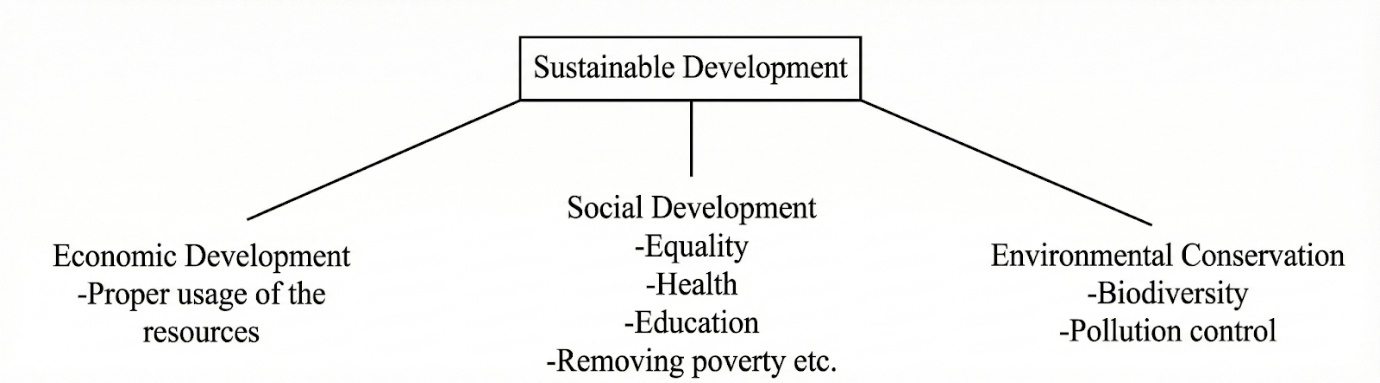
13. What is the meaning of sustainable development and why is it important for future generations? {Morigaon}
14. “Economic growth leads to economic development” – is this statement correct? Discuss with reasons. {Salmara}
15. Clarify the concept of sustainable development from the following information. {Udalguri}
16. Assam is still lagging behind compared to some other states of India in terms of industrial development. Write five reasons for this. {Darrang}
Some Important Most Probable 2 Marks Questions for HSLC 2027
1. What do you understand by Economic Planning?
2. Mention any two main objectives of India’s Five-Year Plans.
3. What is Liberalization?
4. Name any two indicators used to calculate the Human Development Index (HDI).
5. Write the full form of NITI Aayog in English.
6. What is meant by Democratic Planning?
7. Mention two reasons why India had to adopt economic reforms in 1991.
8. What is meant by Disinvestment?
9. Write two main differences between economic growth and economic development.
10. Mention two benefits of Globalization.
Some Important Most Probable 3 Mark Questions for HSLC 2027
11. Write three important differences between NITI Aayog and the Planning Commission.
12. How does the Human Development Index (HDI) reflect the true development of a country? Explain briefly.
13. Discuss three negative impacts of globalization on the Indian economy.
14. Prepare a short note on Privatization.
15. Why did the Government of India dissolve the Planning Commission? Give three reasons.
16. Describe the role and functions of the National Development Council (NDC) in the history of Indian economic planning.
17. Briefly write how the policy of liberalization has changed the industrial sector of India.
18. Explain the ‘Bottom-up planning’ approach of NITI Aayog.
19. Mention any three main characteristics of economic development.
20. Write briefly about the current status of Assam in terms of human development.
Some Important Most Probable 4 Mark Questions for HSLC 2027
21. Discuss in detail the main reasons that compelled the Government of India to adopt the New Economic Policy in 1991.
22. Differentiate between economic growth and economic development. Why is economic development considered more important than mere economic growth?
23. Analyze the structure, objectives, and main functions of NITI Aayog.
24. “Globalization has connected the Indian economy with the world, creating new opportunities as well as challenges.” – Provide an analytical discussion on this statement.
25. Discuss the successes and failures of India’s Five-Year Plans in eradicating poverty and achieving economic development.
26. What is the Human Development Index (HDI)? Discuss its three main components and explain its importance in measuring the progress of a nation.
27. Evaluate the impact of Liberalization, Privatization, and Globalization (LPG policies) on the standard of living of the common people of India.
28. What was the economic scenario of India before 1991? Discuss the role played by the public sector during that period.
29. How can infrastructure development help in the economic growth of a state like Assam? Provide your suggestions.
30. Provide a comparative discussion between Democratic Planning and Capitalist Planning with suitable examples.

Class 10 Social Science (Economics) Chapter 13 – Economic Development Complete Question Answers and Exam Solutions (ASSEB / SEBA Assam – English Medium)
The thirteenth chapter of the Class 10 Social Science syllabus (Economics section), ‘Economic Development’, is a vital chapter that helps students understand the dynamics of a country’s growth and planning. For the upcoming HSLC 2027 board examinations, we have meticulously formulated a complete set of question answers (Class 10 Social Science Chapter 13 Question Answer) entirely based on the New ASSEB (Assam State School Education Board) Syllabus 2026-27 and the newest exam blueprint. This exhaustive Question Bank includes in-text Very Short Answers (VSA), Short Questions, Long Answers, and complete solutions to Previous Years’ Board Exam Questions (PYQ). Ospin Academy provides these notes with absolute accuracy to secure your exam success.
This chapter offers an essential comparative study between Economic Growth and Economic Development. It also delves into the concept of the Human Development Index (HDI), democratic planning, and the history of the Five-Year Plans in India. Crucially, it covers the replacement of the Planning Commission by the NITI Aayog and its functions in modern India. Grasping these contemporary economic concepts is essential for matric students. Our Question Bank ensures that you not only cover textbook exercises but also confidently tackle the Extra Board Questions and Answers that examiners frequently prioritize.
What you will learn and get from this chapter:
- A clear conceptual distinction between Economic Growth and Economic Development.
- Detailed explanations of the Human Development Index (HDI) and the core indicators used to measure it.
- In-depth insights into India’s economic planning system, the history of Five-Year Plans, and the establishment of NITI Aayog.
- Accurate, board-ready answers for 1-mark objective questions (VSA/MCQ) related to economic indicators and planning dates.
- Well-structured, comprehensive solutions for 4-5 marks long descriptive questions regarding the functions of NITI Aayog and the goals of economic planning.
Special benefits from Ospin Academy for the HSLC 2027 Exam:
- A fully updated Chapter 13 Question Bank perfectly mapped to the new ASSEB blueprint for HSLC 2027.
- Verified and complete solutions for Previous 10 Years’ Questions (PYQ) as well as Pre-Board question papers from diverse districts of Assam.
- 100% precise, premium quality study materials (Class 10 Economics Notes) written in lucid English to facilitate rapid learning.
- Easily downloadable PDF format (PDF Download) optimized for smart, on-the-go revision prior to the final exam.
- An expertly formulated list of 100% Common Board Suggestion questions to maximize your scoring potential in Economics.
Complete your Social Science syllabus preparation and secure the Highest Marks by mastering the concepts of economic development with Ospin Academy today.