Class 7 Science Chapter 3 Acidic Basic and Neutral Substances Found in Nature Solutions | ASSEB Assam | English Medium
Class 7 Science (Amar Bijan) Chapter 3 – Acidic Basic and Neutral Substances Found in Nature Complete Textual Question Answers and Solutions (ASSEB Assam – English Medium)
The third chapter of the Class 7 Science (English Medium) syllabus, ‘Acidic Basic and Neutral Substances Found in Nature,’ is an essential and highly engaging topic in chemistry. Based on the new ASSEB (Assam State School Education Board) guidelines and the latest National Education Policy (NEP) framework according to the current syllabus, we have prepared comprehensive textual question answers for this chapter. This special guide includes very short answers (VSA), short questions, long descriptive answers, multiple-choice questions (MCQs), and additional questions. Brought to you by Ospin Academy, these solutions are accurate, easy to understand, and highly exam-oriented.
In ‘Acidic Basic and Neutral Substances Found in Nature’, students learn how to identify different substances using natural indicators like litmus, turmeric, and China rose. The chapter also covers the critical concept of neutralization and its practical applications in everyday life, such as treating indigestion, ant bites, and soil. Understanding these chemical properties is crucial for exam preparation. Our textual solutions not only cover the textbook exercises but also provide extra important questions and MCQs to ensure students have a thorough grasp of the topic.
What you will learn and get from these textual solutions:
- Clear definitions and differences between acidic, basic, and neutral substances.
- 1-mark objective questions (VSA), MCQs, and detailed 2-3 mark short questions tailored for exams.
- Step-by-step explanations for 4-5 mark long questions, including the neutralization process and how indicators work.
- A wide range of additional questions and MCQs specifically designed according to the new syllabus pattern.
- Comprehensive insights into everyday science, like soil treatment and factory waste neutralization, explained in simple English.
Special Features of Ospin Academy’s Notes:
- Prepared strictly according to the new ASSEB syllabus and current educational guidelines.
- 100% accurate and written in simple, easy-to-memorize English (Class 7 Science Notes).
- Includes quick revision tables on natural indicators, highly beneficial for last-minute exam preparation.
- Exclusive compilation of extra important questions and MCQs to maximize your scores.
Aiming for academic excellence, Ospin Academy provides these comprehensive textual solutions to aid students in their studies. Start your preparation today and secure the highest marks in Class 7 Science.
Class 7 Science (English Medium) PDF Solutions 2026-27 | SEBA Assam
Get Class 7 Science Solutions (SEBA Assam) in a PDF format, covering Part I & II with chapter-wise answers, MCQs, and explanations. Perfect for exam preparation and concept clarity.
Out of stock
SCERT Assam, Class 7: Science
Acidic Basic and Neutral Substances Found in Nature
EXERCISE
1. Darken the circle for correct answer.
(i) You have dipped a red litmus paper into a solution and it turned blue. Which of the following solutions would turn it back to red?
(a) Baking soda
(b) Vinegar
(c) Lime water
(d) Soap solution
Ans. (b)
(ii) Three unknown liquids were tested with different indicators: A turns red litmus to blue colour, B turns turmeric to red colour, C turns red rose extract to green colour. Which of the following is correctly matched?
(a) A-Acidic, B-Acidic, C-Acidic
(b) A-Basic, B-Basic, C-Acidic
(c) A-Basic, B-Basic, C-Basic
(d) A-Neutral, B-Basic, C-Basic
Ans. (c)
(iii) Which of the following natural indicator(s) will turn green
when placed in a basic solution?
(a) Red rose extract
(b) Turmeric
(c) Purple cabbage
(d) Litmus paper
Ans. (a)
(iv) A farmer finds that crops are not growing well because the soil is
too acidic. Which of the followings should be added by him to neutralise
the soil?
(a) Vinegar
(b) Slaked lime)
(c) Common salt
(d) Lemon juice
Ans. (b)
2. Riya was bitten by a red ant and her grandfather applied moist
baking soda. Give the reason.
Ans. Red ants inject formic acid into the skin upon biting, which leads to immediate pain, itching, and a burning sensation. Baking soda acts as a mild base. When applied, it triggers a chemical reaction that neutralises the injected acid, thus alleviating the discomfort and soothing the skin.
3. Match the indicator to its colour.
|
Indicator |
In Acid |
In base |
|
Red litmus paper |
||
|
Turmeric solution |
||
|
Red rose extract |
Ans.
|
Indicator |
In Acid |
In base |
|
Red litmus paper |
Red |
Blue |
|
Turmeric solution |
Yellow |
Reddish brown |
|
Red rose extract |
Red |
Green |
4. Identify the colour. Ravi is given turmeric pasted paper and
colourless liquid-soup water. What should he observe on the paper to
identify the liquid?
Ans. Ravi needs to look for a specific colour change; the turmeric-coated paper will turn a distinct reddish-brown hue when exposed to the basic soap solution.
5. You want to surprise your friend with a secret birthday message. The message should appear only when a special spray is used. Which natural solution can you use to write the message? Which natural indicator can you spray to reveal it? Can you design a fun experiment to try this?
Ans. To create the invisible text on a plain white sheet, I would utilize a clear soap solution. To uncover the hidden text later, I would lightly spray a prepared turmeric solution over the paper. The basic soap residue will instantly react with the turmeric indicator, transforming the invisible letters into a visible reddish-brown colour.
6. A liquid solution turns blue butterfly pea extract green. What does it tell you about the liquid’s nature? What change would be there if you add elephant apple juice or vinegar to it?
Ans. The observation indicates that the initial liquid is basic in its chemical nature. By introducing an acidic substance like vinegar or elephant apple juice into this mixture, the chemical balance shifts, causing the extract’s colour to revert from green back to its original blue state.
7. Complete the table
|
Material used to write |
Spray solution |
Visible colour |
|
Soap water |
Turmeric solution |
|
|
Vinegar |
Red cabbage extract |
|
|
Baking soda |
Red rose extract |
Ans.
|
Material used to write |
Spray solution |
Visibla colour |
|
Soap water |
Turmeric solution |
Reddish brown |
|
Vinegar |
Red cabbage extract |
Red |
|
Baking soda |
Red rose extract |
Green |
8. After mixing grape juice with red rose extract, the solution turns reddish colour. What happens if baking soda is added to the above solution? Explain the reason.
Ans. Upon the addition of baking soda, the mixture will shift to a pink hue. Grape juice is naturally acidic, which gives the red rose extract its reddish tint. Baking soda, acting as a base, initiates a neutralisation reaction that counters the acid, resulting in the new pink colour.
9. Which of these solutions can act as writing materials for invisible messages on turmeric-coated paper? Explain why?
(a) Lemon juice
(b) Soap solution
(c) Milk
(d) Vinegar
Ans. (b) Soap solution is the correct choice. Turmeric functions as a natural indicator that uniquely changes its colour to reddish-brown only when it encounters a basic substance, and among the given options, only the soap solution possesses basic properties.
10. You have turmeric paper and three solutions : Which solutions will not show any colour change? Justify your answer.
(a) Sugar water
(b) Lemon juice
(c) Baking soda
Ans. Solutions (a) and (b) will cause no colour change. Turmeric indicator specifically reacts to bases. Since sugar water is a chemically neutral solution and lemon juice is an acidic solution, neither has the basic properties required to trigger turmeric’s colour shift to reddish-brown.
11. You want to prepare a natural indicator at home. Name one flower or fruit, or spice you could use. Describe how you would prepare the indicator and how it behaves in acid and base.
Ans. A red rose is an excellent flower for making a natural indicator. To prepare it, collect fresh red petals, wash them thoroughly, add a few drops of water, and grind them into a smooth paste using a mortar and pestle. Coat a plain white paper with this paste using a brush, let it dry completely, and slice it into testing strips. When tested, this indicator strip will display a red colour in acidic solutions and switch to a green colour in basic solutions.
12. Riya dipped a turmeric paper strip in a liquid, and it turned
red. She added some vinegar, and it turned yellow again. What is the
name of the process?
Ans. This chemical phenomenon is known as neutralisation.
13. Observe the flow of the situation given below and fill in the
missing information:
Rahul had spicy food at a fair and later he complained of stomach
discomfort.
(a) This happened because his stomach produced too much ______ .
Ans. hydrochloric acid
(b) Too much acid in the stomach leads to a condition called ______ .
Ans. acidity
(c) To feel better, Rahul’s mother gave him a medicine called ______ .
Ans. milk of magnesia
(d) This medicine is a type of ______ (acid/base).
Ans. base
(e) The base reacts with excess acid in the stomach. This process is called __________.
Ans. neutralisation
(f) It forms ________ and ________, bringing relief.
Ans. salt, water
14. Select the natural acid-base indicators and write their names.
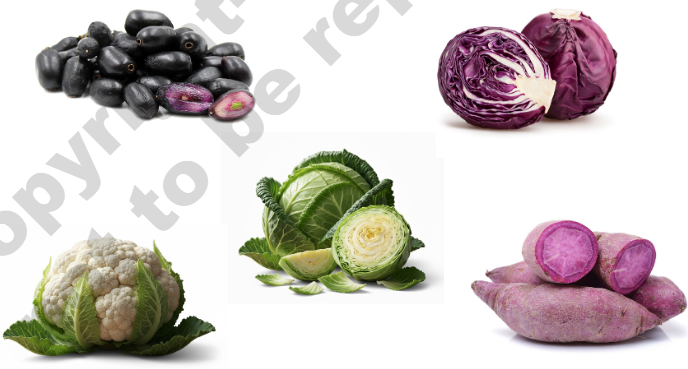
Ans. The natural acid-base indicators are: Turmeric, Red Rose Extract, Red Cabbage Juice, and Butterfly Pea Flower Extract.
Multiple Choice Questions (MCQs)
1. Acids generally taste:
(A) Sweet
(B) Sour
(C) Bitter
(D) Salty
Answer: (B)
2. Which acid is naturally present in lemon juice?
(A) Hydrochloric acid
(B) Citric acid
(C) Acetic acid
(D) Lactic acid
Answer: (B)
3. Bases generally feel ________ to touch.
(A) Rough
(B) Hot
(C) Soapy/slippery
(D) Sticky
Answer: (C)
4. What is the chemical name of baking soda?
(A) Sodium carbonate
(B) Sodium bicarbonate
(C) Sodium chloride
(D) Calcium hydroxide
Answer: (B)
5. Which indicator is extracted from lichens?
(A) Turmeric
(B) Phenolphthalein
(C) Litmus
(D) Methyl orange
Answer: (C)
6. Blue litmus paper turns ________ when dipped in an acidic solution.
(A) Green
(B) Yellow
(C) Red
(D) White
Answer: (C)
7. What acid is found in curd (sour milk)?
(A) Tartaric acid
(B) Oxalic acid
(C) Lactic acid
(D) Ascorbic acid
Answer: (C)
8. The reaction between an acid and a base to form salt and water is called:
(A) Evaporation
(B) Neutralisation
(C) Crystallisation
(D) Condensation
Answer: (B)
9. Which base is present in window cleaners?
(A) Magnesium hydroxide
(B) Calcium hydroxide
(C) Ammonium hydroxide
(D) Sodium hydroxide
Answer: (C)
10. Antacid tablets usually contain:
(A) Formic acid
(B) Magnesium hydroxide
(C) Hydrochloric acid
(D) Potassium hydroxide
Answer: (B)
11. Vinegar contains which of the following acids?
(A) Acetic acid
(B) Formic acid
(C) Citric acid
(D) Nitric acid
Answer: (A)
12. What colour does turmeric turn when exposed to a basic substance?
(A) Blue
(B) Yellow
(C) Reddish-brown
(D) Green
Answer: (C)
13. A solution that does not change the colour of either red or blue litmus is called:
(A) Acidic
(B) Basic
(C) Neutral
(D) Indicator
Answer: (C)
14. Which acid is produced in the human stomach to help with digestion?
(A) Sulphuric acid
(B) Nitric acid
(C) Hydrochloric acid
(D) Acetic acid
Answer: (C)
15. Factory wastes are generally treated with basic substances before discharging into water bodies because the waste is usually:
(A) Basic
(B) Acidic
(C) Neutral
(D) Sweet
Answer: (B)
16. Slaked lime is chemically known as:
(A) Calcium oxide
(B) Calcium carbonate
(C) Calcium hydroxide
(D) Calcium chloride
Answer: (C)
17. Which of the following is NOT an acid?
(A) Tartaric acid
(B) Baking soda
(C) Ascorbic acid
(D) Lactic acid
Answer: (B)
18. Calamine solution, applied to soothe ant bites, contains:
(A) Zinc carbonate
(B) Copper sulphate
(C) Sodium chloride
(D) Magnesium oxide
Answer: (A)
19. Tamarind and grapes are sour due to the presence of:
(A) Oxalic acid
(B) Lactic acid
(C) Tartaric acid
(D) Citric acid
Answer: (C)
20. When an acidic soil is treated with quicklime or slaked lime, the process is an example of:
(A) Neutralisation
(B) Evaporation
(C) Precipitation
(D) Crystallisation
Answer: (A)
Long Questions with Answers
1. Explain the properties of acids and give three examples of natural acids.
Answer: Acids are chemical substances that typically possess a characteristic sour taste. They have the ability to turn blue litmus paper red, which is a primary test for acidity. When dissolved in water, they can conduct electricity, and they react strongly with bases to form salts. Three common examples of natural acids include citric acid (found in lemons and oranges), lactic acid (found in curd or sour milk), and acetic acid (found in vinegar).
2. Discuss the properties of bases and how they differ from acids.
Answer: Bases are substances that taste distinctly bitter and feel soapy or slippery when rubbed between the fingers. Unlike acids, bases turn red litmus paper blue. While acids neutralize bases, bases neutralize acids to form neutral salts and water. Examples include baking soda, soap, and calcium hydroxide. Therefore, their fundamental taste, tactile feel, and reaction with litmus indicators represent their core differences from acids.
3. What are indicators? Name two natural and two synthetic indicators.
Answer: Indicators are specialized substances used to determine whether a given solution is acidic or basic. They function by changing their colour distinctly when introduced into an acidic or basic environment, removing the need to taste potentially harmful chemicals. Turmeric and litmus are excellent examples of natural indicators obtained from nature. Conversely, phenolphthalein and methyl orange are common synthetic indicators created in laboratories.
4. Describe the neutralisation reaction with a word equation and a practical example.
Answer: Neutralisation is a fundamental chemical reaction where an acid and a base interact with each other to mutually destroy their respective acidic and basic properties. This reaction universally produces a new substance called salt, along with water and the evolution of heat. The word equation is: Acid + Base → Salt + Water. A practical example is the reaction between hydrochloric acid (in the stomach) and magnesium hydroxide (antacid) to cure indigestion.
5. How is soil treatment carried out when agricultural land becomes too acidic or too basic?
Answer: Plants require neutral soil for optimal growth. If chemical fertilizers make the soil too acidic, farmers treat it by adding strong bases like quicklime (calcium oxide) or slaked lime (calcium hydroxide) to neutralise the excess acid. Conversely, if the soil is too basic, organic matter like compost or manure is added. This organic matter gradually releases organic acids, which safely neutralise the basic nature of the soil.
6. Explain how antacids provide relief from acidity in the stomach.
Answer: The human stomach naturally secretes hydrochloric acid to break down food. Sometimes, due to spicy food or stress, it overproduces acid, causing a painful burning sensation called acidity. Antacids are mild bases, commonly containing milk of magnesia (magnesium hydroxide). When consumed, these basic substances travel to the stomach and initiate a neutralisation reaction with the excess hydrochloric acid, balancing the stomach’s pH and providing quick relief from the pain.
7. Why is factory waste often treated before being discharged into rivers?
Answer: Factory effluents and industrial wastes frequently contain highly concentrated, dangerous acids. If these untreated acidic wastes are directly dumped into rivers or lakes, they drastically lower the pH of the water. This acidic environment is highly toxic and can quickly kill fish, aquatic plants, and other marine organisms. Therefore, factories must treat these wastes by adding basic substances to neutralise the acids before safely discharging them.
8. How does tooth decay happen, and how does toothpaste help prevent it?
Answer: Tooth decay begins when bacteria in the mouth break down leftover food particles and sugars stuck between teeth, producing strong acids as a byproduct. These acids gradually dissolve the hard protective enamel of the teeth. Toothpastes are formulated to be basic in nature. Brushing introduces these bases to the mouth, which neutralise the harmful bacterial acids and physically scrub away plaque, preventing enamel erosion and decay.
9. Differentiate between natural and synthetic indicators, providing examples.
Answer: Natural indicators are dyes and pigments extracted directly from biological sources like plants, flowers, or lichens without chemical alteration. Examples include turmeric, litmus, and red cabbage juice. Synthetic indicators, on the other hand, are man-made chemical compounds manufactured in industrial laboratories specifically to test pH. Examples include phenolphthalein, which turns pink in bases, and methyl orange, which turns red in acids.
10. Describe what happens when you apply calamine solution to an ant bite.
Answer: When an ant bites, particularly a red ant, it injects an irritating acidic substance called formic acid under the skin, leading to swelling, redness, and a burning pain. Calamine solution contains zinc carbonate, which is a mild base. Applying this solution directly over the bite site causes a localised neutralisation reaction, effectively cancelling out the formic acid’s effects and quickly relieving the itching and pain.
11. Can a substance be neither acidic nor basic? Explain with an example.
Answer: Yes, certain substances lack both acidic and basic properties; these are classified as neutral substances. They do not alter the colour of any standard indicators, like red or blue litmus paper, remaining completely unreactive in terms of pH. Pure distilled water is a perfect example of a neutral liquid. Similarly, a solution made by dissolving common table salt (sodium chloride) or sugar in water is entirely neutral.
12. If a blue litmus paper is dipped in a solution and remains blue, what is the nature of the solution?
Answer: If the blue litmus paper does not change its colour to red, it indicates the absence of an acidic environment. Therefore, the solution can either be basic, as bases turn red litmus blue but leave blue litmus unchanged, or it could be a neutral solution, which does not affect the colour of either red or blue litmus paper. Further testing with red litmus is required for certainty.
13. How would you test the nature of a completely colourless liquid like Sprite or 7Up?
Answer: To test the nature of a clear aerated drink like Sprite, you would use both red and blue litmus papers. Dip the blue litmus paper into the drink; it will quickly turn red due to the presence of dissolved carbon dioxide (carbonic acid) and citric acid flavourings. If you dip the red litmus paper, it will remain red. This confirms that the colourless liquid is definitively acidic in nature.
14. What are salts, and how do their properties vary?
Answer: Salts are the resulting ionic compounds produced when an acid reacts with a base during a neutralisation reaction. While many people think of salts as entirely neutral (like sodium chloride), their actual nature depends on the strengths of the reacting acid and base. A strong acid and weak base form an acidic salt, a strong base and weak acid form a basic salt, and equal strengths produce a neutral salt.
15. Describe a simple experiment to observe a neutralisation reaction at home using household items.
Answer: Take a clear glass and pour some vinegar (acetic acid) into it. Add a few drops of red cabbage juice; the solution will turn bright red or pink, indicating high acidity. Slowly sprinkle baking soda (a base) into the glass and stir. You will see bubbles of carbon dioxide gas forming (effervescence), and the liquid will gradually change colour towards blue or green, visibly demonstrating the acid being neutralised by the base.