Class 10 Social Science Chapter 10 – Indian Democracy Complete Question Answer | ASSEB / SEBA
Class 10 Social Science (Political Science) Chapter 10 – Indian Democracy Complete Question Answers and Exam Solutions (ASSEB / SEBA Assam – English Medium)
The tenth chapter of the Class 10 Social Science syllabus (and the first chapter of the Political Science section), ‘Indian Democracy’, is the foundation for understanding our nation’s political structure. For the upcoming HSLC 2027 board examinations, we have meticulously formulated a complete set of question answers (Class 10 Social Science Chapter 10 Question Answer) perfectly aligned with the New ASSEB (Assam State School Education Board) Syllabus 2026-27 and the latest exam blueprint. This comprehensive Question Bank includes in-text Very Short Answers (VSA), Short Questions, Long Answers, and thorough solutions to Previous Years’ Board Exam Questions (PYQ). Ospin Academy provides these notes with absolute clarity to elevate your exam preparation.
This chapter offers an in-depth understanding of the Indian Constitution, the ideals embedded in its Preamble (Sovereign, Socialist, Secular, Democratic, Republic), and the core characteristics of India’s parliamentary democracy and federal system. Grasping these constitutional concepts is highly crucial for board examinees. Our Question Bank ensures that you not only master the standard textbook exercises but also confidently tackle the Extra Board Questions and Answers that frequently appear in the HSLC exams.
What you will learn and get from this chapter:
- A clear understanding of the ideals and philosophy of the Indian Constitution as reflected in the Preamble.
- Detailed explanations of India’s parliamentary system of government and its federal characteristics with unitary features.
- Perfectly structured answers for 1-mark objective questions (VSA/MCQ) related to constitutional amendments and drafting dates.
- Point-wise, easy-to-memorize solutions for 2-3 marks short notes and 4-5 marks long descriptive questions.
- Comprehensive insights into the role of the Constitution in shaping modern Indian democracy.
Special benefits from Ospin Academy for the HSLC 2027 Exam:
- A fully updated Chapter 10 Question Bank perfectly mapped to the new ASSEB blueprint for HSLC 2027.
- Verified and detailed solutions for Previous 10 Years’ Questions (PYQ) along with Pre-Board papers from multiple districts of Assam.
- 100% accurate, high-quality study materials (Class 10 Political Science Notes) written in simple English to facilitate rapid learning.
- Easily downloadable PDF format (PDF Download) optimized for smart, last-minute revision before the board exam.
- An expertly curated list of 100% Common Board Suggestion questions to maximize your scoring potential in Political Science.
Strengthen your understanding of our nation’s political framework and secure the Highest Marks in Social Science by starting your HSLC 2027 exam preparation with Ospin Academy today.
Class 10 Social Science Question Bank ASSEB HSLC 2027 | English Medium Chapter-wise Solutions PDF

Class 10: Social Science
Indian Democracy
HSLC English PYQs (2024–2026): Important MCQs with Answers
1. Why is India a socialist state ? {2026}
(i) All the ways and means of production would be nationalized.
(ii) Socialism shall be established through the equal distribution of the national income.
(iii) The economy of the country shall be determined by the people themselves.
(iv) Only the capitalist class of people shall determine the country’s economy.
(A) (i), (ii)
(B) (ii), (iii)
(C) (i), (ii), (iii)
(D) (i), (ii), (iii), (iv)
Answer: B
2. Choose the correct match from the following options about Indian Constitution: {2026}
(i) Cabinet Mission
(ii) Drafting Committee
(iii) Indian Constitution adopted
(iv) Execution of Indian Constitution
A) 29th August, 1947
B) 26th January, 1950
C) March 1946
D) 26th November 1949
(A) (i) – (A), (ii) – (C), (iii) – (D), (iv) – (B)
(B) (i) – (C), (ii) – (A), (iii) – (B), (iv) – (D)
(C) (i) – (B), (ii) – (D), (iii) – (A), (iv) – (C)
(D) (i) – (C), (ii) – (A), (iii) – (D), (iv) – (B)
Answer: D
3. Two statements are given in the question below as Assertion (A) and Reason (R). Read the statements and choose the correct option.{2025}
Assertion (A): To grasp the inner spirit of the Constitution, one should go through the Preamble of the Constitution.
Reason (R): Each and every word mentioned in the Preamble bears ideals, philosophy and objectives of the Constitution.
(A) (A) is true, but (R) is false.
(B) (A) is false, but (R) is true.
(C) Both (A) and (R) are true; but (R) is not the correct explanation of (A).
(D) Both (A) and (R) are true; and (R) is the correct explanation of (A).
Answer: D
4. Why is a democratic government regarded as a better choice over other forms of government? {2025}
(i) It promotes equality among citizens.
(ii) It ensures economic development.
(iii) It provides a method of resolving conflict.
(A) (i), (ii)
(B) (i), (iii)
(C) (ii), (iii)
(D) (i), (ii), (iii)
Answer: B
5. Find out the feature(s) of the federal system of India from the alternatives given below: {2024}
(i) Provision of separate constitution for the constituent states.
(ii) Dual Citizenship
(A) Only (i) is correct
(B) Only (ii) is correct
(C) Both (i) and (ii) are correct
(D) Both (i) and (ii) are incorrect
Answer: D
6. Which of the following persons was a member of the Drafting Committee of the Constitution of India? {2024}
(A) Rajendra Prasad
(B) Dr. Sachidananda Saha
(C) Syed Mahammad Sadulla
(D) Gopinath Bordoloi
Answer: C
Assam’s Various District Pre‑Board (2025–26) MCQs With Answers
1. Which amendments of the constitution included the words ‘socialist’ and ‘secular’: {Bajali}
(A) Amendment No 42 1976
(B) 43rd Amendment of 1977
(C) Amendment No 46 of 1983
(D) 49th Amendment of 1984
Answer: A
2. The British Government sent a Cabinet Mission to India: {Bajali}
(A) The industries, enterprises and factories established by the British in India were taken to England.
(B) To strictly rule over India and suppress the freedom movement.
(C) In order to creat the constitution the necessary environment and preparations being carried out.
(D) For international good relations, maintaining world peace and the welfare of the people.
Answer: C
3. Which Act introduced the parliamentary system in colonial India? {Bajali}
(A) Partition of Bengal 1905
(B) Government of India Act. 1858
(C) Government of Indian Act. 1935
(D) Government of Indian Act. 1919
Answer: C
4. Who among the following was not a member of drafting Committe of the constitution? {Baksa}
(A) Jawaharlal Nehru
(B) K.M. Munshi
(C) Syed Mahammad Saadullah
(D) N. Madhava Rao
Answer: A
5. The question of summons to statements as claim (A) and reason (R). Read the statements and choose the correct option. {Baksa}
Claim ‘A’ : Indian federation system is a peculliar federation.
‘R’: India has dual citizenship system.
(A) Claim (A) is correct and (R) is incorrect and ‘R’ is not the correct interpretation of ‘A’.
(B) ‘A’ is incorrect and ‘R’ is correct and ‘R’ is not the correct interpretation of’A’.
(C) Both ‘A’ and ‘R’ are correct.
(D) Both ‘A’ and ‘R’ are incorrect.
Answer: A
6. When was the 42nd Amendment to the constitution of India passed? {Barpeta}
(A) In 26th January 1976
(B) In 18th December 1976
(C) In 18th December 1972
(D) In 26th January 1972
Answer: B
7. Two statements are given in the question below as Assertation (A) and Reason (R). Read the statements and choose the correct option. {Barpeta}
Assertation (A): India is a socialist, secular and democratic republic country.
Reason (R): These words were added to the Constitution of India through the 42nd Amendment to the constitution.
(A) (A) is true, (R) is false
(B) (A) is false, (R) is true
(C) Both (A) and (R) are true, but (R) is not correct explination of (A)
(D) Both (A) and (R) are true, but (R) is the correct explination of (A)
Answer: D
8. Which among the following statements is/are correct about the constitution of India? {Barpeta}
(i) Article 1 of the constitution declares India to be a Union of States.
(ii) There is duel citizenship in India
(iii) The states in India are less powerful than the center
(iv) The federal system has been introduced in India following the constitution of the USA
(A) i, iii, iv
(B) i
(C) ii, iii, iv
(D) i, iii
Answer: D
9. Which country is regarded as ‘homeland’ of Federation? {Biswanath}
(A) India
(B) China
(C) America
(D) England
Answer: C
10. Who among the following person was not a member of the constitution Drafting Committee of India? {Biswanath}
(A) N. Gopalaswami Ayengar
(B) D.P. Khaiten
(C) K.M Munshi
(D) Jawaharlal Nehru
Answer: D
11. Through the 42nd constitutional amendment of 1976 three important words were incorporated in the preamble of the Indian Constitution. These words are – {Bongaigaon}
(A) Sovereign, Republic, Unity
(B) Socialist, Secular, Unity
(C) Democratic, Republic, Unity
(D) Secular, Sovereign, Unity
Answer: B
12. In India, the chairman of the National Human Rights Commission is to be – {Bongaigaon}
(A) Chief Justice of the Supreme Court.
(B) Chief Justice of the High Court.
(C) Retired Chief Justice of the Supreme Court.
(D) Retired Chief Justice of the High Court.
Answer: C
13. Which one of the following persons was a member of the drafting committee of the constitution of India? {Bongaigaon}
(A) Dr. Rajendra Prasad
(B) Dr. Sachidananda Sinha
(C) Syed Muhammad Sadulla
(D) Gopinath Bordoloi
Answer: C
14. 26 November, 1949 is an important date in the political history of India. Why? {Cachar}
(A) Handing over the draft copy of the new India Constitution to Dr. Rajendra Prasad.
(B) Constituent Assembly was formed to prepare a draft constitution for the new Constitution of India.
(C) Creation of a Drafting Committee to create a ne constitution.
(D) The new constitution of India came into force.
Answer: A
15. The Government of India Act, ______ introduced parliamentary form of Government in a limited form in the pre-independence era. {Cachar}
(A) 1909
(B) 1919
(C) 1935
(D) 1946
Answer: C
16. Which act elevated the post of the Governor of Bangal to the level of Governor General. {Dhubri}
(A) Regulating Act, 1773
(B) Charter Act, 1833
(C) Government of India Act, 1858
(D) Government of India Act, 1935
Answer: A
17. Which of the following system of government is adopted by India? {Dhubri}
(A) Parliamentary government
(B) Presidential government
(C) Unitary government
(D) Dictator government
Answer: A
18. Consider the following statements – {Dhubri}
(P) The process of making a constitution had began even before India Attained her independence.
(Q) B.R. Ambedkar was the president of constituent assembly.
(A) P correct Q incorrect
(B) P incorrect Q correct
(C) P and Q both are correct
(D) P and Q both are incorrect
Answer: A
19. For which of the follow ing reasons is India called a Democratic Republic? {Goalpara}
(i) President of India is elected mdirectly by the people of India.
(ii) The post of President is not hereditary.
(iii) The Prime Minister will appoint the President.
(A) (i), (ii) and (ii)
(B) (i) and (ii)
(C) (i) and (ii)
(D) (ii) and (iii)
Answer: B
20. Identify the correct set of statements regarding the Indian Constitution: {Hailakandi}
a)It was adopted on November 26, 1949.
b)It came into force on January 26, 1950.
c) It is the shortest written constitution in the world.
d) It derives its authority directly from the people of India.
(A) 1, 2, and 3
(B) 1, 2, and 4
(C) 2, 3, and 4
(D) All of the above
Answer: B
21. Which of the following is a characteristic feature of the Parliamentary form of government in India? {Hailakandi}
(A) Strict separation of powers between the Legislature and Executive.
(B) The Head of State is also the Head of Government.
(C) Existence of two heads: a Nominal Head (President) and a Real Head (Prime Minister)
(D) The Judiciary
Answer: C
22. A dispute arises between the Government of India and the Government of Assam regarding the management of water resources from the Brahmaputra River.The State government claims it has the sole right, while the Union government argues it involves national security and interstate commerce.
According to the Indian Constitution, which institution has the authority to resolve this conflict? {Hailakandi}
(A) The President of India
(B) The Prime Minister’s Office
(C) The Supreme Court of India
(D) The NITI Aayog
Answer: C
23. Assertion (A) : In a democracy, the rule of low is mandatory. {Jorhat}
Reason (R) : No citizen, excluding leaders, is above the law.
(A) Both (A) and (R) are Correct, and R is the correct explanation of A.
(B) Both (A) and (R) are correct, But R is not the correct explanation of (A).
(C) (A) is true, (R) is false.
(D) (A) is false,(R) is true.
Answer: C
24. The Preamble declares India as a Sovereign nation. Which of the following actions would violate this ideal? {Jorhat}
(A) India singging a mutual trade agreement with another country.
(B) India allowing foreign countries to control its defence decisions.
(C) India participating in International peace missions.
(D) India hosting international sports events.
Answer: B
25. Assertion (A) : In recent years the political experts has termed Indian Federal system as cooperative federation. {Kamrup M}
Reason (R): Though there is separation of power between central and state yet all the strategic power is accumulated in the hand of centre.
(A) A and R both true and R is the correct explanation of A.
(B) A and R both are true but R is not the correct explanation of A
(C) A is correct but R is not.
(D) A is not correct but R is correct
Answer: B
26. Sovereignty means- {Kamrup R}
(A) The supreme power of country
(B) The highest capacity of the individual
(C) A kind of power
(D) None of these
Answer: A
27. What is the main reason for the formation of the Sarkaria Commission? {Kamrup R}
(A) Demand of independence of the member states.
(B) Protect the sovereignty and integrity of the country.
(C) For co-operation between the centre and the state.
(D) For resolving of the conflicts between centre and states.
Answer: C
28. The head of the states of India is- {Kokrajhar}
(A) The Prime Minister
(B) The Presiden
(C) The Chief Justice of the Supreme Court
(D) The Vice President
Answer: B
29. India has been declared as a ‘Union of States’ in- {Kokrajhar}
(A) Article No. 1
(B) Article No. 2
(C) Article No. 4
(D) Article No. 21
Answer: A
30. Which of the following sequence of events of correct: {Lakhimpur}
(A) Cabinet Mission sent to India – Formation of constituent Assembly – India attains independence – New constitution comes into force.
(B) Formation of constituent Assembly – Cabinet Mission sent to India – India attains independence-New constitution comes into force.
(C) India attains independence – Formation of constituent Assembly – Cabinet Mission sent to India-New constitution comes into force.
(D) Cabinet Mission sent to India – India attains independence- Formation of constituent Assembly – New constitution comes into force.
Answer: A
31. Where the fedaral system first introduced in the world- {Lakhimpur}
(A) India
(B) United State of America
(C) Canada
(D) Great Britain
Answer: B
32. Consider the statements (1) and (II) about the features of federal system of India and choose the correct option- {Nalbari}
Statement-I: The constitution divides powers between the union and state governments through three schedules.
Statement-II: India has a Dual citizenship system.
(A) I is true, II is false
(B) I is false, II is true
(C) Both are true
(D) Both are false
Answer: A
33.The Indian parliament is supreme legislative body of India. It is bicameral in structure, meaning it has two houses. Its main components are- {Sibsagar}
(a) The Lok Sabha
(b) The Rajya Sabha
(c) The President
(d) The Prime Minister
(A) a, b, c
(B) a, c, d
(C) a, b, d
(D) b, c, d
Answer: A
34. Arrange the following events in correct chronological order- {Sibsagar}
(a) Nehru’s objective Resoulution
(b) Cabinet Mission in India
(c) Formation of government by labour party in England
(d) Formation of the constitutent Assembly
(A) a – b – c – d
(B) b – c – d – a
(C) c – b – d – a
(D) c – a – d – b
Answer: C
35. Which of the following word was included in the preamble as per 42th Amendment to Indian constitution in 1976. {Sonitpur}
(A) Sovereign
(B) Democratic
(C) Republic
(D) Socialist
Answer: D
36. Read the assertion (A) and reason (R) and choose the correct option. {Sonitpur}
Assertion (A):Indian federal system is known as co-operative federal system.
Reason (R):Indian federal system sustains on co operation among centre and states
(A) A is true but R is in correct
(B) A is incorrect but R is correct.
(C) Both A and R are correct, but R duesnot explanation A.
(D) Both A and R are correct but R explanation A.
Answer: D
37. India has been declared as “Union of States” in – {Sribhumi}
(A) Article No. 1
(B) Article No. 2
(C) Article No. 4
(D) Article No. 5
Answer: A
38. Assertion (A) : The preamble is called the soul of the constitution. {Sribhumi}
Reason (R) : The preamble does not reflect the basic ideals and objectives of the constitution.
(A) Both A and R are correct and R is the correct explanation of A.
(B) Both A and R are correct but R is not the correct explanation of A.
(C) Assertion is correct, but reason is wrong.
(D) Assertion is wrong, but reason is correct.
Answer: C
39. In which article of the Indian Constitution India is referred to as a Union of states? {Salmara}
(A) Article 1 of the Constitution
(B) Article 2 of the Constitution
(C) Article 3 of the Constitution
(D) Article 4 of the Constitution
Answer: A
40. If, Congress: the USA, Parliament: Canada, Parliament: England, then : India? {Salmara}
(A) Loksabha
(B) Sansad
(C) Rajya Sabha
(D) Bidhan Sabha
Answer: B
41. Which of the following pairs are correctly match? {Salmara}
i. Arrival of Cabinet mission in India: May 1946
ii. First meeting of the constituent Assembly: 9 Dec, 1946
iii. Formation of the drafting committee of the constitution: 29 July 1947
iv. The constitution of India was came into force: 26 January 1950
(A) i, ii
(B) ii, iii
(C) i, iii
(D) ii, iv
Answer: D
42. “Co-operative Federalism” is- {Udalguri}
(A) Dependent on the cooperation of State-District.
(B) Dependent on the cooperation of Centre-State.
(C) Dependent only on the Centre.
(D) Dependent on the co-operation of Centre-State-District
Answer: B
43. Which of the following is not true in the Indian Federal System? {Udalguri}
(A) Federation’s Homeland
(B) Union of States
(C) Centralised Federation
(D) Exceptional Federation
Answer: A
44. Indian Constitution was enforced on came into effect in – {Udalguri}
(A) 1935
(B) 1947
(C) 1949
(D) 1950
Answer: D
Probable Multiple Choice Questions with Answers for HSLC 2027
1. When was the first meeting of the Constituent Assembly of India held?
(A) 9 December 1946
(B) 15 August 1947
(C) 26 November 1949
(D) 26 January 1950
Answer: A
2. Who introduced the ‘Objective Resolution’ in the Constituent Assembly?
(A) Dr. B. R. Ambedkar
(B) Pandit Jawaharlal Nehru
(C) Dr. Rajendra Prasad
(D) Mahatma Gandhi
Answer: B
3. In which year were the words ‘Socialist’ and ‘Secular’ added to the Preamble of the Indian Constitution?
(A) 1951
(B) 1976
(C) 1978
(D) 1985
Answer: B
4. Through which Constitutional Amendment were changes made to the Preamble?
(A) 42nd Amendment
(B) 44th Amendment
(C) 73rd Amendment
(D) 86th Amendment
Answer: A
5. Why is India called a ‘Republic’?
(A) It has a written constitution
(B) The Head of State is elected by the people
(C) Both Hindus and Muslims live here
(D) The Head of State is hereditary
Answer: B
6. Which country is known as the birthplace of parliamentary democracy in the world?
(A) United States of America
(B) France
(C) England
(D) Switzerland
Answer: C
7. In the Indian federal system, which entity has been granted more power?
(A) The State Government
(B) The Central Government
(C) The Local Panchayats
(D) The Supreme Court
Answer: B
8. Who is the nominal executive or the head of state in India’s parliamentary system?
(A) The Prime Minister
(B) The Speaker of the Lok Sabha
(C) The President
(D) The Chief Justice
Answer: C
9. Which of the following countries practices a ‘Dual Citizenship’ system?
(A) India
(B) England
(C) United States of America
(D) Japan
Answer: C
10. How is India described in Article 1 of the Indian Constitution?
(A) A Union of States
(B) A full Federal State
(C) A Unitary State
(D) A Quasi-Federal State
Answer: A
11. What is the meaning of the word ‘Sovereign’ as mentioned in the Preamble?
(A) India is a secular country
(B) All citizens of India have equal rights
(C) India is completely free from any foreign control in its internal and external affairs
(D) India is a socialist state
Answer: C
12. Which of the following individuals described the Indian federal system as ‘Quasi-Federal’?
(A) Dr. B. R. Ambedkar
(B) K. C. Wheare
(C) Pandit Jawaharlal Nehru
(D) Granville Austin
Answer: B
13. What was the date of adoption of the Indian Constitution?
(A) 9 December 1946
(B) 15 August 1947
(C) 26 November 1949
(D) 26 January 1950
Answer: C
14. What is the primary difference between the parliamentary system of England and that of India?
(A) There is no Prime Minister in England
(B) In India, Parliament is supreme, but in England, the Constitution is supreme
(C) In England, Parliament is supreme (Parliamentary Supremacy), but in India, the Constitution is supreme (Constitutional Supremacy)
(D) The President of India is hereditary
Answer: C
15. What does the word ‘Fraternity’ in the Preamble signify?
(A) A feeling of brotherhood and unity among all citizens of the country
(B) Good relations with neighboring countries
(C) Loyalty towards the government
(D) Providing shelter to foreign citizens
Answer: A
16. Who was the Chairman of the Drafting Committee of the Indian Constitution?
(A) Dr. Rajendra Prasad
(B) B. N. Rau
(C) Dr. B. R. Ambedkar
(D) K. M. Munshi
Answer: C
17. In whom is the real executive power vested in India?
(A) The President
(B) The Prime Minister and the Council of Ministers
(C) The Parliament
(D) The Supreme Court
Answer: B
18. “We the people of India…” – What does this opening phrase of the Constitution prove?
(A) The Constitution was a gift from the British
(B) The true source and ultimate authority of the Constitution are the common people of India
(C) The Constitution is only meant for political leaders
(D) The states of India drafted the Constitution
Answer: B
19. What is the true meaning of ‘Secularism’ in the Indian democracy?
(A) The state has its own official religion
(B) The state gives equal status to all religions and has no official state religion
(C) The state strictly prohibits religious ceremonies
(D) The state only protects the religion of minorities
Answer: B
20. Which of the following types of liberty is NOT mentioned among the ideals in the Preamble of the Indian Constitution?
(A) Liberty of thought and expression
(B) Liberty from economic exploitation
(C) Liberty of belief, faith, and worship
(D) Liberty to possess firearms
Answer: D
21. Consider the following statements and choose the correct answer:
(i) The Constitution of India is a written constitution.
(ii) In India, states have their own separate constitutions.
(iii) The Indian federal system has implemented a single citizenship system.
(A) Only (i) and (ii) are correct
(B) Only (ii) and (iii) are correct
(C) Only (i) and (iii) are correct
(D) All (i), (ii), and (iii) are correct
Answer: C
22. The federal system of India most closely emulates the federal model of which country?
(A) United States of America
(B) Canada
(C) Russia
(D) Australia
Answer: B
23. Match Column A with Column B and select the correct option:
Column A
(a) Sovereign
(b) Socialist
(c) Republic
Column B
(i) Elected head of state
(ii) Free from external control
(iii) Eradication of inequalities in income and status
(A) (a)-ii, (b)-iii, (c)-i
(B) (a)-i, (b)-ii, (c)-iii
(C) (a)-iii, (b)-i, (c)-ii
(D) (a)-ii, (b)-i, (c)-iii
Answer: A
24. Which of the following is NOT a characteristic of the Indian federation?
(A) Division of power between the center and states
(B) A written and rigid constitution
(C) Dual citizenship
(D) An independent judiciary
Answer: C
25. Which of the following statements about England’s parliamentary system is incorrect?
(A) In England, the Parliament is supreme.
(B) The head of state in England is not elected, but hereditary.
(C) In England’s parliamentary system, the Supreme Court can strike down laws passed by the Parliament.
(D) The House of Lords is the upper house in England.
Answer: C
26. Why is the Indian federal system said to have a ‘Unitary bias’?
(A) Because states possess more power than the center.
(B) Because during an emergency, the central government becomes supremely powerful.
(C) Because the Governor runs the state according to his own will.
(D) Because there is only one political party in India.
Answer: B
27. Arrange the following events in chronological order:
(i) Addition of the word ‘Socialist’ to the Preamble
(ii) First meeting of the Constituent Assembly
(iii) The Constitution of India coming into force
(iv) Introduction of Nehru’s ‘Objective Resolution’
(A) (ii) → (iv) → (iii) → (i)
(B) (ii) → (iv) → (i) → (iii)
(C) (iv) → (ii) → (iii) → (i)
(D) (ii) → (iii) → (iv) → (i)
Answer: A
28. What kind of judiciary is generally present in a federal system?
(A) A judiciary subordinate to the executive
(B) Completely separate judiciaries for the center and states
(C) An independent and impartial Supreme Court
(D) Only a state-level judiciary
Answer: C
29. What dimensions does the word ‘Justice’ cover in the Preamble?
(A) Only social justice
(B) Only economic justice
(C) Social, economic, and political justice
(D) Political and legal justice
Answer: C
30. What is the Upper House of the Indian Parliament called?
(A) Lok Sabha
(B) Rajya Sabha
(C) Legislative Council
(D) House of Lords
Answer: B
31. Which of the following countries exhibits a ‘True Federation’ where states have their own separate constitutions?
(A) United States of America
(B) India
(C) Sri Lanka
(D) France
Answer: A
32. Match Column A with Column B:
Column A
(a) Single citizenship
(b) Objective Resolution
(c) Motherland of Parliamentary democracy
Column B
(i) Jawaharlal Nehru
(ii) England
(iii) Feature of the Indian Federation
(A) (a)-iii, (b)-ii, (c)-i
(B) (a)-i, (b)-iii, (c)-ii
(C) (a)-iii, (b)-i, (c)-ii
(D) (a)-ii, (b)-i, (c)-iii
Answer: C
33. From the constitution of which country was the concept of starting the Indian Constitution with a Preamble inspired?
(A) Soviet Russia
(B) France
(C) United States of America
(D) Ireland
Answer: C
34. Who appoints the Governor of a state in India? (Which is a sign of unitary bias)
(A) The Chief Minister of the state
(B) The people of the state through elections
(C) The President of India
(D) The Chief Justice of the Supreme Court
Answer: C
35. To what number was the total membership of the ‘Constituent Assembly’ reduced after the partition of India (1947)?
(A) 389 members
(B) 299 members
(C) 284 members
(D) 226 members
Answer: B
36. How many lists have been provided in the Indian Constitution for the division of power between the center and the states?
(A) Two
(B) Three
(C) Four
(D) Five
Answer: B
37. Which of the following statements does NOT fit with Indian secularism?
(A) The state does not favor any religion.
(B) Religious instruction can be made compulsory in educational institutions.
(C) Every individual can adopt and propagate the religion of their choice.
(D) The state does not discriminate against anyone on the basis of religion.
Answer: B
38. When did the ‘Cabinet Mission’ arrive in India, on whose recommendation the Constituent Assembly was formed?
(A) 1942
(B) 1945
(C) 1946
(D) 1947
Answer: C
39. In India, in whom are the Residuary Powers vested?
(A) The State Governments
(B) The Central Government (Parliament)
(C) The President
(D) The Local Governments
Answer: B
40. The Preamble of the Constitution is—
(A) The soul and mirror of the Constitution.
(B) A legal and enforceable article of the Constitution.
(C) Applicable only during a state of emergency.
(D) Enforceable by the courts of law.
Answer: A
41. Assertion (A): India is a sovereign state.
Reason (R): India is not subordinate to any foreign power in determining its internal and foreign policies.
(A) Both (A) and (R) are true, and (R) is the correct explanation of (A).
(B) Both (A) and (R) are true, but (R) is not the correct explanation of (A).
(C) (A) is true, but (R) is false.
(D) (A) is false, but (R) is true.
Answer: A
42. Assertion (A): Despite having a federal system, India has adopted a single citizenship system.
Reason (R): Maintaining unity and integrity among the diverse races and communities of India was the primary goal of the framers of the Constitution.
(A) Both (A) and (R) are true, and (R) is the correct explanation of (A).
(B) Both (A) and (R) are true, but (R) is not the correct explanation of (A).
(C) (A) is true, but (R) is false.
(D) (A) is false, but (R) is true.
Answer: A
43. Assertion (A): In England, the Parliament holds supreme power.
Reason (R): England does not have a specific written constitution that can limit the powers of the Parliament.
(A) Both (A) and (R) are true, and (R) is the correct explanation of (A).
(B) Both (A) and (R) are true, but (R) is not the correct explanation of (A).
(C) (A) is true, but (R) is false.
(D) (A) is false, but (R) is true.
Answer: A
44. Assertion (A): India is called a quasi-federal state.
Reason (R): In India, only the central government exists, and there is no existence of state governments.
(A) Both (A) and (R) are true, and (R) is the correct explanation of (A).
(B) Both (A) and (R) are true, but (R) is not the correct explanation of (A).
(C) (A) is true, but (R) is false.
(D) Both (A) and (R) are false.
Answer: C
45. Assertion (A): The Preamble of the Indian Constitution cannot be enforced in a court of law.
Reason (R): The Preamble is an ideological document much like the Directive Principles of State Policy; it is not a legal provision.
(A) Both (A) and (R) are true, and (R) is the correct explanation of (A).
(B) Both (A) and (R) are true, but (R) is not the correct explanation of (A).
(C) (A) is true, but (R) is false.
(D) (A) is false, but (R) is true.
Answer: A
46. Assertion (A): The ‘Objective Resolution’ introduced by Jawaharlal Nehru was later adopted as the Preamble of the Constitution.
Reason (R): This resolution clearly described the core ideals, philosophy, and goals of the Constitution of independent India.
(A) Both (A) and (R) are true, and (R) is the correct explanation of (A).
(B) Both (A) and (R) are true, but (R) is not the correct explanation of (A).
(C) (A) is true, but (R) is false.
(D) (A) is false, but (R) is true.
Answer: A
47. Assertion (A): In the Indian federation, there are two separate constitutions for the center and the states.
Reason (R): Just like in the United States of America, states in India can secede from the federation according to their own will.
(A) Both (A) and (R) are true, and (R) is the correct explanation of (A).
(B) Both (A) and (R) are true, but (R) is not the correct explanation of (A).
(C) (A) is true, but (R) is false.
(D) Both (A) and (R) are false.
Answer: D
48. Assertion (A): An independent judiciary has been provided for in India.
Reason (R): An impartial court is needed to resolve potential power conflicts between the center and the states in a federal system and to act as the guardian of the Constitution.
(A) Both (A) and (R) are true, and (R) is the correct explanation of (A).
(B) Both (A) and (R) are true, but (R) is not the correct explanation of (A).
(C) (A) is true, but (R) is false.
(D) (A) is false, but (R) is true.
Answer: A
49. Assertion (A): The President can run an autocratic rule in the Indian democracy.
Reason (R): In a parliamentary system, the President cannot perform functions without the advice of the Prime Minister and the Council of Ministers.
(A) Both (A) and (R) are true, and (R) is the correct explanation of (A).
(B) Both (A) and (R) are true, but (R) is not the correct explanation of (A).
(C) (A) is true, but (R) is false.
(D) (A) is false, but (R) is true.
Answer: D
50. Assertion (A): The word ‘Socialist’ mentioned in the Preamble sets the goal of establishing economic equality in India.
Reason (R): Through this, the state promises to make efforts for the equal distribution of wealth and to reduce the gap between the rich and the poor.
(A) Both (A) and (R) are true, and (R) is the correct explanation of (A).
(B) Both (A) and (R) are true, but (R) is not the correct explanation of (A).
(C) (A) is true, but (R) is false.
(D) (A) is false, but (R) is true.
Answer: A
HSLC PYQs (2016–2026): Important 2/3 Marks Short Questions
HSLC PYQs (2016–2026): Important 2‑ and 3‑Mark Short Questions
1. Write any two differences between the federal system of India and the U.S.A. {2026}
2. Read the description below and answer the question that follows:
Suppose, the government has set up a hospital in a village called Dambuk. The hospital provides free treatment to the Hindus. People of other religions have to bear the cost of treatment themselves.
Can government take such measures in a country like India? Give your opinion. {2025}
3. What is meant by Federal State? In which country in the world was the federal system introduced first? {2024}
4. Write three main differences between the parliamentary democratic system of India and that of England. {2024}
5. Who presided over the first meeting of the Constituent Assembly which was formed for the preparation of the constitution of India? {2023}
6. Write briefly the characteristics of the Indian Federal System. {2023}
7. From which country’s constitution the concept of India’s parliamentary democracy is followed? Mention two differences of the parliamentary democratic system of India as compared to that country. {2023}
8. Why is India called Sovereign Socialist Secular Democratic Republic? {2020}
9. Distinguish between direct and indirect election. {2016}
10. Do you support Coalition Government? Give three reasons. {2016}
HSLC PYQs (2018–2026): Important 4 Marks Long Questions
HSLC PYQs (2016–2026): Important 2‑ and 3‑Mark Short Questions
1. Explain in brief how the ideals of the Indian constitution have been manifested in its Preamble. {2022}
2. Briefly discuss how parliamentary democracy is practised in India. {2021}
3. Is India a federal country like that of the USA? Explain. {2020}
4. What is Parliamentary Democracy? Write the main difference between the Parliamentary Democracy System of India and that England. {2019}
5. Discuss the characteristics of the Indian Federal System. {2018}

District Pre Board (2025–26): Important 2 Marks Short Questions
1. Mention two differences of the parliamentary democratic system of India as compared with the parliamentary democratic system of England. {Bajali}
2. The panchayat built a rest house in Bagodi village, where only the upper castes can rest but the lower castes can not. Can such measures be taken in country like India ? Express your opinion. {Barpeta}
3. “India is a democratic state”- Explain. {Darrang}
4. From the given picture, mention the names of the members of the drafting committee and also identify the chairman from the photograph. {Hailakandi}
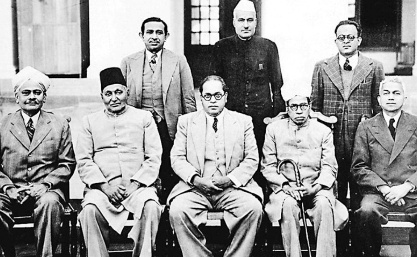
5. How does the democratic ideal reflects in the Preamble of Indian constitution? {Kamrup M}
6. Why did the makers of Indian constitution follow the Canadian Constitution rather than the American Constitution in introducing Federal system in India? {Kamrup M}
7. Why are the words “We the people of India” have been incorporated in the preamble? {Kokrajhar}
8. Why have the makers of the constitution mentioned ‘We the people of India’ in the preamble of the constitution of India? {Majuli}
9. The Centre is too powerful, in India. So the learned makers of the Indian Constitution have categorically mentioned our political system as “Quasi-federal,” “Peculiar federation,” Centralised federation and Federal in form but Unitary in Sprit”Do you agree with this statement? Give your opinion with reason. {Salmara}
District Pre Board (2025–26): Important 3 Marks Long Questions
10. Why India is known as soverign, secular, democratic and republic? {Baksa}
11. Explain the importance of the preamble in understanding the nature of Indian democracy. {Biswanath}
12. Which country is regarded as the Homeland of federation? Mention two characteristics of Indian federal system. {Bongaigaon}
13. In your village government has set up an industry. However only wealthy candidates are allowed to work here and no poor candidates can work here. Is this discriminatory policy allowed in India? Discuss. {Cachar}
14. What is meant by Socialist, Secular and Republic ? {Dhubri}
15. Write the obectives resolutions put forward by Nehru in relation to the Indian constitution. {Dhubri}
16. Discuss how the ideals of the Indian constitution have been manifested in its Preamble. {Jorhat}
17. Can an Indian be a citizen of his own state? Give reasons in support of your answer. {Kamrup R}
18. Mention why parliamentary democracy in England is different from Indian democracy. {Majuli}
19. Is there a true federal system in India? Give arguments in support of your answer. {Morigaon}
20. Write down three differences between the parliamentary democracy of England and that of India. {Nalbari}
21. What is secularism? Why is the concept of secularism considered a fundamental pillar of Indian Democracy? {Sibsagar}
22. Discuss, What do you understand by sovereign, socialist and secular. {Sonitpur}
23. Discuss the objective resolution put forwarded by Pandit Nehru in relation to the Indian constitution. {Sonitpur}
24. Why is India’s parliamentary democracy different from England’s? Discuss. {Tamulpur}
25. “Discrimination between rich and poor”. Which ideal of the preamble is harmed here? How do people benefit from this ideal? Point out three aspects. {Udalguri}
26. As a result of globalization, is there a fear that the country or the general public will lose their identity? Present your opinion. {Udalguri}
District Pre Board (2025–26): Important 4 Marks Long Questions
27. The Constitution of India has distributed power between the Central Government and the State Govts. through three lists.Which provision of these lists ensure India to be a quasi federal. Explain. {Kamrup R}
28. Discuss how the ideals of the Indian Constitution have been manifested in its preamble. {Sribhumi}
29. Write about the aims and principles of United Nations. {Sribhumi}
Some Important Most Probable 2 Marks Questions for HSLC 2027
1. What are the five core ideals enshrined in the Preamble of the Indian Constitution?
2. What is the significance of the Preamble of the Constitution? Write in two sentences.
3. Which new words were incorporated into the Preamble through the 42nd Constitutional Amendment?
4. Why is India called a ‘Sovereign’ state?
5. What do you understand by parliamentary democracy? Where is its birthplace?
6. Mention two main reasons for introducing a ‘Single Citizenship’ system in the Indian federation.
7. What does ‘Quasi-Federal State’ mean? Who gave this title to India?
8. What was the main objective of the ‘Objective Resolution’ introduced by Pandit Jawaharlal Nehru?
9. Write two main characteristics of the federal system of the United States of America that are not present in India.
10. Briefly mention the difference between the President and the Prime Minister in India’s parliamentary democracy.
Some Important Most Probable 3 Mark Questions for HSLC 2027
11. “The Preamble is the mirror of the Indian Constitution.” — Briefly explain the meaning of this statement.
12. Why is India called a ‘Democratic Republic’?
13. Mention three main differences between the parliamentary democracy of England and the parliamentary democracy of India.
14. Discuss the importance of ‘Secularism’ as a fundamental pillar of Indian democracy.
15. Write any three main features of the Indian federal system.
16. “The Indian Constitution is federal in form but unitary in spirit.” — Provide three arguments in favor of this statement.
17. Analyze the character of India as a sovereign and socialist state.
18. Under what circumstances and on whose recommendation did the Constituent Assembly begin the task of drafting the Constitution of India? Write briefly.
19. What protections do the words ‘Justice’, ‘Liberty’, and ‘Equality’ mentioned in the Preamble provide for the citizens of India?
20. Why is an independent and impartial judiciary necessary in a federal system? Give reasons.
Some Important Most Probable 4 Mark Questions for HSLC 2027
21. Discuss in detail the ideals and goals mentioned in the Preamble of the Indian Constitution.
22. Describe what the main contents of the ‘Objective Resolution’ introduced by Jawaharlal Nehru in the Constituent Assembly were.
23. Why and how is the parliamentary democracy of India different from that of England? Discuss extensively.
24. Is there a true federal system in India? Point out the unitary features of the Indian Constitution to put forward arguments in favor of your answer.
25. “Inequality between the rich and the poor” – Through which ideal mentioned in the Preamble of the Indian Constitution is an attempt made to remove this inequality, and how is it possible?
26. Describe how power has been divided between the center and the states in the Indian federal system (refer to the three lists in your answer).
27. What are the main features of a parliamentary democracy? Discuss why India adopted this system of governance.
28. “The Constitution of India is made by the people, for the people.” – Analyze the significance of this statement based on the opening phrase of the Preamble.
29. To what extent does the Indian governance system match the general characteristics of a federation? Provide a comparative study.
30. Prepare an essay on the role of the ‘Drafting Committee’ and Dr. B. R. Ambedkar in the process of framing the Indian Constitution.