Class 10 Social Science Chapter 2 – Mahatma Gandhi and the India’s Freedom Struggle Complete Question Answer | ASSEB / SEBA
Class 10 Social Science (History) Chapter 2 – Mahatma Gandhi and the India’s Freedom Struggle Complete Question Answers and Exam Solutions (ASSEB / SEBA Assam – English Medium)
The second chapter of the Class 10 Social Science History syllabus, ‘Mahatma Gandhi and the India’s Freedom Struggle’, is one of the most critical chapters for board examinations. For the upcoming HSLC 2027 exams, a complete set of question answers (Class 10 Social Science Chapter 2 Question Answer) has been meticulously prepared based on the New ASSEB (Assam State School Education Board) Syllabus 2026-27 and the latest exam blueprint. This exclusive collection contains in-text Very Short Answers (VSA), Short Questions, Long Answers, and thorough solutions to Previous Years’ Board Exam Questions (PYQ). Here at Ospin Academy, we provide these notes accurately to ensure complete exam readiness.
This chapter offers an in-depth exploration of Mahatma Gandhi’s return from South Africa, the powerful tool of Satyagraha, and his undisputed leadership in the Non-Cooperation Movement, Civil Disobedience Movement, and the Quit India Movement. Remembering the timeline, pacts, and historical milestones of this chapter is absolutely essential for matric students. Our Question Bank goes beyond the standard textbook exercises by incorporating Extra Board Questions and Answers that frequently appear in exams, ensuring you are 100% prepared.
What you will learn and get from this chapter:
- A deep dive into Mahatma Gandhi’s political emergence and his foundational role in accelerating India’s freedom struggle.
- Comprehensive explanations of the causes, major events, and impacts of the Non-Cooperation, Civil Disobedience, and Quit India Movements.
- Perfectly framed answers for 1-mark objective questions (VSA/MCQ) and 2-3 marks short questions tailored for the board pattern.
- Simplified, point-wise, and standard solutions for 4-5 marks long descriptive questions.
- Analysis of important historical dates, the Rowlatt Act, Jallianwala Bagh massacre, and the Gandhi-Irwin Pact.
Special benefits from Ospin Academy for the HSLC 2027 Exam:
- A fully updated Social Science Question Bank prepared according to the new ASSEB blueprint for HSLC 2027.
- Complete solutions for Previous 10 Years’ Questions (PYQ) alongside Pre-Board exam question papers from multiple districts of Assam.
- 100% accurate, high-quality notes (Class 10 History Notes) drafted in simple English to facilitate easy learning and memorization.
- Downloadable PDF format (PDF Download) optimized for quick, last-minute revision prior to the final exam.
- An exclusive list of 100% Common Board Suggestion questions that hold a high probability of appearing in the exam.
Begin your HSLC 2027 exam preparation today and take a confident step toward securing the Highest Marks in Social Science.
Class 10 Social Science Question Bank ASSEB HSLC 2027 | English Medium Chapter-wise Solutions PDF
 Class 10: Social Science
Rise of Gandhi and the Freedom Movement of India
HSLC English PYQs (2024–2026): Important MCQs with Answers
1. Match the following and choose the correct option : {2026}
Events
(i) Champaran Movement
(ii) Simon Commission
(iii) Jallianwala Bagh Massacre
(iv) Cripps Mission
(v) Gandhi-Irwin Pact
Year
(A) 1942
(B) 1919
(C) 1927
(D) 1917-18
(E) 1931
(A) (i) – (D), (ii) – (C), (iii) – (B), (iv) – (A), (v) – (E)
(B) (i) – (C), (ii) – (D), (iii) – (B), (iv) – (E), (v) – (A)
(C) (i) – (C), (ii) – (D), (iii) – (B), (iv) – (A), (v) – (E)
(D) (i) – (E), (ii) – (A), (iii) – (B), (iv) – (D), (v) – (C)
Answer: A
2. Four statements are given below. These statements are about some movements. Each movement has a declaration (True or False). Find out the correct option according to the declaration. {2026}
(i) Satyagraha or Non-violence movement did not project Gandhi as ‘an all India leader with immense potential’. – This information is false.
(ii) The Non-Cooperation Movement launched by Gandhi was ratified by the Nagpur session of the Congress in December, 1920. – This information is false.
(iii) One of the factors leading to the Civil Disobedience Movement was the formation of the Simon Commission by the British Government. – This information is true.
(iv) During the Quit India Movement people of Ballia, Satara, Dharwar, Balasore and Talcher formed their own government. – This information is true.
(A) (i), (iii), (iv)
(B) (ii)
(C) (iii), (iv)
(D) (i), (ii), (iii), (iv)
Answer: A
3. With which movement is Gandhi’s “Do or Die” slogan primarily associated? {2026}
(A) Non-Cooperation Movement
(B) Civil Disobedience Movement
(C) Khilafat Movement
(D) Quit India Movement
Answer: D
4. Consider the following statements about the Non-Cooperation Movement. Which of the following options are correct about the Movement? {2025}
(i) Salt laws were challenged.
(ii) Students left government school.
(iii) Unity among Hindus and Muslims.
(iv) Women did not participate.
(A) (i) and (iv)
(B) (ii) and (iii)
(C) (i) and (ii)
(D) (i), (ii), (iii) and (iv)
Answer: B
5. Arrange the following historical events following the sequence they occurred from old to new. {2025}
(i) August Revolution
(ii) Direct Action Day
(iii) Simon Commission
(iv) Demand for Complete Independence
(A) (i) → (ii) → (iii) → (iv)
(B) (iii) → (iv)→(ii)→(i)
(C) (i) → (ii) → (iv) → (iii)
(D) (iii) → (iv)→(1) → (ii)
Answer: D
6. In which country did Gandhi apply the technique of Satyagraha? {2024}
(A) India
(B) South Africa
(C) England
(D) Egypt
Answer: B
7. “Give me blood and I shall give you freedom”. This famous quote attributed to which famous Indian leader? {2024}
(A) Mahatma Gandhi
(B) Bal Gangadhar Tilak
(C) Dadabhai Naoraji
(D) Netaji Subjas Chandra Bose
Answer: D
8. On which date was the ‘Direct Action Day observed? {2024}
(A) 16 August, 1946
(B) 16th October, 1946
(C) 16th July, 1946
(D) 20th February, 194
Answer: A
Assam’s Various District Pre‑Board (2025–26) MCQs With Answers
1. Arrange the following historical events following the sequence they occured from old to new : {Bajali}
(i) Chaurichoura Incident
(ii) Demand for Purna Swaraj
(iii) Champaran Dispute
(iv) Dandi March
(A) i-ii-iii-iv
(B) iii-i-ii-iv
(C) ii-iii-iv-i
(D) iv-ii-iii-i
Answer: B
2. The proposals of the Cripps Mission were {Bajali}
(i) Dominion status to India after the war.
(ii) Transferf power to Indians immediately.
(iii) A constitutional assembly and seperate constitution for the provinces.
(iv) Proposal for the partition of India.
(A) iii, iv
(B) i, iv
(C) i, iii
(D) ii, iii
Answer: C
3. Look at the picture and choose the correct option given below : {Bajali}
Mention the freedom movement with which the picture is related :
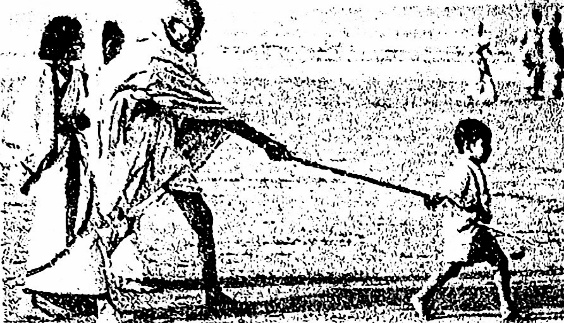
(A) Non co-operative Movement
(B) Civil Disobidence Movement
(C) Quit India Movemet
(D) Sepoy Mutiny
Answer: B
4. Choose the correct option : {Bajali}
Assertion (A) : Indian political parties and social organizations boycotted the Simon Communication.
Reason (R) : This was in response to protests against the commission which led to the death of Lala Lajpat Rai.
(A) Both A and R are correct and R is correct explaining of A.
(B) Both A and R are correct, but R is not correct explaining of A.
(C) Only A is correct.
(D) Only R is correct.
Answer: B
5. Who was the only one representative to take part in the Second Round table conference in 1931? {Baksa}
(A) Rabindranath Tagore
(B) Lala Lajpat Roy
(C) Jawaharlal Nehru
(D) Mahatma Gandhi
Answer: D
6. “Give me blood and I shall give you freedom”- the famous quote is attributed to whom famous Indian leader? {Baksa}
(A) Mahatma Gandhi
(B) Netaji Subhash Chandra Bose
(C) Rash Behari Bose
(D) Jawaharlal Nehru
Answer: B
7. Write down the following events in order – {Baksa}
(i) Crips Mission
(ii) Rowlatt Act
(iii) Communal award
(iv) Non cooperation movement
(A) (i), (iii), (iv), (ii)
(B) (ii), (iv), (iii), (i)
(C) (ii), (i), (iii), (iv)
(D) (iii) , (ii),(i),(iv)
Answer: B
8. Which of the following statement is not true about Subhas Chandra Bose? {Barpeta}
(A) Subhas Chandra Bose was born in Cuttack, Orissa.
(B) He was not associated with the Rani Jhansi Regiment.
(C) He was elected twice as the President of the Indian National Congress.
(D) He reorganised the INA in Singapore.
Answer: B
9. When was the first Independance Day unofficially celebrated before Independence? {Barpeta}
(A) On 26th January 1929
(B) On 26th January 1931
(C) On 26th January 1930
(D) On 15th August 1942
Answer: C
10. In which of the following incidents did Mahatma Gandhi return the Kaiser-E-Hind award? {Barpeta}
(A) Chauri Chaura incident
(B) Simon Commission
(C) Jallianwala Bagh Massacre
(D) Communal Award 1932
Answer: C
11. The term of Gandhi Irwin pact 1931 included – {Biswanath}
(a) The immediate release of all political prisoners not convicted for violence.
(b) The remission of all fines not collected.
(c) Prohibition of use of intoxicants.
(d) The government conceded the right to make salt for consumption to villages along the coast.
Choose the correct option
(A) a, b, c true d false
(B) a, b, d true c false
(C) a, b true cd false
(D) a, c true b, d false
Answer: B
12. Mahatma Gandhi’s third major movement against the British was {Biswanath}
(A) Civil Disobedience Movement
(B) Quit India Movement
(C) The non cooperation Movement
(D) Non Violence Movement
Answer: B
13. Match the following events in order: {Biswanath}
a. Simon Commission
b. End of non-cooperation movement
c. Gandhi Irwin Pact
d. Civil Disobedience Movement
(A) a – b – c – d
(B) a – c – b – d
(C) b – a – d – c
(D) b – a – c – d
Answer: C
14. Subhash Chandra Bose, was interned in his own house in Calcutta for his anti-British activities in 1941. But he eluded Police vigilance and went to Afghanistan, Russia, Germany and ultimately to ________ {Bongaigaon}
(A) Burma and Malay.
(B) Burma and China.
(C) Burma and Bhutan.
(D) Burma and Thailand.
Answer: A
15. The three members of the cabinet mission are respectively- {Bongaigaon}
(A) Sir Stafford Cripps, Lord Pathic Lawrence and A.V. Alexander.
(B) Sir Stafford Cripps, Lord Pathic Lawrence and Mohan Singh.
(C) Sir Stafford Cripps, Clement Attlee and Mahatma Gandhi.
(D) Lord Mountbatten, Lord Pathic Lawrence and Lord Wavell.
Answer: A
16. The Rowlatt Act was passed in the year – {Bongaigaon}
(A) 1916.
(B) 1917.
(C) 1918.
(D) 1919.
Answer: D
17. In envolving the concept of ‘Satyagraha’ Gandhi was influenced by the writings of – {Bongaigaon}
(A) Rousseau and Tolstoy
(B) Tolstoy and Voltaire
(C) Voltaire and Thoreau
(D) Tolstoy and Thoreau
Answer: D
18. Who was arrested along with Gandhiji when the Civil Disobedience Movement was restarted in 1932? {Cachar}
(A) Lala Lajpat Rai
(B) Vallabhai Patel
(C) Rajendra Prasad
(D) Jawaharlal Nehru
Answer: B
19. In which session of the Muslim League did Mohammd Ali Jinnah demand a sperate homeland for the Muslims? {Cachar}
(A) Lahore Session, April, 1940
(B) Lahore Session, March, 1940
(C) Bombay Session, April, 1940
(D) Bombay Session, March, 1940
Answer: B
20. Read the statements given below and choose the correct answer. {Cachar}
Statement 1 : The British government sent the Cripps Mission to India as a proof of their change of attitude towards India during the World War II.
Statement 2: The Cripps Mission did not proposed an immediate transfer of power to Indians.
(A) Both Statement 1 and 2 are correct.
(B) Both Statement 1 and 2 are incorrect.
(C) Statement 1 is correct and Statement 2 is incorrect.
(D) Statement 1 is incorrect and Statement 2 is correct.
Answer: A
21. The reasons are related to non-coopreration movement. {Dhubri}
(i) Failure of Cripps mission
(ii) Rawlatt Act
(iii) Round Table Conference
(iv) Jalianwala Bagh Incident
(A) I and III
(B) I and IV
(C) II and III
(D) II and IV
Answer: D
22. Arrange the following events in order – {Dhubri}
(i) Gandhi-Irwin Pact
(ii) Communal Award
(iii) Dandhi March
(iv) Simon Commission
(A) IV, I, III, II
(B) IV, III, I, II
(C) I, III, IV, II
(D) IV, III, II, I
Answer: B
23. Which of the following is incorrect – {Dhubri}
(A) Gandhi went to South Africa for professional work.
(B) The word Satyagraha was first used by Gandhi in South Africa.
(C) Gandhi founded a political association known as ‘Natal Indian Congress’.
(D) Gandhiji returned from South Africa in 1869.
Answer: D
24. Consider the following events: {Goalpara}
(i) Kheda Satyagraha
(ii) Rowlatt Satyagraha
(iii) Khilafat Movement
(iv) Jallianwala Bag Massacre
Which of the following chronological order is correct?
(A) (i) (ii), (iii), (iv)
(B) (i). (ii) (iii). (iv)
(C) (ii), (iv). (iii), (i)
(D) (i), (ii), (iv), (iii)
Answer: D
25. Which of the following was established by Mahatma Gandhi? {Goalpara}
(A) Indian National Congress
(B) Natal Indian Congress
(C) Dawn Society
(D) Muslim League
Answer: B
26. Choose the correct option on the basis of following assertion (A) and reason (R) {Hailakandi}
Assertion (A): Mahatma Gandhi decided to withdraw the Non-Cooperation Movement in February 1922.
Reason (R): He felt the movement was turning violent in many places and satyagrahis needed to be properly trained before they would be ready for a mass struggle.
(A) Both A and R are true and R is the correct explanation of A.
(B) Both A and R are true but R is not the correct explanation of A.
(C) A is true but R is false.
(D) A is false but R is true.
Answer: A
27. What was the primary significance of the ‘Rani Jhansi Regiment’ within the INA structure? {Hailakandi}
(A) It was a specialized medical unit.
(B) It was a youth wing for intelligence gathering.
(C) It was the first all-wormen combat regiment.
(D) It was a diplomatic corps for the Provisional Government.
Answer: C
28. Arrange the following historical events following the sequence they occurred from old to new : {Hailakandi}
(i) August Revolution
(ii) Direct Action Day
(iii) Demand for Complete Independence
(iv) Simon Commission
(A) (i) → (ii) → (iii) → (iv)
(B) (iv) → (iii) → (ii) → (i)
(C) (i) → (ii) → (iv) → (iii)
(D) (iii) → (iv) → (i) → (ii)
Answer: B
29. Gandhi’s Method of Satyagraha was different from earlier nationalist movements. Which of the following best explains Why it gained massive mass support. {Jorhat}
(A) It demanded complete independence from the British from the beginning.
(B) It used non-violence and truth, making ordinary people confident to join.
(C) It required armed struggle against the British.
(D) It focused only on urban middle-class issues.
Answer: B
30. Why did Indian national leaders, including Gandhi, support the Khilafat Movement despite it being a religions issue for Muslims? {Jorhat}
(A) They aimed to unite Hindus and Muslims for a stronger national struggle.
(B) They wanted to convert Indians to Islam.
(C) They believed Turkey should rule over India.
(D) They wanted to weaken the congress.
Answer: A
31. Consequences of the Rowlatt Act-1919 included– {Jorhat}
i) Widespread anger across India.
ii) Jallianwala Bagh massacre.
iii) Suspension of all British laues.
iv) Strengthening of the national movement.
(A) i, ii, iii
(B) i, ii, iv
(C) i, ii
(D) ii, iv
Answer: B
32. Assertion (A): Gandhiji withdraw the Non-cooperation Movement in 1922. {Jorhat}
Reason (R): Gandhiji wanted avoid the movement turning violent after the Chauri Chaura incident.
Option:
(A) Both (A) and (R) are true, and R is the correct explanation of A.
(B) Both (A) and (R) are true, But R is not the correct explanation of (A).
(C) (A) is true but (R) is false.
(D) (A) is false but (R) is true.
Answer: A
33. Assertion (A): The Quit India Movement is also known as the August Movement. {Jorhat}
Reason (R): It was launched by Mahatma Gandhi on 8th August 1942 at the Bombay session of the congress.
Option:
(A) Both (A) and (R) are true, and Ris the correct explanation of A.
(B) Both (A) and (R) are true, But R is not the correct explanation of (A).
(C) (A) is true, (R) is false.
(D) (A) is false, (R) is true.
Answer: A
34. ‘The Cripps Missions offered dominion status after the Second World War’. Which of the following BEST explains why Indian leaders rejected this offer? {Jorhat}
(A) It delayed full freedom and kept vital powers with the British.
(B) It granted immediate independence
(C) It proposed a new constitution immediate.
(D) It offered full control over defence to Indian leaders.
Answer: A
35. The Slogan ‘Give me blood, I shall give you freedom’ was associated with which movement? {Jorhat}
(A) Non-cooperation Movement
(B) Quit India Movement
(C) Indian National Army
(D) Swadeshi movement
Answer: C
36. Arrange the following historical events following the sequence they occured from old to new. {Jorhat}
i) August Revolution
ii) Direct Action Day
iii) Simon Commission
iv) Demand for complete independence
(A) i-ii-iii-iv
(B) iii-iv-ii-i
(C) i-ii-iv-iii
(D) iii-iv-i-ii
Answer: D
37. Arrange the following events in the correct order. {Kamrup M}
(A) Cripps Mission, Demand of Pakistan, Communal Award Gandhi Irwin Pact.
(B) Gandhi Irwin pact, Communal Award, Demand of Pakistan, Cripps Mission.
(C) Communal Award, Cripps Mission, Demand of Pakistan, Gandhi Irwin pact.
(D) Demand of Pakistan, Cripps Mission, Communal Award, Gandhi Irwin pact
Answer: B
38. Identify the terms of the Gandhi Irwin Act {Kamrup M}
i) Release of all the political prisoners not convicted for violence.
ii) The collection of all fines not yet collected.
iii) The return of confiscated lands of satyagrahis has not been yet sold to third parties.
(A) (i), (ii), (iii) are true
(B) (i) & (iii) are true
(C) (ii) & (iii) are true
(D) (i) & (ii) are true
Answer: A
39.By which Treaty did the British govt abolish the communal Award? {Kamrup R}
(A) Gandhi Areoin Treaty
(B) Pune Treaty
(C) Yandabu Treaty
(D) Mount Baten Declaration letter
Answer: B
40. Mahatma Gandhi formed a political association- {Kokrajhar}
(A) Peitermartinzburg Indian Congress
(B) Pretoria Indian Ciongress
(C) Natal Indian Congress
(D) Johanesburg Indian Congress
Answer: C
41. “Pooma Swaraj Diwas” was celebrated on- {Kokrajhar}
(A) 26 November 1930
(B) 26 January, 1930
(C) 26 November 1935
(D) 26 November 1936
Answer: B
42. The Khilafat committee was formed in India under the leadership of- {Kokrajhar}
(A) Maulana Shaukat Ali and Nawab Salimullah
(B) Maulana Shaukat Ali and Nawab Muh-Sin-Ul-Mulk
(C) Maulana Shaukat Ali and Khan Abdul Gaffar Khan
(D) Maulana Shaukat Ali and Muhammad Ali
Answer: D
43. Who gave the slogan “Do or Die” (Kaaro ya Maro)- {Kokrajhar}
(A) Netaji Subhas Chandra Bose
(B) Rash Bihari Bose
(C) Captain Uddom Singh
(D) Captain Mohan Singh
Answer: (Options incorrect – Actual answer is Mahatma Gandhi)
44. Which of the following was established by Gandhi? {Kokrajhar}
(A) Indian National Congress
(B) Natal Indian Congress
(C) Dawn Society
(D) None of the above
Answer: B
45. The historic Gandhi and Irwin pack was signed on: {Lakhimpur}
(A) 15 March 1930
(B) 25 March 1930
(C) 5 March 1931
(D) 25 March 1931
Answer: C
46. Who was killed by police batons when the Simon Commission came to India- {Lakhimpur}
(A) Mahatma Gandhi
(B) Jhan Simon
(C) Lala Rajpat Rai
(D) Moniram Dewan
Answer: C
47. Robindranath Tagore renounced the title of “Knight” awarded to him by the British Government. {Lakhimpur}
(A) In protest against the Jalibanwalabagh massacre.
(B) In protest againest the polic beating
(C) In protest against the Khilafat Movement
(D) In the pledges of non-cooperation movement.
Answer: A
48. Which slogan is most closely associated with Subhas Chandra Bose and the “Indian National Army: {Nagaon}
(A) “Swaraj is my birthright.”
(B) “Inquilab Zindabad”
(C) “Give me blood and I will give you freedom.”
(D) ‘Do or die”
Answer: C
49. Two statements are given in the question below as Assertion (A) and Reason (R).
Read the statements and choose the correct option. {Nagaon}
Assertion (A) – Lala Lajpat Rai died during protest against the “Simon Commission”.
Reason (R)- The cause of the protest was that British did not include a single Indian representative in the “Simon Commission”.
(A) (A) is true but (R) is false
(B) (A) is false but (R) is ture
(C) Both (A) and (R) are true and (R) is not the correct explanation of (A)
(D) Both (A) and (R) true and (R) is the correct explanation of (A)
Answer: D
50. Which of the following is NOT a positive aspect of the Non-cooperation Movement? {Nagaon}
(A) Boycott of Legislatures
(B) Removal of untouchability
(C) Promotion of Hindu-Muslim unit.
(D) Revival of hand spinning and weaving.
Answer: A
51. Consider the following statements and find the correct answer – {Nagaon}
Statement (i): Mahatma Gandhi launched the Non-co-operation movement in 1942.
Statement (ii): Tax on salt was the main cause of Non-co-operation movement.
(A) (i) is true and (ii) is false
(B) (i) is false and (ii) is true
(C) Both (i) and (ii) are false
(D) Both (i) and (ii) are true
Answer: C
52. The law that empowers of the Government to imprison any person without trial is – {Nalbari}
(A) Govt. of India Act
(B) Rowlatt Act
(C) Regulating Act
(D) The Indian council Act
Answer: B
53. Match the following and choose the correct option. {Nalbari}
(a) Jallianwala bagh Massacre
(b) Dandi March
(c) Gandhi Irwin pact
(d) Direct Action Day
(i) 12 March, 1930
(ii) 16 August, 1946
(iii) 13 April, 1919
(iv) 5 March, 1931
(A) a → iii, b → i, c → ii, d → iv
(B) a → ii, b → iii, c → i, d → iv
(C) a → iii, b → i, c → iv, d → ii
(D) a → i, b → iv, c → ii, d → ii
Answer: C
54. Consider the following staternents (1) and (II) regarding the Simon Commission and choose the correct option {Nalbari}
Statement-I: The main objective of the Simon Commission was to investigate the success of the Montagu Chelmsford Reform.
Statement-II: Lala Lajpat Rai died during protests against the Simon Commission.
(A) I is true, II is false
(B) I is false, II is true
(C) Both are true
(D) Both are false
Answer: C
55. On the basis of the information given in (A) and (R), choose the right answer: {Nalbari}
Assertion (A): The Quit India Movement of 1942 was a significant step towards India’s independence.
Reason (R): The movement resulted in the immediate withdrawal of British forces from India.
(A) (A) is correct, (R) is incorrect
(B) (A) is incorrect, (R) is correct
(C) Both (A) and (R) are correct and (R) is the correct explanation of (A)
(D) Both (A) and (R) are correct, but (R) is not the correct explanation of (A)
Answer: A
56. After returning from London as a Barrister at law in 1891 Mahatma Gndhi worked as a lawyer in which two cities of India? {Sibsagar}
(A) Rajkot and Nagpur
(B) Rajkot and Bombay
(C) Kolkata and Bombay
(D) Kolkata and Nagpur
Answer: B
57. Two statement are given below, one is labelled as Assertion (A) and the other is labelled as Reason (R) consider these statements and choose the most appropriate answer. {Sibsagar}
Assertion (A): British Prime Minister Ramsay Macdonald announced the communal Award in August, 1932.
Reason (R): Poona pact and anti untouchability struggle took place on this issue.
(A) Both A and R are true and R is the correct explanation of A.
(B) Both A and R are true but R is not a correct explanation of A.
(C) A is true R is false.
(D) A is false R is true.
Answer: B
58. Which of the followings were main features of declaration of June 3, 1947? {Sibsagar}
(i) India was to be partitioned
(ii) The native states were free to join either India or Pakistan.
(iii) Each dominion was to have a Governor General appointed by the king of England.
(iv) The legislatures of both the dominions were fully Empowered to make their laws.
(A) i, ii
(B) iii, iv
(C) i, ii, iii
(D) i, ii, iii, iv
Answer: A
59. “A post-dated cheque on a crashing bank” which histocal event of India is related to this statement. {Sibsagar}
(A) Simon commission
(B) Cripps Mission
(C) Individual Satyagraha
(D) Gandhi Irwin pact
Answer: B
60. When was the Quit india movement start? {Sonitpur}
(A) 1942
(B) 1941
(C) 1943
(D) 1944
Answer: A
61. Who ordered the Jallianwala bagh massacre to happen? {Sonitpur}
(A) General Dyer
(B) Lord Pathic Lorence
(C) A.V. Alexendor
(D) Climent
Answer: A
62. Which of the following statements about non-cooperation movement are true ? {Sonitpur}
i) Salt law was opposed.
ii) Students quit government schools.
iii) Unity among Hindus and Muslims.
iv) The women did not participate.
(A) i and iv
(B) ii and iii
(C) i and ii
(D) i, ii, iii and iv
Answer: B
63. Why was the slogan “Simon Go Back” appropriate regarding the Simon Commission? {Sribhumi}
(A) The commission did not get public support.
(B) It had no Indian member.
(C) The commission failed to reforming the law.
(D) The commission came suddenly in India.
Answer: B
64. What is the basic meaning of the word “Satyagraha”? {Sribhumi}
(A) Military resistance
(B) Firmness towards truth
(C) Religious belief
(D) Ethnic Unity
Answer: B
65. The term was first used by Mahatma Gandhi in South Africa. {Sribhumi}
(A) Swaraj
(B) Satyagraha
(C) Ahimsa
(D) All of the above
Answer: B
66. Which of the following are correct regarding Quit India movement? {Salmara}
i. Kushal Konwar was hanged in Connection with derailment of a train at Sarupather
ii. All India Congress Committee passed the famous Resolution Quit India in Bombay on August 8th 1942.
iii. The Colonial govt. Supressed the movement with enormous force in 1944.
iv. People from all walks of life did not participate in the movement.
(A) ii, iii, iv
(B) i, iii, iv
(C) i, ii, iv
(D) i, ii, iii
Answer: D
67. Arrange the following historical events following the sequence they occured from new to old. {Salmara}
i. Rowlatt Act
ii. Non-violence Movement
iii. The Jallianwala Bagh Massacre
iv. Khilafat Movement
(A) i → ii → iv → iii
(B) iv → iii → ii → i
(C) i → ii → iii → iv
(D) i → iv → ii → iii
Answer: B
68. Which of the following statement are correct: {Salmara}
i. Gandhi first used the word ‘Satyagraha’ in South Africa.
ii. Liladhar Baruah from Assam participated in Dandi March.
iii. Gandhi was arrested and kept in prison for nine months, but he was later released by the government following the implementation of the Indian Relief Act.
iv. For the first time Independence Day was Celebrated throughout India on 15th August 1930.
(A) i, ii, iv
(B) i, ii, iii
(C) ii, iii, iv
(D) i, ii, iii, iv
Answer: B
69. Below are the two statements. One is marked as Assertion A) and other as Reason R). Read the statement and find out the appropriate answer. {Udalguri}
Assertion A): Mahatma Gandhi fully supported Khilafat movement.
Reason R): To unite Indian Hindu and Muslims, achieve Swaraj and Self Governance through the ideology of Non-cooperation movement.
(A) Both A) and R) are true and R) is the correct explanation of A).
(B) A) is true, but R) false.
(C) Both A) and R) true, but R) is not the correct explanation of (A)
(D) A) is false, but R) is true.
Answer: A
70. Following are some of the statements about Communal Award, 1932, during Indian Freedom Movement. Judge the statement and choose the correct alternative: {Udalguri}
(i) It was announced during Civil Disobedience movement
(ii) The Poona Act was signed for its Amendment
(iii) Harijan Sevak Sangha was established
(iv) British Prime Minister Mr. Clement Attlee announced the Partition Plan
(A) (ii), (iii), (iv)
(B) (iii), (iv), (i)
(C) (i), (ii), (iii)
(D) (i), (ii), (iv)
Answer: C
71. In the Second Boer War, Mahatma Gandhi was awarded the ‘Kaisar-i-Hind’ Gold Medal for his contribution. Gandhi returned this award to the British Government in protest against which of the following incidents? {Udalguri}
(A) In protest against Chauri-Chaura Massacre.
(B) In protest against Communal Partition.
(C) In protest against Jallianwala Bagh Massacre.
(D) For the safety of Indians living in South Africa.
Answer: C
Probable Multiple Choice Questions with Answers for HSLC 2027
1. What was the name of the political organization formed by Mahatma Gandhi in South Africa to fight against racial discrimination?
(A) African National Congress
(B) Natal Indian Congress
(C) Transvaal Indian Congress
(D) Indian League
Answer: B
2. Who was the author of the famous book ‘Hind Swaraj’?
(A) Jawaharlal Nehru
(B) Bal Gangadhar Tilak
(C) Mahatma Gandhi
(D) Subhas Chandra Bose
Answer: C
3. Where did Mahatma Gandhi lead his first Satyagraha in India?
(A) Kheda
(B) Ahmedabad
(C) Bardoli
(D) Champaran
Answer: D
4. Which commission was appointed by the British Government to investigate the Jallianwala Bagh massacre?
(A) Simon Commission
(B) Cripps Commission
(C) Hunter Commission
(D) Cabinet Mission
Answer: C
5. In which session of the Indian National Congress was the resolution for the Non-Cooperation Movement finally approved?
(A) Lahore Session, 1929
(B) Nagpur Session, 1920
(C) Calcutta Session, 1920
(D) Karachi Session, 1931
Answer: B
6. When was the ‘Swaraj Party’ formed?
(A) 1920
(B) 1922
(C) 1923
(D) 1930
Answer: C
7. How many Indian members were there in the Simon Commission?
(A) One
(B) Two
(C) Seven
(D) None
Answer: D
8. How many volunteers accompanied Mahatma Gandhi during the Dandi March?
(A) 72
(B) 78
(C) 82
(D) 100
Answer: B
9. Who was popularly known as ‘Frontier Gandhi’?
(A) Muhammad Ali Jinnah
(B) Maulana Abul Kalam Azad
(C) Khan Abdul Ghaffar Khan
(D) Shaukat Ali
Answer: C
10. Which British Prime Minister announced the ‘Communal Award’ in 1932?
(A) Winston Churchill
(B) Clement Attlee
(C) Ramsay MacDonald
(D) Lord Mountbatten
Answer: C
11. Who founded the Harijan Sevak Sangh?
(A) B. R. Ambedkar
(B) Mahatma Gandhi
(C) Jyotiba Phule
(D) Swami Vivekananda
Answer: B
12. What was the name of the political party formed by Subhas Chandra Bose?
(A) Forward Bloc
(B) Ghadar Party
(C) Indian League
(D) Swaraj Party
Answer: A
13. Who was the first person to offer ‘Individual Satyagraha’?
(A) Jawaharlal Nehru
(B) Mahatma Gandhi
(C) Acharya Vinoba Bhave
(D) Sardar Vallabhbhai Patel
Answer: C
14. What was the name of the women’s battalion of the Indian National Army (INA)?
(A) Durga Battalion
(B) Sarojini Regiment
(C) Rani of Jhansi Regiment
(D) Lakshmibai Brigade
Answer: C
15. Where did Subhas Chandra Bose give the famous slogan “Give me blood, I shall give you freedom”?
(A) Tokyo
(B) Berlin
(C) Rangoon
(D) Singapore
Answer: C
16. In which year did the Cabinet Mission arrive in India?
(A) 1942
(B) 1944
(C) 1945
(D) 1946
Answer: D
17. When did the Muslim League observe ‘Direct Action Day’?
(A) 16 August 1946
(B) 16 October 1946
(C) 15 August 1947
(D) 23 March 1940
Answer: A
18. Who was the first Indian Governor-General of independent India?
(A) Lord Mountbatten
(B) Jawaharlal Nehru
(C) C. Rajagopalachari
(D) Dr. Rajendra Prasad
Answer: C
19. Who was the chairman of the Boundary Commission formed for the partition of India?
(A) Lord Wavell
(B) Sir Cyril Radcliffe
(C) Lord Pethick-Lawrence
(D) A. V. Alexander
Answer: B
20. Who was martyred while attempting to hoist the national flag at Gohpur police station during the Quit India Movement in Assam?
(A) Kushal Konwar
(B) Kanaklata Barua
(C) Maniram Dewan
(D) Bhogeswari Phukanani
Answer: B
21. When was the Gandhi-Irwin Pact signed?
(A) 5 March 1931
(B) 12 March 1930
(C) 23 March 1931
(D) 26 January 1930
Answer: A
22. In which session in 1940 did the Muslim League adopt the ‘Two-Nation Theory’ resolution?
(A) Dhaka Session
(B) Karachi Session
(C) Lahore Session
(D) Lucknow Session
Answer: C
23. Why was the Simon Commission sent to India?
(A) To grant complete independence to India
(B) To inquire into the working of the Government of India Act, 1919
(C) To resolve the problem of the partition of Bengal
(D) To gain Indian support for the Second World War
Answer: B
24. Where was the historic session of the All India Congress Committee held on 8 August 1942?
(A) Gowalia Tank Maidan, Bombay
(B) Victoria Memorial, Calcutta
(C) Ramlila Maidan, Delhi
(D) Banks of the river Ravi, Lahore
Answer: A
25. What was the primary objective of the Khilafat Movement?
(A) To drive the British out of India
(B) To restore the lost prestige and power of the Sultan (Khalifa) of Turkey
(C) To demand a separate nation for Muslims
(D) To boycott British goods
Answer: B
26. Arrange the following historical events in chronological order from earliest to latest:
(i) Kheda Satyagraha
(ii) Champaran Satyagraha
(iii) Rowlatt Act
(iv) Jallianwala Bagh Massacre
(A) (ii) → (i) → (iii) → (iv)
(B) (i) → (ii) → (iii) → (iv)
(C) (ii) → (i) → (iv) → (iii)
(D) (i) → (iii) → (ii) → (iv)
Answer: A
27. Which of the following does NOT fall under the destructive (negative) programs of the Non-Cooperation Movement?
(A) Boycott of government titles and honors
(B) Boycott of government educational institutions
(C) Removal of untouchability and promotion of Hindu-Muslim unity
(D) Boycott of foreign goods and clothing
Answer: C
28. Why did Mahatma Gandhi refer to the proposals of the Cripps Mission as a “post-dated cheque”?
(A) Because it offered complete independence to India immediately.
(B) Because it promised Dominion Status only after the end of the war.
(C) Because it planned to divide India into multiple fragments.
(D) Because it declared the Indian National Congress illegal.
Answer: B
29. Match Column A with Column B and select the correct option:
Column A:
(a) Frontier Gandhi
(b) Iron Man
(c) Deshbandhu
Column B:
(i) Chittaranjan Das
(ii) Khan Abdul Ghaffar Khan
(iii) Sardar Vallabhbhai Patel
(A) (a)-ii, (b)-iii, (c)-i
(B) (a)-i, (b)-ii, (c)-iii
(C) (a)-iii, (b)-ii, (c)-i
(D) (a)-ii, (b)-i, (c)-iii
Answer: A
30. What was the main reason for the failure of the Second Round Table Conference?
(A) The British Government did not invite any representative from the Congress.
(B) Disagreement arose over the issue of separate electorates for minority communities.
(C) Mahatma Gandhi left the conference midway.
(D) The report of the Simon Commission was rejected.
Answer: B
31. Arrange the following historical events in chronological order:
(i) Gandhi-Irwin Pact
(ii) Demand for Purna Swaraj at Lahore Congress
(iii) Poona Pact
(iv) Dandi March
(A) (ii) → (iv) → (i) → (iii)
(B) (iv) → (ii) → (i) → (iii)
(C) (ii) → (i) → (iv) → (iii)
(D) (i) → (ii) → (iii) → (iv)
Answer: A
32. What was the primary outcome of the ‘Poona Pact’ of 1932?
(A) The demand for a separate electorate for the untouchables was accepted.
(B) The Communal Award dividing Hindus and Muslims was cancelled.
(C) It provided reserved seats for the depressed classes under the general electorate.
(D) The British Government agreed to grant independence to India.
Answer: C
33. Which of the following statements regarding the Cabinet Mission’s proposals is incorrect?
(A) It proposed a federal government for India.
(B) It outrightly rejected the Muslim League’s demand for a separate Pakistan.
(C) It emphasized provincial autonomy.
(D) It proposed dividing India into two separate sovereign countries.
Answer: D
34. For what crime was Kushal Konwar, a martyr from Assam during the 1942 Quit India Movement, hanged?
(A) For setting fire to a police station
(B) On the charge of derailing a military train at Sarupathar
(C) For assassinating a British official
(D) For transmitting secret messages via radio
Answer: B
35. Arrange the following historical events in chronological order from earliest to latest:
(i) Mountbatten Plan
(ii) Cripps Mission
(iii) Cabinet Mission
(iv) August Offer
(A) (iv) → (ii) → (iii) → (i)
(B) (ii) → (iv) → (iii) → (i)
(C) (iv) → (iii) → (ii) → (i)
(D) (iii) → (iv) → (ii) → (i)
Answer: A
36. Which of the following newspapers was NOT edited by Mahatma Gandhi?
(A) Harijan
(B) Young India
(C) Indian Opinion
(D) Yugantar
Answer: D
37. What was the fundamental difference between the Non-Cooperation Movement and the Civil Disobedience Movement?
(A) Non-Cooperation was violent, whereas Civil Disobedience was non-violent.
(B) Non-Cooperation merely involved refusing to assist the government, while Civil Disobedience involved intentionally breaking British laws.
(C) Non-Cooperation was led only by Muslims, whereas Civil Disobedience was led by Hindus.
(D) There was no difference between the two movements.
Answer: B
38. According to the ‘Indian Independence Act, 1947’, what special right was granted to the Constituent Assemblies of India and Pakistan?
(A) The right to legislate only under the supervision of the British Parliament.
(B) The right to independently decide whether to join or leave the British Commonwealth.
(C) The right to determine only the borders of India.
(D) The right to govern as autonomous provinces under the British Empire.
Answer: B
39. Which of the following statements correctly describes the philosophy of ‘Satyagraha’?
(A) Satyagraha is the weapon of the weak.
(B) Satyagraha means physically harming the enemy to defeat them.
(C) Satyagraha is the opposition to injustice through a firm adherence to truth and non-violence.
(D) Satyagraha requires secret conspiracies and underground activities.
Answer: C
40. What was the horrific consequence of the ‘Direct Action Day’ observed in 1946?
(A) India gained its independence.
(B) Severe communal riots and massacres took place in Calcutta.
(C) The British Government banned the Muslim League.
(D) Mahatma Gandhi went on a fast unto death.
Answer: B
41. Assertion (A): Mahatma Gandhi abruptly called off the Non-Cooperation Movement in 1922.
Reason (R): An angry mob set fire to a police station at Chauri Chaura in Uttar Pradesh, resulting in the death of 22 policemen.
(A) Both (A) and (R) are true, and (R) is the correct explanation of (A).
(B) Both (A) and (R) are true, but (R) is not the correct explanation of (A).
(C) (A) is true, but (R) is false.
(D) (A) is false, but (R) is true.
Answer: A
42. Assertion (A): Indians boycotted the Simon Commission.
Reason (R): Out of the seven members of the Simon Commission, there was not a single Indian member.
(A) Both (A) and (R) are true, and (R) is the correct explanation of (A).
(B) Both (A) and (R) are true, but (R) is not the correct explanation of (A).
(C) (A) is true, but (R) is false.
(D) (A) is false, but (R) is true.
Answer: A
43. Assertion (A): Rabindranath Tagore renounced his ‘Knighthood’ title conferred by the British Government.
Reason (R): He strongly opposed the Rowlatt Act.
(A) Both (A) and (R) are true, and (R) is the correct explanation of (A).
(B) Both (A) and (R) are true, but (R) is not the correct explanation of (A).
(C) (A) is true, but (R) is false.
(D) (A) is false, but (R) is true.
Answer: C
44. Assertion (A): Mahatma Gandhi initiated the Civil Disobedience Movement by breaking the salt law at Dandi.
Reason (R): Salt was an essential commodity for every poor Indian, and the British had imposed a heavy tax on it.
(A) Both (A) and (R) are true, and (R) is the correct explanation of (A).
(B) Both (A) and (R) are true, but (R) is not the correct explanation of (A).
(C) (A) is true, but (R) is false.
(D) (A) is false, but (R) is true.
Answer: A
45. Assertion (A): The Indian National Congress rejected the proposals of the Cripps Mission.
Reason (R): The Cripps Mission proposed an immediate transfer of power to Indians instead of offering Dominion Status.
(A) Both (A) and (R) are true, and (R) is the correct explanation of (A).
(B) Both (A) and (R) are true, but (R) is not the correct explanation of (A).
(C) (A) is true, but (R) is false.
(D) (A) is false, but (R) is true.
Answer: C
46. Assertion (A): The Poona Pact amended the provisions of the Communal Award.
Reason (R): It provided reserved seats for the depressed classes within the general electorates instead of separate electorates.
(A) Both (A) and (R) are true, and (R) is the correct explanation of (A).
(B) Both (A) and (R) are true, but (R) is not the correct explanation of (A).
(C) (A) is true, but (R) is false.
(D) (A) is false, but (R) is true.
Answer: A
47. Assertion (A): The Quit India Movement of 1942 is often described as a ‘leaderless mass movement’.
Reason (R): The British Government arrested Mahatma Gandhi and all top Congress leaders in the early morning of August 9.
(A) Both (A) and (R) are true, and (R) is the correct explanation of (A).
(B) Both (A) and (R) are true, but (R) is not the correct explanation of (A).
(C) (A) is true, but (R) is false.
(D) (A) is false, but (R) is true.
Answer: A
48. Assertion (A): The Cabinet Mission directly accepted the demand for the partition of India.
Reason (R): The Muslim League strongly demanded an independent nation of Pakistan.
(A) Both (A) and (R) are true, and (R) is the correct explanation of (A).
(B) Both (A) and (R) are true, but (R) is not the correct explanation of (A).
(C) (A) is true, but (R) is false.
(D) (A) is false, but (R) is true.
Answer: D
49. Assertion (A): Unprecedented Hindu-Muslim unity was witnessed during the Khilafat Movement.
Reason (R): Mahatma Gandhi combined the Khilafat and Non-Cooperation Movements to build a powerful mass struggle against the British.
(A) Both (A) and (R) are true, and (R) is the correct explanation of (A).
(B) Both (A) and (R) are true, but (R) is not the correct explanation of (A).
(C) (A) is true, but (R) is false.
(D) (A) is false, but (R) is true.
Answer: A
50. Assertion (A): The Indian National Army (INA) led by Subhas Chandra Bose successfully expelled the British completely from India.
Reason (R): Japan’s defeat in the Second World War cut off the supply of arms, ammunition, and rations to the INA.
(A) Both (A) and (R) are true, and (R) is the correct explanation of (A).
(B) Both (A) and (R) are true, but (R) is not the correct explanation of (A).
(C) (A) is true, but (R) is false.
(D) (A) is false, but (R) is true.
Answer: D
HSLC PYQs (2018–2026): Important 2/3/4 Marks Short Questions
HSLC PYQs (2016–2026): Important 2‑ and 3‑Mark Short Questions
1. Explain the significance of the word “blood” in the quotation “Give me blood, and I shall give you freedom”. And who said this? {2026}
2. How was the British Prime Minister Mr. Clement Attlee’s approach to India and Indians different from the Prime Minister Winston Churchill’s constitutional and political approach? {2026}
3. Evaluate the role of General Dyer in the Jallianwala Bagh Massacre and the subsequent reactions to his actions. {2025)
4. Give a brief description of Quit India Movement. Why is this movement called the August Revolution? {2024)
5. What were the main provisions of the Indian Independence Act, 1947? {2024)
6. When was ‘Gandhi-Irwin Pact’ signed? Write two terms of this agreement? {2018}
7. On what circumstance did Mahatma Gandhi start the non-cooperation movement? Why did Gandhi stop this Movement? {2018}

District Pre Board (2025–26): Important 2 Marks Short Questions
1. Where did Gandhiji first experiment Satyagraha? In which place of India Gandhiji first led a Satyagraha Movement? {Cachar}
2. Why was the Second Round Table Conference a failure for Gandhiji? {Cachar}
3.
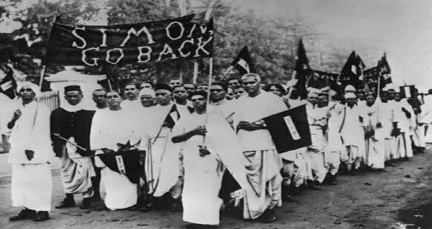
a) What was the reason behind the procession shown in the above picture?
b) Why did Simon come to India? {Hailakandi}
4. Why did the Khilafat Movement start in India? {Jorhat}
5. When and in which session of the Indian national Congress was Puma Swaraj declared to be the chief goal of the India? {Kokrajhar}
6. Mention two negative aspects of the Non-Cooperation Movement. {Nalbari}
District Pre Board (2025–26): Important 3 Marks Long Questions
1. When did the civil Disobedience Movement take place in India? How did Mahatma Gandhi challenge this movement? {Bongaigaon}
2. “Imagine you are an Indian official witnessing the scene at Jallianwala Bagh. Write a brief report highlighting the peaceful nature of the gathering and the brutality of the firing.” {Hailakandi}
3. Analyze the reasoning behind Mahatma Gandhi’s withdrawal of the Non-Cooperation Movement. Was this decision a “national disaster” or a “necessary disciplinary measure”? {Morigaon}
District Pre Board (2025–26): Important 4/5 Marks Long Questions
1. What were the main provisions of the Indian Independence Act, 1947? {Bajali}
2. When did Civil Disobedience Movements take place in India? How was it conducted by Mahatma Gandhi? {Bajali}
3. Do you want to declare the Quit India Movement as a mile stone in the freedom struggle of India. Give three reasons in support of the opinion. {Baksa}
4. What are the positive and negative aspects of Non-cooperation Movement? How does the negative programme necessitated some positive steps? {Biswanath}
5. What do you understand by Satyagraha? Briefly write about the three local disputes where Gandhi first applied the technique of Satyagraha in India? {Biswanath}
6. Discuss in brief the role played by the people of Assam in the ‘Quite India Movement’. {Bongaigaon}
7. Explain the importance and impact of Gandhiji’s speech at the historic August meeting on 4th August 1942. {Darrang}
9. Write the main provisions of Indian Independence Act-1947. {Goalpara}
10. What do you understand by the term Satyagraha? Briefly write about three local disputes where Mahatma Gandhi first applied the technique of Satyagraha in India. {Goalpara}
11. Write down the differences between the ‘August offer’ and the ‘August Revolution’. {Kamrup M}
12. Do you consider the Quit India Movement as a milestone in India’s freedom struggle? Give your opinion. {Majuli}
13. Which movement, led by Gandhiji resulted in signing of the Gandhi-Irwin pact? Analyze the significance of that pact in the Indian freedom struggle. {Sibsagar}
14. “The Indian Independence Act 1947 laid the foundation for the political reorganization of the Indian subcontinent.” Explain this statement by discussing any four major clauses of the Indian Independence Act 1947. {Sonitpur}
15. What do you understand by the term satyagraha? Discuss three local disputes that Mahatma Gandhi succeeded in through the satyagraha movement. {Salmara}
16. Discuss the reasons between the British Viceroy August Offer and the Individual Satyagraha under the leadership of Mahatma Gandhi. Who was the first satyagrahi arrested in the Individual Satyagraha? {Udalguri}
17. Give an account on the role of Assam in Quit India Movement. {Goalpara}
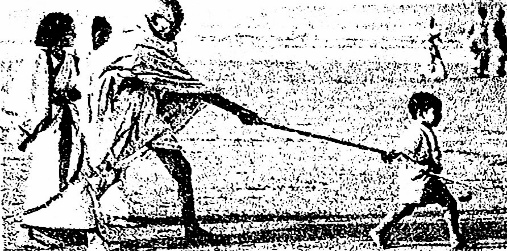
18. Give a brief explation of the subject matter attached to the picture. {Lakhimpur}
Some Important Most Probable 2 Marks Questions for HSLC 2027
1. Why did Mahatma Gandhi establish the ‘Natal Indian Congress’ in South Africa?
2. What was the primary objective of the Rowlatt Act of 1919?
3. What is the historical significance of the Lahore Congress Session of 1929?
4. Write the names of the two prominent leaders who spearheaded the Khilafat Movement.
5. Mention two reasons why Indians boycotted the Simon Commission.
6. State any two conditions of the Gandhi-Irwin Pact (1931).
7. What do you understand by the ‘August Offer’ of 1940?
8. Name two martyrs from Assam who lost their lives during the Quit India Movement.
9. What were the two main proposals of the Cabinet Mission?
10. What was the ‘Communal Award’ of 1932?
Some Important Most Probable 3 Mark Questions for HSLC 2027
11. Briefly describe the economic boycott programs of the Non-Cooperation Movement.
12. Write three major differences between the Non-Cooperation Movement and the Civil Disobedience Movement.
13. How did the Jallianwala Bagh massacre change the course of the Indian National Movement?
14. Briefly discuss the role of Subhas Chandra Bose in the formation and reorganization of the Indian National Army (INA).
15. Write a short note on the ‘Poona Pact’ (1932).
16. Why did the Indian National Congress reject the proposals brought forward by the Cripps Mission?
17. On what principles was Mahatma Gandhi’s concept of ‘Satyagraha’ based? What are its core elements?
18. Briefly write about the participation of women in the Civil Disobedience Movement.
19. Why did the Muslim League observe ‘Direct Action Day’ in 1946, and what were its consequences?
20. Mention any three important clauses of the ‘Indian Independence Act’ of 1947.
Some Important Most Probable 4 Mark Questions for HSLC 2027
21. Analyze the causes of the Non-Cooperation Movement. Do you justify Mahatma Gandhi’s decision to abruptly suspend this movement? Give reasons.
22. Discuss the background circumstances that led to the launch of the Civil Disobedience Movement. What was the symbolic importance of the ‘Dandi March’ in this movement?
23. “The Quit India Movement of 1942 was a spontaneous mass uprising.” Analyze this statement by giving examples of common people’s participation.
24. How did the Second World War impact the background and progress of India’s freedom struggle? Discuss in detail.
30. Imagine you are a journalist present at the Lahore Congress Session of 1929. Draft a report highlighting the demand for ‘Purna Swaraj’ and the subsequent action plans adopted.