Class 10 Social Science Chapter 4 – Indian Freedom Movement and National Awakening in Assam Complete Question Answer | ASSEB / SEBA
Class 10 Social Science (History) Chapter 4 – Indian Freedom Movement and National Awakening in Assam Complete Question Answers and Exam Solutions (ASSEB / SEBA Assam – English Medium)
The fourth chapter of the Class 10 Social Science History syllabus, ‘Indian Freedom Movement and National Awakening in Assam’, is a profoundly inspiring and mark-fetching chapter. For the upcoming HSLC 2027 board examinations, we have compiled the ultimate set of question answers (Class 10 Social Science Chapter 4 Question Answer) precisely mapped to the New ASSEB (Assam State School Education Board) Syllabus 2026-27 and the newest exam blueprint. This exhaustive study material features in-text Very Short Answers (VSA), Short Questions, Long Answers, and complete solutions to Previous Years’ Board Exam Questions (PYQ). Ospin Academy delivers these meticulously crafted notes to guarantee your exam success.
This chapter vividly traces the socio-political awakening in Assam, highlighting the formation of the Assam Association, Assam Chatra Sanmilan, and various Ryot Sabhas. It further details Assam’s active and heroic participation in the national freedom struggle, including the Non-Cooperation Movement, Civil Disobedience Movement, and the Quit India Movement, honoring legends like Tarun Ram Phukan, Nabin Chandra Bardoloi, and the martyr Kanaklata Barua. Memorizing these regional milestones is essential for matriculation candidates. Our Question Bank ensures that you not only master the textbook exercises but also tackle Extra Board Questions and Answers that examiners frequently prioritize.
What you will learn and get from this chapter:
- A thorough understanding of the socio-cultural organizations in Assam, such as the Assam Association and Jonaki Yug, that sparked national consciousness.
- Detailed accounts of Assam’s involvement in Gandhiji’s mass movements and the supreme sacrifices made by local freedom fighters.
- Accurate, board-ready answers for 1-mark objective questions (VSA/MCQ) and 2-3 marks short explanatory questions.
- Well-structured, comprehensive solutions for 4-5 marks long descriptive questions regarding the role of specific leaders and organizations.
- Crucial timelines, organizational establishment dates, and the impact of the freedom movement on Assam’s political landscape.
Special benefits from Ospin Academy for the HSLC 2027 Exam:
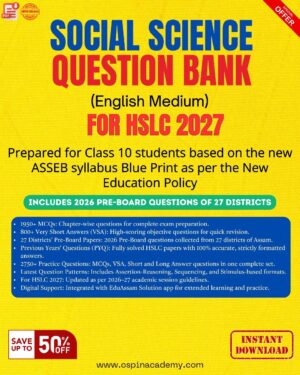
- A fully updated Chapter 4 Question Bank structured flawlessly according to the new ASSEB blueprint for HSLC 2027.
- Verified and complete solutions for Previous 10 Years’ Questions (PYQ) as well as Pre-Board question papers from diverse districts of Assam.
- 100% precise, premium quality study materials (Class 10 History Notes) written in lucid English to facilitate rapid learning.
- Easily downloadable PDF format (PDF Download) optimized for smart, on-the-go revision prior to the final exam.
- An expertly formulated list of 100% Common Board Suggestion questions to maximize your scoring potential.
Accelerate your HSLC 2027 exam preparation today and secure the Highest Marks in Social Science with Ospin Academy’s exceptional resources.
Class 10 Social Science Question Bank ASSEB HSLC 2027 | English Medium Chapter-wise Solutions PDF

Class 10: Social Science
Indian Freedom Movement and National Awakening in Assam
HSLC English PYQs (2024–2026): Important MCQs with Answers
1. Find out the correct statement(s) about Anandaram Dhekial Phukan – {2026}
(i) The Gyan Pradayini Sabha was founded by Anandaram Dhekial Phukan and Gunaviram Barua in 1857.
(ii) He opposed the introduction of the Bengali language in schools, offices and courts in Assam.
(iii) Assamese Literary Society was formed under the leadership of Anandaram Dhekial Phukan.
(iv) The Ahom Sabha was formed under the leadership of Anandaram Dhekial Phukan.
(A) Only (i) is correct.
(B) (i) and (ii) are correct.
(C) (iii) and (iv) are correct.
(D) Only (ii) is correct.
Answer: B
2. The first national school was established at Gauhati in February 192- {2026}
(A) In the memory of Ambikagiri Raychaudhury.
(B) In the memory of Bal Gangadhar Tilak
(C) In the memory of Lala Lajpat Ray.
(D) In the memory of Bipin Chandra Pal.
Answer: B
3. The modern form of Assamese language is evolved – {2026}
(A) Through ‘Milan’
(B) Through ‘Arunodoi’
(C) Through Assam Association
(D) Through Jorhat Sarbajanik Sabha
Answer: B
4. Which of the following pair is correctly matched ? {2026}
(A) Jorhat Sarbajanik Sabha; in 1895
(B) Assam Association; in 1903
(C) Assam Provincial Congress Committee; in 1925
(D) Ahom Sabha; in 1885
Answer: B
5. From the following options, choose the programme and the freedom movement led by Mahatma Gandhi, in which Leeladhar Baruah from Assam joined.{2025}
(A) Dandi March, Non-Cooperation Movement
(B) Dandi March, Civil Disobedience Movement
(C) Collection of funds through Tilak Swarajya Fund, Non-Cooperation Movement
(D) Historic August Meeting in Bombay, Quit India Movement
Answer: B
6. The consumption of Abkari opium in Assam fell from 1615 maunds in 1920-21 to 993 maunds in 1922-23.
Which of the following statements correctly explains the fall in the consumption of opium? {2025}
(A) The British Government recognising the ill effects of opium consumption restricted its sale.
(B) People understood the ill effects of opium consumption.
(C) There was fall in demand for opium among the people.
(D) Vigorous anti-opium campaign led by the Congress workers.
Answer: D
7. Assam Chatra Sanmilan was formed in the year. {2024}
(A) 1916
(B) 1917
(C) 1918
(D) 1920
Answer: A
8. Which of the literatures mentioned below are works of Hemchandra Goswami? {2024}
(i) Kumudini
(ii) Phular Saki
(iii) Sadhu Charitra
(iv) Manomoti
(A) (i), (ii), (iii)
(B) (ii), (iii), (iv)
(C) (i), (iii), (iv)
(D) (i), (ii), (iv)
Answer: A
Assam’s Various District Pre‑Board (2025–26) MCQs With Answers
1. Which organisation played a leading role in the publication of Hemchandra Baruah’s ‘Hemkosh’? {Bajali}
(A) Gyan Pradayini Sabha
(B) Asomiya Literary Society
(C) Assamese Language Development Association
(D) Assam Association
Answer: C
2. Assertion (A) : Many young and elderly Assamese participated in the Non-cooperation movement of 1920. Their participation increased the popularity of the movement. During this time, a trend of unification was seen among the nationalist forces of Assam. {Bajali}
Reason (R) : This movement played an important roe in the unification of Assam’s nationalist forces.
(A) (A) and (R) are correct and (R) is correct explanation of (A)
(B) (A) and (R) are correct but (R) is not correct explanation of (A)
(C) (A) is correct but (R) is incorrect
(D) (A) is incorrect but (R) is correct
Answer: A
3. The Bengali language was introduced in Assam- {Baksa}
(A) 1836
(B) 1873
(C) 1872
(D) 1857
Answer: A
4. When was the Gauhati Medical College formally started? {Baksa}
(A) 7th Nov. 1959
(B) 20th Sep. 1968
(C) 20th Sep. 1960
(D) 26th June 1960
Answer: C
5. Which one of the following is not an objective of the Rayat Sabha ? {Baksa}
(A) abolition of grazing tax
(B) reduction of land tax
(C) to ban the migration of Bengali from East Bengal
(D) to improve the conditions of mass people
Answer: C
6. Which of the following options are correct about Assam Chatra Sanmilan? {Barpeta}
(i) The Assam Chatra Sanmilan was formed in 1916
(ii) The main objectives of this Sanmilan was to promote the Assamese language
(iii) Its first session was held a Jorhat under the chairmanship of Lakhsminath Bezbaruah.
(iv) Milan was the mouthpiece of the chatra sanmilan
(A) (i), (ii) and (iii) are correct
(B) (ii), (iii) and (iv) are correct
(C) (i), (ii) and (iv) are correct
(D) (i), (iii) and (iv) are correct
Answer: C
7. Which of the following public welfare works were taken by the British Government to keep the Brahmaputra Valley people away from the influence of Swadeshi Movement? {Biswanath}
(a) To reintroduce Moujadary system in the Brahmaputra Valley.
(b) Reducing increased taxes and changes in government customs system.
(c) To introduce Assamese language and literature in the syllabus of entrance examination of calcutta (Kolkata) University.
(d) To introduce 20 point settlement of land.
(A) a, c, d
(B) a, b, c
(C) b, c, d
(D) a, b, c, d
Answer: A
8. “To develop a strong scientific base for the Assamese language and took initiative of adopting a correct and standardised grammatical system in all the vernacular schools of Assam” – Who took this initiative? {Biswanath}
(A) Gyan Pradayini Sabha
(B) Assamese Literary Society
(C) Asomiya Bhasa Unnati Sadhini Sabha
(D) Assam Sahitya Sabha
Answer: C
9. Assertion (A): The Rayot Sabha did not play significant role in the peasant movement of 1893-94 which took place at Rangia, Lachima, Sarthebari and Patharughat against the enhancement of land tax. {Biswanath}
Reason (R): It demanded for the abolition of grazing tax, reduction of land tax and to ban the migration of peasants from East Bengal.
(A) (A) is true (R) is false.
(B) (A) is false (R) is true.
(C) Both (A) and (R) are true and (R) is the correct explanation of (A).
(D) Both (A) and (R) are true but (R) is not the correct explanation of (A)
Answer: D
10. (A) Jorhat Sarbajanik Sabha’ was the first Public Political Association of Assam {Bongaigaon}
(B) The Jorhat Sarbajanik Sabha initially opposed thepartition of Bengal but later abandoned the anti-breaking attitude.
(A) Both (A) and (B) are true
(B) Both (A) and (B) are not true
(C) (A) is true (B) is false
(D) (A) is false (B) is true
Answer: A
11. Match the following and choose the correct answer. {Bongaigaon}
The following table:
Part-A
(i) Jorhat Sarbajanik Sabha,
(ii) Ahom Sabha,
(iii) Asomiya Bhasa Unnati Sadhini Sabha,
(iv) Assam Association,
Part-B
(a) 1903
(b) 1884
(c) 1893
(d) 1888
(A) (i) a, (ii) b, (iii) c, (iv) d
(B) (ii) a, (iii) b, (iv) c, (i) d
(C) (i) b, (ii) c, (iii) d, (iv) a
(D) (iii) a, (ii) b, (i) c, (iv) d
Answer: C
12. Arrange the following events in the correct order – {Bongaigaon}
(i) Assam Association
(ii) Assam Chatra Sanmilan
(iii) Assamese Literary Society
(iv) Ahom Sabha
(A) (i)→(ii)→(iii)→(iv)
(B) (iii)→(iv)→(i)→(ii)
(C) (ii)→(iii)→(iv)→(i)
(D) (iv)→(i)→(iii)→(ii)
Answer: B
13. Which of the following can be regarded as a marker of Assamese nationalism? {Cachar}
(A) The cultural and literary renaissance started by Orunodoi
(B) Assamese language was re-established as the official language of Assam in 1873
(C) Publication of Hemkosh
(D) Establishment of Asomiya Bhasa Unnati Sadhini Sabha
Answer: D
14. This was first published by the American Baptist Missionaries in 1846. This gave shape to the modern form of Assamese language which is in use now. What is being described here? {Cachar}
(A) Arunudoi
(B) Charyapada
(C) Namghosa
(D) Padya Geeta
Answer: A
15. Match Column ‘A’ with ‘B’ {Cachar}
The following table:
Column A
a) Assam Association
b) Ahom Sabha
c) Jorhat Sarbajanin Sabha
d) Gyan Pradayini Sabha
Column B
(i) Manik
(ii) Anandaram Dhekiyal Phukan
(iii) Jagannath Barua
(iv) Padmanath Gohin Barah
(A) a-(i), b-(iii), c-(ii), d-(iv)
(B) a-(i), b-(iv), c-(iii), d-(ii)
(C) a-(ii), b-(i), c-(iv), d-(iii)
(D) a-(ii), b-(iii), c-(i), d-(iv)
Answer: B
16. Arrange the events related to the Non-Cooperation Movement in Assam in proper sequence. {Cachar}
(i) Visit of Gandiji to Assam.
(ii) Establishment of national school at Guwahati.
(iii) Holding of the 17th session of Assam Association at Tejpur.
(iv) Formation of Assam Provincial Congress Committee.
(v)Protest of the tea garden labourers of chargola and Longai against their colonial masters.
(A) i, ii, iii, iv, v
(B) ii, iii, iv, v, i
(C) iii, ii, v, iv, i
(D) iv, iii, ii, i, v
Answer: C
17. Who formed the Assam Association in 1903? {Dhubri}
(A) Manikchandra Barua
(B) Padmanath Gohain Barua
(C) Nabin Chandra Bordoloi
(D) Hemchandra Goswami
Answer: A
18. Gauhati University established in – {Dhubri}
(A) 1946
(B) 1947
(C) 1948
(D) 1949
Answer: C
19. Some organization are listed with the time of establishment are given below – {Dhubri}
(a) Jorhat Sarbajanik Shabha
(b) Ahom Shabha
(c) Assam Association
(d) Assam Chatra Sanmilan
(i) 1916
(ii) 1903
(iii)1893
(iv) 1884
(A) (a-i) (b-ii) (c-iii) (d-iv)
(B) (a-iv) (b-iii) (c-ii) (d-i)
(C) (a-iv) (b-iii) (c-i) (d-ii)
(D) (a-i) (b-ii) (c-iv) (d-iii)
Answer: B
20. The area under Eastern Bengal and Assam is – {Goalpara}
(A) Rajshahi, Dhaka, Bengal Province
(B) Rajshahi, Dhaka, Assam
(C) Chattagram, Dhaka, Rajshahi
(D) Chattagram, Dhaka, Rajshahi, Assam
Answer: D
21. Who was the first formally elected president of APCC? {Goalpara}
(A) Omeo Kumar Das
(B) Bishnuram Medhi
(C) Gopinath Bordoloi
(D) Nobin Chandra Bordoloi
Answer: B
22. Match the following and choose the correct option: {Goalpara}
Name of institution
Year of establishment
(a) Gauhati University
(b) Assam Agriculture University
(c) Assam Medical College
(d) Gauhati Medical College
(e) Silchar Medical College
(i) 1960
(ii) 1947
(iii) 1968
(iv) 1969
(v) 1948
(A) (a) – (i), (b) – (ii), (c) – (iii), (d)-(iv), (e) – (v)
(B) (a) – (v), (b) – (iv), (c) – (ii), (d) – (i), (e) (iii)
(C) (a) – (v), (b) – (iv), (c) – (i), (d) – (ii), (e) – (iii)
(D) (a) – (ii), (b) – (iv), (c) – (v), (d) – (i), (e) – (iii)
Answer: B
23. Which of the following person was the secretary of Ahom Sabha. {Hailakandi}

Choose the Correct Option:
(A) a
(B) b
(C) c
(D) d
Answer: D
24. Read the following description and answer the below question: {Hailakandi}
The establishment of the Asomiya Bhasa Unnati Sadhini Sabha (ABUSS) in 1888 by Assamese students in Calcutta was a landmark in the history of Assam. In 1889, the Sabha launched its mouthpiece, Jonaki, with Chandra Kumar Agarwala as its first editor. This period, known as the Jonaki Age, introduced romanticism intoAssamese literature and played a vital role in unifying the linguistic identity of the region.Led by the “Trimurti”-Lakshminath Bezbaroa, Chandra Kumar Agarwala,and Hemchandra Goswami-the magazine didn’t just publish poetry; it became a platform for socio-political discussions that laid the groundwork for future nationalist movements.
Based on the case study, how did the onaki magazine primarily contribute to “National Awakening” in Assam?
(A) By providing military training to local youth.
(B) By unifying linguistic identity and fostering cultural pride.
(C) By demanding immediate complete independence ‘Purna Swaraj’ .
(D) By acting as a direct political party under British rule.
Answer: B
25. Which of the following best describes the “Trimurti” of the Jonaki Age? {Hailakandi}
(A)Three revolutionary leaders who led an armed rebellion.
(B)Three poets who wrote only about the Indian National Congress.
(C)Three iconic literary figures who pioneered modern Assamese literature.
(D)The first three British officers to recognize the Assamese language.
Answer: C
26. Which of the following institutions were established due to the efforts of the Gopinath Bordoloi ministry after 1946? {Hailakandi}
(A) Cotton College and Guwahati High Court.
(B) Gauhati University, Assam Medical College, and Assam Agricultural University.
(C) Jorhat Engineering College and Dibrugarh University.
(D) Assam Agricultural University and Silchar Medical College.
Answer: B
27. Consider the following associations. Choose the correct chronological order From the following options. {Hailakandi}
i) The Muslim League
ii) The Ahom Sabha
iii) Indian National Congress
iv) Jorhat Sarbajanik Sabha
(A) i,ii,iii,iv
(B) ii, iv,ii, i
(C) iv, iii,ii,i
(D) iii,ii, iv,i
Answer: C
28. Consider the following statement: {Jorhat}
1. Assam students boycotted schools and college during the Quit India movement.
2. People attacked government officer and disrupted communication lines.
3. Tea garden labouress refused to participate in the movement.
(A) 1 and 2 only
(B) 2 and 3 only
(C) 1 and 3 only
(D) 1,2 and 3
Answer: A
29. Match the following. {Jorhat}
Column A:
(A) Assam Association
(B) Assam Chatra Sanmilan
(C) Congress Party Assam
(D) Ryot Sabha
Column B:
i) Plateform for students activism
ii) Represented Assamese interests before British administration
iii) Organized peasant issues
iv) Played a major role in the freedom struggle in Assam
Options:
(A) a-ii, b-i, c-iv, d-iii
(B) a-ii, b-iv, c-iii, d-i
(C) a-iii, b-iv, c-i, d-ii
(D) a-iv, b-ii, c-iii, d-i
Answer: A
30. Match Column A with Column (B) {Jorhat}
Column A:
(A) Assam Veterinary College
(B) Assam Agricultural University
(C) Assam Medical College officially named
(D) Silchar Medical College
Column B:
i) 1968
ii) 1947
iii) 1948
iv) 1969
Options:
(A) a-iii, b-iv, c-ii, d-i
(B) a-iii, b-ii, c-iv, d-i
(C) a-i, b-ii, c-iii, d-iv
(D) a-iv, b-iii, c-i, d-ii
Answer: A
31. Match the following and find out the correct one from the options given below : {Kamrup M}
1. Assam Medical College
2. Assam Agriculture University
3. Gauhati University
4. Silchar Medical College
a) 1969
b) 1968
c) 1947
d) 1948
(A) 1 – (c), 2 – (a), 3 – (d), 4 – (b)
(B) 1 – (a), 2 – (b), 3 – (c), 4 – (d)
(C) 1 – (d), 2 – (c), 3 – (a), 4 – (b)
(D) 1 – (c), 2 – (d), 3 – (b), 4 – (a)
Answer: A
32. Match the following and find out the correct one from options given below: {Kamrup M}
1. Haribilash Agarwala
2. Chandra Kr. Agarwala
3. Padmanath Gohain Baruah
4. Naranarayan Singha
i) Ahom Sabha
ii) Jorhat Sarbojonik Sabha
iii) Tezpur Rayot Sabha
iv) Junaki
(A) 1 – (iv), 2 – (iii), 3 – (i), 4 – (ii)
(B) 1 – (ii), 2 – (iv), 3 – (iii), 4 – (i)
(C) 1 – (i), 2 – (ii), 3 – (iii), 4 – (iv)
(D) 1 – (iii), 2 – (iv), 3 – (i), 4 – (ii)
Answer: D
33. Assertion (A): The British annexation of Assam led to economic and political restructuring of the region {Kamrup M}
Reason (R): Modern education introduced by the British helped to create a newly educated Assamese middle class which was inspired by patriotism and nationalist sentiments.
(A) Both A and R are true, and R is correct explanation of A.
(B) Both A and R are true, but R is not correct explanation of A.
(C) A true, R false
(D) A false, R true
Answer: B
34. During which movement was the above institution formed? {Kamrup M}
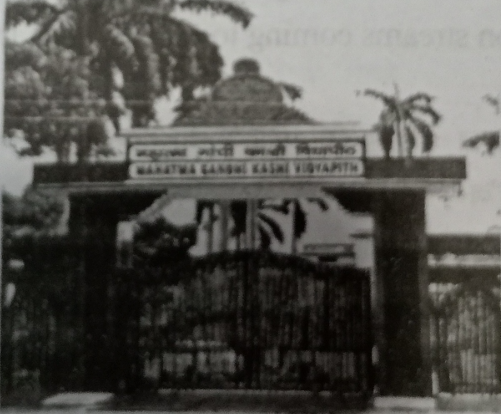
(A) Quit India Movement
(B) Non-Cooperation Movement
(C) Non-Violence Movement
(D) Civil disobedience Movement
Answer: B
35. Which leader of Assam was associated with quitting his legal practice to join the freedom struggle during the non-cooperation movement? {Kamrup R}
(A) Chabilal Upadhaya
(B) Nabinchandra Bordoloi
(C) Tirot Singh
(D) Ambikagiri Raichoudhury
Answer: B
36. Who opined for the first time that there could be an University in Assam or Guwahati? {Kamrup R}
(A) John Berry White
(B) Michael Sedler
(C) Surjya Kumar Bhuyan
(D) Fakhruddin Ali Ahmed
Answer: B
37. Assertion (A): The Assam Association remained Independent and never merged with any political party. {Kamrup R}
Reason (R): It focused only on cultural and Social reforms not on political Independence.
(A) Both A and R are true, R is the correct explanation of A.
(B) Both A and R are true, but R is not the correct explanation of A.
(C) A is true, R is false.
(D) A is false, R is true.
Answer: D
38. The student of Assam who accompanied Mahatma Gandhi in Dandi March was {Kamrup R}
(A) Hemchandra Baruah
(B) Leeladhar Baruah
(C) M(D) Tayebulla
(D) Lakhidar Sarma
Answer: B
39. The first chief commissioner of Assam was- {Kokrajhar}
(A) R. H. Keatings
(B) Andrew Fraser
(C) J. Bamfylde Fuller
(D) William E. Ward
Answer: A
40. The Association Gyan Pradayini Sabha was initiated by- {Kokrajhar}
(A) Anandaram Dhekial Phukan and Gunabhiram Barua
(B) Anandaram Dhekial Phukan and Devicharan Barua
(C) Gagannath Barua and Gunabhiram Barua
(D) Jagannath Barua and Manik Chandra Barooh
Answer: A
41. The university of Gauhati was established on. {Kokrajhar}
Answer: A
42. The president of the first session of Assam Association was- {Kokrajhar}
(A) Jagannath Barua
(B) Manik Chandra Barua
(C) Raja Prabhat Chandra Barua
(D) Chandra Nath Sarma
Answer: C
43. The Assamese Literary society was established under the leadership of- {Lakhimpur}
(i) Devicharan Boruah
(ii) Jagannath Boruah
(iii) Guna Gubinda Phukan
(iv) Manik Ch. Boruah
(A) Only (iii)
(B) (ii) and (iii)
(C) (i) and (iii)
(D) (i) and (iv)
Answer: C
44. Who among the following was not included in the trimurti of Jonaki Age? {Nagaon}
(A) Lakhminath Bezbaruah
(B) Chandra Kumar Agarwala
(C) Jyoti Prasad Agarwala
(D) Hemchandra Goswami
Answer: C
45. The reasons for the growth of Nationalism in Assam in the end of 19th century are – {Nalbari}
(i) Expansion of Education
(ii) Colonial exploitation
(iii) Establishment of National institution
(iv) Economic Development
(A) i, ii
(B) i, iii, iv
(C) i, ii, iii
(D) ii, iii, iv
Answer: C
46. On the basis of the information given in (A) and (R), choose the right answer – {Nalbari}
Assertion (A): Jonaki ushered in a new era in Assam.
Reason (R): The poems and articles published in this magazine reflected the nationalistic views of the authors.
(A) (A) is correct, (R) is incorrect
(B) (A) is incorrect, (R) is correct
(C) Both (A) and (R) are correct and (R) is the correct explanation of (A)
(D) Both (A) and (R) are correct, but (R) is not the correct explanation of (A)
Answer: C
47. The correct order of the following institutions according to the year of establishments is- {Nalbari}
(A) Assam Medical College → Gauhati Medical College → Gauhati University → Assam Agricultural university
(B) Assam Medical College → Gauhati University → Gauhati Medical College → Assam Agricultural university
(C) Assam Agricultural university → Assam Medical College → Gauhati University → Gauhati Medical College
(D) Gauhati Medical College → Gauhati University → Assam Medical College → Assam Agricultural university
Answer: B
48. Arrange the following historical events in chronological order from oldest to newest according to the year of occurance: {Sibsagar}
(i) First Session of the Ahom Sabha
(ii) 41st Session of the Congress
(iii) All Assam Ryot Sabha
(iv) Tilak Memorial School
(A) i – iii – ii – iv
(B) i – iv – ii – iii.
(C) iv – ii – iii – i
(D) iii – i – iv – ii
Answer: B
49. Assertion (A): The Cabinet Mission tried to include Assam and North-East in group- C along with East Bengal. {Sibsagar}
Reason (R): It was because of only Mahatma Gandhi’s opposition that Assam was not included in group C.
(A) The statement A is true, R is False.
(B) The statement R is true, A is false.
(C) Both A and R are true, But R is not correct explanation of A.
(D) Both A and R are true, and R is correct explanation of A.
Answer: A
50. 14 years old Kanakiata Baruah was martyred in which movement. {Sonitpur}
(A) Quit India
(B) Non-cooperation
(C) Swadeshi
(D) Satyagraha
Answer: A
51. Who is the auther of ‘Hemkosha’ {Sonitpur}
(A) Banikanta Kakati
(B) Hemchandra Baruah
(C) Hemchandra Goswami
(D) Banikanta Baruah
Answer: B
52. Who was the first editor of Jonaki? {Sonitpur}
(A) Hemchandra Baruah
(B) Hamchandra Goswami
(C) Jagannath Baruah
(D) Chandra Kumar Agarwala
Answer: D
53. Match the following and choose the correct answer. {Sonitpur}
i) Ambikagiri Rai Choudhury
ii) Padınanath Gohain Baruah
iii) Laxminath Bezbaruah
iv) Anandaram Dhekiai Phukan
a) Gyan Pradayini Sabha
b) Bandini Bharat
c) Ahom Sabha
d) Bin Boragi
(A) (i) (b), (ii) (c), (iii) (d), (iv) (a)
(B) (i) (d), (ii) (a), (iii) (c), (iv) (b)
(C) (i) (b), (ii) (c), (iii) (a), (iv) (d)
(D) (i) (d), (ii) (a), (iii) (c), (iv) (b)
Answer: A
54. The main function of Ahom Sabha established in 1893 – {Sribhumi}
(A) Aroused a sense of unity amongst the Assamese.
(B) To enrich the mother tongue.
(C) Anti opium campaign.
(D) Reduce land tax.
Answer: C
55. The first medical college in North-East India was established {Sribhumi}
(A) Guwahati
(B) Dibrugarh
(C) Titabar
(D) Jorhat
Answer: B
56. Berry White Medical school was established at – {Sribhumi}
(A) Kamrup
(B) Silchar
(C) Dibrugarh
(D) Tezpur
Answer: C
57. Who was the first editor of the magazine “Jonaki”? {Sribhumi}
(A) Jagannath Barua
(B) Ramakanta Barkakati
(C) Laxminath Bezbaruah
(D) Chandra Kumar Agarwalla
Answer: D
58. Match the following and choose the correct answer. {Salmara}
i) Yandaboo Treaty
ii) Asomiya Bhasa Unnati Sadhini Sabha
iii) Assam chatra Sanmilan
iv) All Assam Rayot Sabha
a) 1888
b) 1933
c) 1826
d) 1916
(A) i-c, ii-a, iii-d, iv-b
(B) i-c, ii-d, iii-a, iv-b
(C) i-c, ii-b, iii-a, iv-d
(D) i-c, ii-a, iii-d, iv-b
Answer: A
59. Match the following and choose the correct answer: {Salmara}
i. Gauhati University
ii. Assam Agriculture University
iii. Silchar Medical College
iv. Assam Medical College
(A) 1969
(B) 1968
(C) 1947
(D) 1948
(A) i-c, ii-a, iii-d, iv-b
(B) i-d, ii-b, iii-a, iv-c
(C) i-d, ii-c, iii-a, iv-b
(D) i-d, ii-a, iii-b, iv-c
Answer: D
60. Which three of the following are the Trimurti of Jonaki age. {Salmara}

i. Lakshminath Bezbaruah
ii. Hemchandra Goswami
iii. Chandrakumar Agarwala
iv. Padmanath Gohain Baruah
(A) i, ii, iii,
(B) ii, iii, iv,
(C) i, iii, iv,
(D) i, ii, iv,
Answer: A
61. Two statements are given in the question below as Assertion (A) and Reason (R).
Read the statements and choose the correct option: {Salmara}
Assertion (A) In the late 19th Century the Rayat Sabha was born in Tezpur and Nagaon.
Reason (R) The Rayat Sabha opposed the land revenue Policy introduced by the British government in Assam.
(A) (A) is true, (R) is false.
(B) (A) is false, (R) is true.
(C) Both (A) and (R) are true
(D) Both (A) and (R) are false
Answer: C
62. Which of the following pairs is correctly matched? {Udalguri}
(A) Ambikagiri Raychowdhury – Bandini Bharat
(B) Padmanath Gohain Baruah – Jorhat Public Meeting
(C) Jagannath Baruah – Ahom Sabha
(D) Rayat Sabha – Hemchandra Goswami
Answer: A
63. During the Non-Cooperation Movement, the primary slogan used by the garden workers in protest against various demands was “Gandhi Maharaj ki Jai”.
Which of the following is not correct {Udalguri}
(A) Protest against colonial rule.
(B) Demand for wage increase.
(C) Protest through Strike/Hartal.
(D) All garden workers made this movement a success.
Answer: D
64. Under whose leadership was the first organisation named “Assamese Literary Society” formed in 1872 in Calcutta? {Udalguri}
(A) Debicharan Baruah and Gunagobinda Phukan
(B) Jagannath Baruah and Manik Chandra Baruah
(C) Anandaram Dhekial Phukan and Gunaviram Baruah
(D) Ambikagiri Ray Chowdhury and Gobinda Lahiri
Answer: A
Probable Multiple Choice Questions with Answers for HSLC 2027
1. In which year was the Assamese language replaced by Bengali as the official language in the schools and courts of Assam?
(A) 1826
(B) 1836
(C) 1873
(D) 1888
Answer: B
2. Who submitted a memorandum to (A) J. Moffatt Mills strongly advocating for the reinstatement of the Assamese language?
(A) Hemchandra Barua
(B) Lakshminath Bezbaroa
(C) Anandaram Dhekial Phukan
(D) Gunabhiram Barua
Answer: C
3. What was the name of the first socio-cultural organization formed by the Assamese students in Calcutta in 1872?
(A) Asamiya Bhasa Unnati Sadhini Sabha
(B) Asamiya Literary Society
(C) Assam Chatra Sanmilan
(D) Assam Association
Answer: B
4. In which year was the ‘Asamiya Bhasa Unnati Sadhini Sabha’ (ABUSS) established?
(A) 1872
(B) 1884
(C) 1888
(D) 1903
Answer: C
5. Who among the following was the first editor of the famous Assamese magazine ‘Jonaki’?
(A) Lakshminath Bezbaroa
(B) Hemchandra Goswami
(C) Chandrakumar Agarwala
(D) Padmanath Gohain Barua
Answer: C
6. The first session of the Asam Sahitya Sabha was held in 1917 at:
(A) Guwahati
(B) Jorhat
(C) Sivasagar
(D) Tezpur
Answer: C
7. Who founded the ‘Jorhat Sarvajanik Sabha’ in 1884?
(A) Manik Chandra Barua
(B) Jagannath Barua
(C) Prabhat Chandra Barua
(D) Nabin Chandra Bardoloi
Answer: B
8. Who served as the first General Secretary of the Assam Association formed in 1903?
(A) Raja Prabhat Chandra Barua
(B) Manik Chandra Barua
(C) Tarun Ram Phukan
(D) Jagannath Barua
Answer: B
9. The mouthpiece (magazine) of the Assam Chatra Sanmilan was:
(A) Banhi
(B) Milan
(C) Orunodoi
(D) Jonaki
Answer: B
10. In which year was the Assam Provincial Congress Committee (APCC) formed?
(A) 1905
(B) 1916
(C) 1921
(D) 1926
Answer: C
11. Who was the President of the ad-hoc committee of the Assam Provincial Congress Committee formed in June 1921?
(A) Kuladhar Chaliha
(B) Bishnuram Medhi
(C) Tarun Ram Phukan
(D) Gopinath Bordoloi
Answer: A
12. In which session of the Indian National Congress, held in Assam in 1926, did Mahatma Gandhi participate?
(A) Guwahati (Pandu) Session
(B) Jorhat Session
(C) Tezpur Session
(D) Silchar Session
Answer: A
13. The infamous ‘Cunningham Circular’ was issued to strictly curb the participation of students in which national movement?
(A) Swadeshi Movement
(B) Non-Cooperation Movement
(C) Civil Disobedience Movement
(D) Quit India Movement
Answer: C
14. Who among the following from Assam participated in Mahatma Gandhi’s historic Dandi March?
(A) Chandranath Sarma
(B) Liladhar Barua
(C) Hemchandra Barua
(D) Tayyebulla
Answer: B
15. Kanaklata Barua and Mukunda Kakati were shot dead by the British police during the Quit India Movement at:
(A) Sarupathar
(B) Gohpur
(C) Dhekiajuli
(D) Barpeta
Answer: B
16. Kushal Konwar was hanged by the British on false charges of orchestrating a train derailment at:
(A) Sarupathar
(B) Panbari
(C) Rangiya
(D) Lumding
Answer: A
17. When was Gauhati University officially established?
(A) 26 January 1947
(B) 26 January 1948
(C) 15 August 1947
(D) 20 September 1960
Answer: B
18. The first medical college of North-East India, Assam Medical College, was established in 1947 in:
(A) Guwahati
(B) Silchar
(C) Dibrugarh
(D) Jorhat
Answer: C
19. Who was the founder of the ‘Ahom Sabha’ in 1893?
(A) Purandar Singha
(B) Padmanath Gohain Barua
(C) Jagannath Barua
(D) Haliram Dhekial Phukan
Answer: B
20. The first Assamese dictionary ‘Hemkosh’ was compiled by:
(A) Hemchandra Goswami
(B) Hemchandra Barua
(C) Miles Bronson
(D) Nathan Brown
Answer: B
21. What was the name of the socio-political organization formed by Ambikagiri Raichoudhury?
(A) Assam Association
(B) Asam Sahitya Sabha
(C) Asom Sangrakshini Sabha
(D) Ryot Sabha
Answer: C
22. Who was the Chief Minister of Assam who played a pivotal role in establishing higher educational institutions after independence?
(A) Bishnuram Medhi
(B) Bimala Prasad Chaliha
(C) Tarun Ram Phukan
(D) Gopinath Bordoloi
Answer: D
23. During which movement did the tea garden workers of Assam leave the gardens chanting “Gandhi Maharaj Ki Jai”?
(A) Quit India Movement
(B) Non-Cooperation Movement
(C) Civil Disobedience Movement
(D) Swadeshi Movement
Answer: B
24. Assam Agricultural University was established at Jorhat in the year:
(A) 1948
(B) 1960
(C) 1968
(D) 1969
Answer: D
25. Who presided over the first session of the Assam Chatra Sanmilan held in 1916?
(A) Lakshminath Bezbaroa
(B) Chandrakumar Agarwala
(C) Tarun Ram Phukan
(D) Nabin Chandra Bardoloi
Answer: A
26. Arrange the following socio-political organizations of Assam in chronological order of their establishment:
(i) Assam Association
(ii) Asamiya Bhasa Unnati Sadhini Sabha (ABUSS)
(iii) Jorhat Sarvajanik Sabha
(iv) Asam Sahitya Sabha
(A) (ii) → (iii) → (i) → (iv)
(B) (iii) → (ii) → (i) → (iv)
(C) (ii) → (i) → (iii) → (iv)
(D) (iii) → (i) → (ii) → (iv)
Answer: B
27. Match Column A (Personalities) with Column B (Organizations/Journals) and select the correct option:
Column A
(a) Padmanath Gohain Barua
(b) Jagannath Barua
(c) Manik Chandra Barua
Column B
(i) Jorhat Sarvajanik Sabha
(ii) Assam Association
(iii) Ahom Sabha
(A) (a)-iii, (b)-ii, (c)-i
(B) (a)-iii, (b)-i, (c)-ii
(C) (a)-i, (b)-ii, (c)-iii
(D) (a)-ii, (b)-iii, (c)-i
Answer: B
28. What was the primary reason for the Assam Association merging with the Assam Provincial Congress Committee in 1921?
(A) The British government banned the Assam Association.
(B) The leaders realized the need to align local aspirations with the broader national movement led by Mahatma Gandhi.
(C) The Assam Association went bankrupt and could not sustain itself.
(D) The leaders of the Association wanted to form a new armed revolutionary group.
Answer: B
29. Which of the following statements regarding the ‘Jonaki’ magazine is incorrect?
(A) It ushered in the Romantic Age in Assamese literature.
(B) It was published by the Asamiya Bhasa Unnati Sadhini Sabha.
(C) It openly published strong anti-British political manifestos from its very first issue.
(D) Its prominent writers included the ‘Trimurti’ of Assamese literature.
Answer: C
30. Arrange the establishment of the following educational institutions in chronological order:
(i) Gauhati University
(ii) Assam Agricultural University
(iii) Assam Medical College
(iv) Gauhati Medical College
(A) (iii) → (i) → (iv) → (ii)
(B) (i) → (iii) → (ii) → (iv)
(C) (iii) → (i) → (ii) → (iv)
(D) (i) → (iii) → (iv) → (ii)
Answer: A
31. Read the following statements regarding the Ryot Sabhas and select the correct option:
(i) They demanded a reduction in land revenue.
(ii) They actively supported the British grazing tax.
(iii) They played a significant role in creating political awareness among the peasants of Assam.
(A) Only (i) and (ii) are correct.
(B) Only (ii) and (iii) are correct.
(C) Only (i) and (iii) are correct.
(D) All (i), (ii), and (iii) are correct.
Answer: C
32. The primary objective behind issuing the Cunningham Circular in Assam was to:
(A) Promote western education among the youth.
(B) Force students and their parents to sign a guarantee that they would not participate in any political activities.
(C) Introduce Assamese as a compulsory subject in schools.
(D) Recruit young students into the British army.
Answer: B
33. Which of the following was a highly successful anti-colonial campaign undertaken by the Assamese people during the Non-Cooperation Movement?
(A) The armed uprising at Patharughat.
(B) The massive anti-opium (Kani) eradication drive.
(C) The establishment of a parallel provincial government.
(D) The derailment of military trains across the state.
Answer: B
34. Which of the following leaders is NOT considered a part of the “Trimurti” (Trinity) of the Jonaki Age?
(A) Lakshminath Bezbaroa
(B) Hemchandra Goswami
(C) Padmanath Gohain Barua
(D) Chandrakumar Agarwala
Answer: C
35. Match the national movements with their prominent features/events in Assam:
(a) Non-Cooperation Movement
(b) Civil Disobedience Movement
(c) Quit India Movement
(i) Cunningham Circular
(ii) Mrityu Bahini (Death Squads)
(iii) Anti-Opium Campaign
(A) (a)-iii, (b)-i, (c)-ii
(B) (a)-i, (b)-ii, (c)-iii
(C) (a)-iii, (b)-ii, (c)-i
(D) (a)-ii, (b)-i, (c)-iii
Answer: A
36. Consider the following statements about the Jorhat Sarvajanik Sabha:
Statement 1: It was the first public socio-political organization in Assam.
Statement 2: It openly demanded complete independence (Purna Swaraj) from British rule in 1884.
(A) Statement 1 is correct, and Statement 2 is incorrect.
(B) Statement 1 is incorrect, and Statement 2 is correct.
(C) Both statements are correct.
(D) Both statements are incorrect.
Answer: A
37. Which of the following played the most crucial role in laying the foundation of political awakening in Assam during the late 19th century?
(A) The outbreak of the 1857 revolt in North India.
(B) The language and literary movement led by western-educated Assamese middle-class intelligentsia.
(C) The arrival of Christian missionaries in Sivasagar.
(D) The rapid industrialization of Assam by the British.
Answer: B
38. Choose the correct statement regarding the role of women in Assam during the Quit India Movement:
(A) They were strictly confined to their homes by the Congress leaders.
(B) They solely engaged in peaceful spinning of khadi yarn.
(C) They actively led processions, faced police bullets, and formed ‘Mrityu Bahinis’ (Death Squads).
(D) They participated only in the anti-opium campaigns.
Answer: C
39. What was the historical significance of the Indian National Congress session held at Pandu (Guwahati) in 1926?
(A) It was the first time the Congress demanded the partition of India.
(B) It successfully integrated the local leaders of Assam into mainstream national politics.
(C) It marked the beginning of the Swadeshi Movement in Assam.
(D) It was the session where Subhas Chandra Bose formed the Forward Bloc.
Answer: B
40. Who among the following Assamese leaders bravely advocated for the cause of Assamese identity and language while opposing the dominance of Bengali in the 19th century?
(A) Maniram Dewan
(B) Kushal Konwar
(C) Anandaram Dhekial Phukan
(D) Tarun Ram Phukan
Answer: C
41. Assertion (A): The Assamese language was reinstated as the official language of schools and courts in Assam in 1873.
Reason (R): American Baptist Missionaries and prominent Assamese intellectuals like Anandaram Dhekial Phukan continuously pressured the British government with logical arguments and memorandums.
(A) Both A and R are true, and R is the correct explanation of A.
(B) Both A and R are true, but R is not the correct explanation of A.
(C) A is true, but R is false.
(D) A is false, but R is true.
Answer: A
42. Assertion (A): The ‘Jonaki’ magazine played a pivotal role in the Assamese cultural renaissance.
Reason (R): The magazine heavily focused on writing active political manifestos urging the masses to take up arms against the British.
(A) Both A and R are true, and R is the correct explanation of A.
(B) Both A and R are true, but R is not the correct explanation of A.
(C) A is true, but R is false.
(D) A is false, but R is true.
Answer: C
43. Assertion (A): The student community of Assam vehemently protested against the Cunningham Circular in 1930.
Reason (R): The circular mandated that students and their guardians sign a written bond promising not to participate in any political activities.
(A) Both A and R are true, and R is the correct explanation of A.
(B) Both A and R are true, but R is not the correct explanation of A.
(C) A is true, but R is false.
(D) A is false, but R is true.
Answer: A
44. Assertion (A): The Assam Association merged itself into the newly formed Assam Provincial Congress Committee (APCC) in 1921.
Reason (R): The leaders of the Assam Association realized that without aligning with the broader national movement, securing local political rights would be impossible.
(A) Both A and R are true, and R is the correct explanation of A.
(B) Both A and R are true, but R is not the correct explanation of A.
(C) A is true, but R is false.
(D) A is false, but R is true.
Answer: A
45. Assertion (A): Kushal Konwar was awarded the death penalty by hanging during the Quit India Movement.
Reason (R): The British government found concrete evidence that he was the mastermind behind the assassination of the Chief Commissioner of Assam.
(A) Both A and R are true, and R is the correct explanation of A.
(B) Both A and R are true, but R is not the correct explanation of A.
(C) A is true, but R is false.
(D) A is false, but R is true.
Answer: D
46. Assertion (A): Mahatma Gandhi’s first visit to Assam in 1921 generated an unprecedented wave of patriotism.
Reason (R): Following his visit, thousands of Assamese men and women burnt foreign clothes, boycotted government schools, and actively took up Khadi spinning.
(A) Both A and R are true, and R is the correct explanation of A.
(B) Both A and R are true, but R is not the correct explanation of A.
(C) A is true, but R is false.
(D) A is false, but R is true.
Answer: A
47. Assertion (A): The establishment of Gauhati University in 1948 was a monumental achievement for the people of Assam.
Reason (R): Prior to its establishment, students from Assam had to rely entirely on Calcutta University for pursuing higher education.
(A) Both A and R are true, and R is the correct explanation of A.
(B) Both A and R are true, but R is not the correct explanation of A.
(C) A is true, but R is false.
(D) A is false, but R is true.
Answer: A
48. Assertion (A): The Jorhat Sarvajanik Sabha was the first fully political organization in Assam to fight for independence.
Reason (R): It was formed by Jagannath Barua in 1884 to represent the hopes and aspirations of the people before the British administration.
(A) Both A and R are true, and R is the correct explanation of A.
(B) Both A and R are true, but R is not the correct explanation of A.
(C) A is true, but R is false.
(D) A is false, but R is true.
Answer: D
49. Assertion (A): The anti-opium campaign achieved remarkable success in Assam during the Non-Cooperation Movement.
Reason (R): The British government voluntarily banned the sale of opium recognizing its harmful effects on public health.
(A) Both A and R are true, and R is the correct explanation of A.
(B) Both A and R are true, but R is not the correct explanation of A.
(C) A is true, but R is false.
(D) A is false, but R is true.
Answer: C
50. Assertion (A): Kanaklata Barua became a legendary martyr of the Quit India Movement in 1942.
Reason (R): She fearlessly faced police bullets while leading a procession to hoist the Tricolour at the Gohpur police station.
(A) Both A and R are true, and R is the correct explanation of A.
(B) Both A and R are true, but R is not the correct explanation of A.
(C) A is true, but R is false.
(D) A is false, but R is true.
Answer: A
HSLC PYQs (2016–2026): Important 4/5 Marks Long Questions
HSLC PYQs (2016–2026): Important 2‑ and 3‑Mark Short Questions
1. There was disagreement over the conduct of the agenda of Civil Disobedience in Assam.{2026}
(i) What was the announcement made by the Congress leadership in Assam at that time?
(ii) How did the committed workers continue their organizational work in such situation?
(iii) What were the objectives of the newly formed committees to look into the various matters of the movement?
2. Discuss the role and activities of Asomiya Bhasa Unnati Sadhini Sabha. {2026}
3. Chandra Kumar Agarwala, the editor of Jonaki, in its inaugural issue made it clear that the politics of the rulers was beyond the purview of ‘Jonaki’. {2025}
(a) Who are being referred to as ‘rulers’ in the statement
(b) Which association published Jonaki?
(c) If politics was out of the purview of Jonaki, then how did it contribute to the growth of nationalist consciousness? Provide at least three examples.
4. Discuss the role and activities of Asomiya Bhasa Unnati Sadhini Sabha. {2024}
5. Give an account on the role of Assam in the Civil Disobedience Movement. {2024}
6. Who was the first editor of ‘Jonaki’? {2023}
7. Give an account on the role of Assam in the Quit India movement.{2023}
8. Write the objectives and activities of Jorhat Sarbajani Sabha. {2023}
9. Discuss the contribution of Asomiya Bhasa Unnati Sadhini Sabha in Assam. {2022)
10. Who formed the Ahom Sabha? What was its most important activity? {2020}
11. How did the Non Co-Operation Movement in Assam? {2020}
12. How did Assamese Nationalism grow in Assam during the freedom movement. {2020}
13. Discuss in brief the role played by the people of Assam in “Quit India” Movement. {2019}
14. How were the Ryot Sabhas formed in different parts of Assam. {2019}
15. Give a brief description about the educational institutions established in Assam under the leadership of Bordoloi Ministry. {2018}
16. Give an account of the Jorhat Sarbajanik Sabha {2018}
17. Give an account of the activities and influence of the ‘Quit India Movement’ in Assam. {2018}
18. How were the Ryot Sabha formed in different parts of Assam against the British? {2017}
19. How did the people of Assam take part in the Civil Disobedience Movement? {2017}
20. Write on the contribution of Assam Association towards social reforms in British-ruled Assam. {2016}
21. Write briefly on how the programmes of the Non-Cooperation Movement were fulfilled in Assam. {2016)
22. Write how the people of Assam took part in the Civil Disobedience Movement launched by Mahatma Gandhi. {2016}

District Pre Board (2025–26): Important 2 Marks Short Questions
1. What is the main content of Cunningham Circular? {Kamrup R}
2. What was the primary objective of the All Assam Ahom Association? {Kamrup R}
3. Write the names of two organisations associated with protecting the uniqueness of the Assamese language, re-establishing Assamese as the medium of instruction and promoting Assamese language and literature. {Udalguri}
District Pre Board (2025–26): Important 3 Marks Long Questions
4. To give an account of how the Quit India movement was conducted in Assam in comparison to the rest of India. {Barpeta}
5. ‘The anti-opium campaign during the Non-Cooperation Movement achieved maximum success in Assam.’ How did this impact the British administration? {Darrang}
6. “Discuss the circumstances leading to the martyrdom of Kushal Konwar and Kanaklata Barua” in the context of Quit India Movement and Assam. {Hailakandi}
7. Do you think Jorhat Sarbajanik Sabha and Assam Association took any steps in the field of partition of Bengal. {Kamrup M}
8. Name the persons associated with the Asomiya Bhasa Unnati Sadhini Sabha. {Kokrajhar}
9. Discuss the contribution of Jonaki magazine to the development of Assamese nationalism. {Nalbari}
District Pre Board (2025–26): Important 4 Marks Long Questions
10. Highlight the role of Assam in the Civil Disobedience movement? {Jorhat}
11. Briefly write about the contribution of ‘Jorhat Sarbajanik Sabha’ towards the development of Assamese society in British ruled Assam. {Majuli}
12. Discuss the role and activities of the Asomiya Bhasa Unnati Sadhini Sabha. {Sribhumi}
13. Discuss the role of Assam in the Non-cooperation movement. {Sribhumi}
14. Discuss the role of activities of Asomiya Bhasa Unnati Sadhini Sabha. {Salmara}
District Pre Board (2025–26): Important 5 Marks Long Questions
15. Write the objectives and activities of Jorhat Sarbajonik Sabha. {Bajali}
16. Give an account on the role of Assam in the Non co-operation Movement. {Bajali}
17. Give an account on the role of Assam in 1920-22 Non-Cooperation Movement. {Baksa}
18. Discuss regarding the role and activities of Asomiya Bhasha Unnati Sadhini Sabha. {Baksa}
19. “The Assam Association served as the ‘mouth piece’ of the people of Assam”. {Biswanath}
(a) When was the Assam Association born and under whose leadership? (2 Marks)
(b) What works were done by the Assam Association as a spokesperson of the people of Assam? (3 Marks)
20. Discuss the history of the establishment of medical colleges in Assam. {Cachar}
21. Discuss the expansion of higher educational institutions for agriculture in Assam. {Cachar}
22. Give an account on the role of Assam in civil Disobedience Movement. {Dhubri}
23. Discuss the role and activities of Asomiya Bhasa Unnoti Sadhini Shabh(A) {Dhubri}
24. The renaissance of Assamese literature came the pages of Jonaki- Discuss on the basis of reasoning. {Sibsagar}
25. Write about the contribution of Assam Association to social reforms in British ruled Assam. {Sonitpur}
26. Discuss the contributions and activities of Asomiya Bhasha Unnati Sadhini Sabha. {Sonitpur}
27. In which year was the Cunningham Circular published? What were the subjects included in this circular? What role did this circular play in the Civil Disobedience Movement? Analyze. {Tamulpur}
Some Important Most Probable 2 Marks Questions for HSLC 2027
1. Mention any two major objectives of the Asamiya Bhasa Unnati Sadhini Sabha (ABUSS).
2. Name the three literary giants who are collectively known as the ‘Trimurti’ (Trinity) of the Jonaki Age.
3. Who founded the Jorhat Sarvajanik Sabha and in which year was it established?
4. What was the ‘Cunningham Circular’? Mention its primary motive.
5. Name two prominent leaders from Assam who actively spearheaded the Non-Cooperation Movement.
6. State two primary demands raised by the Ryot Sabhas in Assam during the British rule.
7. In which year was the Assam Provincial Congress Committee (APCC) formed, and who served as the president of its ad-hoc committee?
8. Mention two significant contributions of the Assam Chatra Sanmilan towards the socio-cultural life of Assam.
9. Name the first medical college established in North-East India and state its year of establishment.
10. Who was Kushal Konwar? Mention the specific incident for which he was hanged by the British.
Some Important Most Probable 3 Mark Questions for HSLC 2027
11. Briefly explain the crucial role played by Anandaram Dhekial Phukan and the American Baptist Missionaries in the reinstatement of the Assamese language.
12. How did the publication of the ‘Jonaki’ magazine usher in a new era of national awakening in Assam? Discuss briefly.
13. Write a short note on the establishment of the Assam Association and its significance in the political history of Assam.
14. Briefly discuss the immense impact of Mahatma Gandhi’s visit to Assam in 1921 on the local masses.
15. How did the student community of Assam react to the imposition of the Cunningham Circular during the Civil Disobedience Movement?
16. Outline three key contributions of the Jorhat Sarvajanik Sabha in representing the grievances of the Assamese people to the British administration.
17. Write a short analytical note on the success of the anti-opium (Kani) campaign in Assam during the Non-Cooperation Movement.
18. Briefly describe the heroic sacrifice of Kanaklata Barua during the Quit India Movement.
19. Why was the establishment of Gauhati University in 1948 considered a major milestone in the educational history of Assam? Explain.
20. Write a brief note on the formation of the Ahom Sabha and its primary objectives.
Some Important Most Probable 4 Mark Questions for HSLC 2027
21. Discuss in detail the formation, objectives, and major socio-cultural achievements of the Asamiya Bhasa Unnati Sadhini Sabha (ABUSS).
22. Critically analyze the role and activities of the Assam Association as the premier political mouthpiece of the people of Assam prior to the advent of the Indian National Congress.
23. “The Quit India Movement of 1942 witnessed unprecedented mass participation and brutal suppression in Assam.” Justify this statement highlighting key events, mass uprisings, and the role of martyrs.
24. Evaluate the extraordinary role of women in Assam during the various phases of the Indian National Movement. Give suitable examples.
25. Describe the progress of higher education in Assam during the immediate post-independence perio(D) Highlight the specific efforts and achievements of the Gopinath Bordoloi ministry.
26. Give a detailed account of how the Civil Disobedience Movement was carried out in Assam. What were its major programs and outcomes?
27. How did the Non-Cooperation Movement take shape in Assam? Discuss the major constructive and destructive programs undertaken by the people.
28. Discuss the growth of political consciousness in Assam during the late 19th century, focusing specifically on the functions of the Ryot Sabhas and the Jorhat Sarvajanik Sabha.
29. “The 19th-century Assamese literary renaissance was the direct precursor to the political awakening in the state.” Analyze this statement in the context of the language movement and the birth of various socio-literary organizations.
30. Imagine you are an enthusiastic student leader in Assam in 1930. Draft a passionate and persuasive speech appealing to your fellow students to defy the draconian Cunningham Circular and actively join the national freedom struggle.

 Class 10: Social Science
Indian Freedom Movement and National Awakening in Assam
HSLC English PYQs (2024–2026): Important MCQs with Answers
1. Find out the correct statement(s) about Anandaram Dhekial Phukan – {2026}
(i) The Gyan Pradayini Sabha was founded by Anandaram Dhekial Phukan and Gunaviram Barua in 1857.
(ii) He opposed the introduction of the Bengali language in schools, offices and courts in Assam.
(iii) Assamese Literary Society was formed under the leadership of Anandaram Dhekial Phukan.
(iv) The Ahom Sabha was formed under the leadership of Anandaram Dhekial Phukan.
(A) Only (i) is correct.
(B) (i) and (ii) are correct.
(C) (iii) and (iv) are correct.
(D) Only (ii) is correct.
Answer: B
2. The first national school was established at Gauhati in February 192- {2026}
(A) In the memory of Ambikagiri Raychaudhury.
(B) In the memory of Bal Gangadhar Tilak
(C) In the memory of Lala Lajpat Ray.
(D) In the memory of Bipin Chandra Pal.
Answer: B
3. The modern form of Assamese language is evolved – {2026}
(A) Through ‘Milan’
(B) Through ‘Arunodoi’
(C) Through Assam Association
(D) Through Jorhat Sarbajanik Sabha
Answer: B
4. Which of the following pair is correctly matched ? {2026}
(A) Jorhat Sarbajanik Sabha; in 1895
(B) Assam Association; in 1903
(C) Assam Provincial Congress Committee; in 1925
(D) Ahom Sabha; in 1885
Answer: B
5. From the following options, choose the programme and the freedom movement led by Mahatma Gandhi, in which Leeladhar Baruah from Assam joined.{2025}
(A) Dandi March, Non-Cooperation Movement
(B) Dandi March, Civil Disobedience Movement
(C) Collection of funds through Tilak Swarajya Fund, Non-Cooperation Movement
(D) Historic August Meeting in Bombay, Quit India Movement
Answer: B
6. The consumption of Abkari opium in Assam fell from 1615 maunds in 1920-21 to 993 maunds in 1922-23.
Which of the following statements correctly explains the fall in the consumption of opium? {2025}
(A) The British Government recognising the ill effects of opium consumption restricted its sale.
(B) People understood the ill effects of opium consumption.
(C) There was fall in demand for opium among the people.
(D) Vigorous anti-opium campaign led by the Congress workers.
Answer: D
7. Assam Chatra Sanmilan was formed in the year. {2024}
(A) 1916
(B) 1917
(C) 1918
(D) 1920
Answer: A
8. Which of the literatures mentioned below are works of Hemchandra Goswami? {2024}
(i) Kumudini
(ii) Phular Saki
(iii) Sadhu Charitra
(iv) Manomoti
(A) (i), (ii), (iii)
(B) (ii), (iii), (iv)
(C) (i), (iii), (iv)
(D) (i), (ii), (iv)
Answer: A
Assam’s Various District Pre‑Board (2025–26) MCQs With Answers
1. Which organisation played a leading role in the publication of Hemchandra Baruah’s ‘Hemkosh’? {Bajali}
(A) Gyan Pradayini Sabha
(B) Asomiya Literary Society
(C) Assamese Language Development Association
(D) Assam Association
Answer: C
2. Assertion (A) : Many young and elderly Assamese participated in the Non-cooperation movement of 1920. Their participation increased the popularity of the movement. During this time, a trend of unification was seen among the nationalist forces of Assam. {Bajali}
Reason (R) : This movement played an important roe in the unification of Assam’s nationalist forces.
(A) (A) and (R) are correct and (R) is correct explanation of (A)
(B) (A) and (R) are correct but (R) is not correct explanation of (A)
(C) (A) is correct but (R) is incorrect
(D) (A) is incorrect but (R) is correct
Answer: A
3. The Bengali language was introduced in Assam- {Baksa}
(A) 1836
(B) 1873
(C) 1872
(D) 1857
Answer: A
4. When was the Gauhati Medical College formally started? {Baksa}
(A) 7th Nov. 1959
(B) 20th Sep. 1968
(C) 20th Sep. 1960
(D) 26th June 1960
Answer: C
5. Which one of the following is not an objective of the Rayat Sabha ? {Baksa}
(A) abolition of grazing tax
(B) reduction of land tax
(C) to ban the migration of Bengali from East Bengal
(D) to improve the conditions of mass people
Answer: C
6. Which of the following options are correct about Assam Chatra Sanmilan? {Barpeta}
(i) The Assam Chatra Sanmilan was formed in 1916
(ii) The main objectives of this Sanmilan was to promote the Assamese language
(iii) Its first session was held a Jorhat under the chairmanship of Lakhsminath Bezbaruah.
(iv) Milan was the mouthpiece of the chatra sanmilan
(A) (i), (ii) and (iii) are correct
(B) (ii), (iii) and (iv) are correct
(C) (i), (ii) and (iv) are correct
(D) (i), (iii) and (iv) are correct
Answer: C
7. Which of the following public welfare works were taken by the British Government to keep the Brahmaputra Valley people away from the influence of Swadeshi Movement? {Biswanath}
(a) To reintroduce Moujadary system in the Brahmaputra Valley.
(b) Reducing increased taxes and changes in government customs system.
(c) To introduce Assamese language and literature in the syllabus of entrance examination of calcutta (Kolkata) University.
(d) To introduce 20 point settlement of land.
(A) a, c, d
(B) a, b, c
(C) b, c, d
(D) a, b, c, d
Answer: A
8. “To develop a strong scientific base for the Assamese language and took initiative of adopting a correct and standardised grammatical system in all the vernacular schools of Assam” – Who took this initiative? {Biswanath}
(A) Gyan Pradayini Sabha
(B) Assamese Literary Society
(C) Asomiya Bhasa Unnati Sadhini Sabha
(D) Assam Sahitya Sabha
Answer: C
9. Assertion (A): The Rayot Sabha did not play significant role in the peasant movement of 1893-94 which took place at Rangia, Lachima, Sarthebari and Patharughat against the enhancement of land tax. {Biswanath}
Reason (R): It demanded for the abolition of grazing tax, reduction of land tax and to ban the migration of peasants from East Bengal.
(A) (A) is true (R) is false.
(B) (A) is false (R) is true.
(C) Both (A) and (R) are true and (R) is the correct explanation of (A).
(D) Both (A) and (R) are true but (R) is not the correct explanation of (A)
Answer: D
10. (A) Jorhat Sarbajanik Sabha’ was the first Public Political Association of Assam {Bongaigaon}
(B) The Jorhat Sarbajanik Sabha initially opposed thepartition of Bengal but later abandoned the anti-breaking attitude.
(A) Both (A) and (B) are true
(B) Both (A) and (B) are not true
(C) (A) is true (B) is false
(D) (A) is false (B) is true
Answer: A
11. Match the following and choose the correct answer. {Bongaigaon}
The following table:
Part-A
(i) Jorhat Sarbajanik Sabha,
(ii) Ahom Sabha,
(iii) Asomiya Bhasa Unnati Sadhini Sabha,
(iv) Assam Association,
Part-B
(a) 1903
(b) 1884
(c) 1893
(d) 1888
(A) (i) a, (ii) b, (iii) c, (iv) d
(B) (ii) a, (iii) b, (iv) c, (i) d
(C) (i) b, (ii) c, (iii) d, (iv) a
(D) (iii) a, (ii) b, (i) c, (iv) d
Answer: C
12. Arrange the following events in the correct order – {Bongaigaon}
(i) Assam Association
(ii) Assam Chatra Sanmilan
(iii) Assamese Literary Society
(iv) Ahom Sabha
(A) (i)→(ii)→(iii)→(iv)
(B) (iii)→(iv)→(i)→(ii)
(C) (ii)→(iii)→(iv)→(i)
(D) (iv)→(i)→(iii)→(ii)
Answer: B
13. Which of the following can be regarded as a marker of Assamese nationalism? {Cachar}
(A) The cultural and literary renaissance started by Orunodoi
(B) Assamese language was re-established as the official language of Assam in 1873
(C) Publication of Hemkosh
(D) Establishment of Asomiya Bhasa Unnati Sadhini Sabha
Answer: D
14. This was first published by the American Baptist Missionaries in 1846. This gave shape to the modern form of Assamese language which is in use now. What is being described here? {Cachar}
(A) Arunudoi
(B) Charyapada
(C) Namghosa
(D) Padya Geeta
Answer: A
15. Match Column ‘A’ with ‘B’ {Cachar}
The following table:
Column A
a) Assam Association
b) Ahom Sabha
c) Jorhat Sarbajanin Sabha
d) Gyan Pradayini Sabha
Column B
(i) Manik
(ii) Anandaram Dhekiyal Phukan
(iii) Jagannath Barua
(iv) Padmanath Gohin Barah
(A) a-(i), b-(iii), c-(ii), d-(iv)
(B) a-(i), b-(iv), c-(iii), d-(ii)
(C) a-(ii), b-(i), c-(iv), d-(iii)
(D) a-(ii), b-(iii), c-(i), d-(iv)
Answer: B
16. Arrange the events related to the Non-Cooperation Movement in Assam in proper sequence. {Cachar}
(i) Visit of Gandiji to Assam.
(ii) Establishment of national school at Guwahati.
(iii) Holding of the 17th session of Assam Association at Tejpur.
(iv) Formation of Assam Provincial Congress Committee.
(v)Protest of the tea garden labourers of chargola and Longai against their colonial masters.
(A) i, ii, iii, iv, v
(B) ii, iii, iv, v, i
(C) iii, ii, v, iv, i
(D) iv, iii, ii, i, v
Answer: C
17. Who formed the Assam Association in 1903? {Dhubri}
(A) Manikchandra Barua
(B) Padmanath Gohain Barua
(C) Nabin Chandra Bordoloi
(D) Hemchandra Goswami
Answer: A
18. Gauhati University established in – {Dhubri}
(A) 1946
(B) 1947
(C) 1948
(D) 1949
Answer: C
19. Some organization are listed with the time of establishment are given below – {Dhubri}
(a) Jorhat Sarbajanik Shabha
(b) Ahom Shabha
(c) Assam Association
(d) Assam Chatra Sanmilan
(i) 1916
(ii) 1903
(iii)1893
(iv) 1884
(A) (a-i) (b-ii) (c-iii) (d-iv)
(B) (a-iv) (b-iii) (c-ii) (d-i)
(C) (a-iv) (b-iii) (c-i) (d-ii)
(D) (a-i) (b-ii) (c-iv) (d-iii)
Answer: B
20. The area under Eastern Bengal and Assam is – {Goalpara}
(A) Rajshahi, Dhaka, Bengal Province
(B) Rajshahi, Dhaka, Assam
(C) Chattagram, Dhaka, Rajshahi
(D) Chattagram, Dhaka, Rajshahi, Assam
Answer: D
21. Who was the first formally elected president of APCC? {Goalpara}
(A) Omeo Kumar Das
(B) Bishnuram Medhi
(C) Gopinath Bordoloi
(D) Nobin Chandra Bordoloi
Answer: B
22. Match the following and choose the correct option: {Goalpara}
Name of institution
Year of establishment
(a) Gauhati University
(b) Assam Agriculture University
(c) Assam Medical College
(d) Gauhati Medical College
(e) Silchar Medical College
(i) 1960
(ii) 1947
(iii) 1968
(iv) 1969
(v) 1948
(A) (a) – (i), (b) – (ii), (c) – (iii), (d)-(iv), (e) – (v)
(B) (a) – (v), (b) – (iv), (c) – (ii), (d) – (i), (e) (iii)
(C) (a) – (v), (b) – (iv), (c) – (i), (d) – (ii), (e) – (iii)
(D) (a) – (ii), (b) – (iv), (c) – (v), (d) – (i), (e) – (iii)
Answer: B
23. Which of the following person was the secretary of Ahom Sabha. {Hailakandi}

Choose the Correct Option:
(A) a
(B) b
(C) c
(D) d
Answer: D
24. Read the following description and answer the below question: {Hailakandi}
The establishment of the Asomiya Bhasa Unnati Sadhini Sabha (ABUSS) in 1888 by Assamese students in Calcutta was a landmark in the history of Assam. In 1889, the Sabha launched its mouthpiece, Jonaki, with Chandra Kumar Agarwala as its first editor. This period, known as the Jonaki Age, introduced romanticism intoAssamese literature and played a vital role in unifying the linguistic identity of the region.Led by the “Trimurti”-Lakshminath Bezbaroa, Chandra Kumar Agarwala,and Hemchandra Goswami-the magazine didn’t just publish poetry; it became a platform for socio-political discussions that laid the groundwork for future nationalist movements.
Based on the case study, how did the onaki magazine primarily contribute to “National Awakening” in Assam?
(A) By providing military training to local youth.
(B) By unifying linguistic identity and fostering cultural pride.
(C) By demanding immediate complete independence ‘Purna Swaraj’ .
(D) By acting as a direct political party under British rule.
Answer: B
25. Which of the following best describes the “Trimurti” of the Jonaki Age? {Hailakandi}
(A)Three revolutionary leaders who led an armed rebellion.
(B)Three poets who wrote only about the Indian National Congress.
(C)Three iconic literary figures who pioneered modern Assamese literature.
(D)The first three British officers to recognize the Assamese language.
Answer: C
26. Which of the following institutions were established due to the efforts of the Gopinath Bordoloi ministry after 1946? {Hailakandi}
(A) Cotton College and Guwahati High Court.
(B) Gauhati University, Assam Medical College, and Assam Agricultural University.
(C) Jorhat Engineering College and Dibrugarh University.
(D) Assam Agricultural University and Silchar Medical College.
Answer: B
27. Consider the following associations. Choose the correct chronological order From the following options. {Hailakandi}
i) The Muslim League
ii) The Ahom Sabha
iii) Indian National Congress
iv) Jorhat Sarbajanik Sabha
(A) i,ii,iii,iv
(B) ii, iv,ii, i
(C) iv, iii,ii,i
(D) iii,ii, iv,i
Answer: C
28. Consider the following statement: {Jorhat}
1. Assam students boycotted schools and college during the Quit India movement.
2. People attacked government officer and disrupted communication lines.
3. Tea garden labouress refused to participate in the movement.
(A) 1 and 2 only
(B) 2 and 3 only
(C) 1 and 3 only
(D) 1,2 and 3
Answer: A
29. Match the following. {Jorhat}
Column A:
(A) Assam Association
(B) Assam Chatra Sanmilan
(C) Congress Party Assam
(D) Ryot Sabha
Column B:
i) Plateform for students activism
ii) Represented Assamese interests before British administration
iii) Organized peasant issues
iv) Played a major role in the freedom struggle in Assam
Options:
(A) a-ii, b-i, c-iv, d-iii
(B) a-ii, b-iv, c-iii, d-i
(C) a-iii, b-iv, c-i, d-ii
(D) a-iv, b-ii, c-iii, d-i
Answer: A
30. Match Column A with Column (B) {Jorhat}
Column A:
(A) Assam Veterinary College
(B) Assam Agricultural University
(C) Assam Medical College officially named
(D) Silchar Medical College
Column B:
i) 1968
ii) 1947
iii) 1948
iv) 1969
Options:
(A) a-iii, b-iv, c-ii, d-i
(B) a-iii, b-ii, c-iv, d-i
(C) a-i, b-ii, c-iii, d-iv
(D) a-iv, b-iii, c-i, d-ii
Answer: A
31. Match the following and find out the correct one from the options given below : {Kamrup M}
1. Assam Medical College
2. Assam Agriculture University
3. Gauhati University
4. Silchar Medical College
a) 1969
b) 1968
c) 1947
d) 1948
(A) 1 – (c), 2 – (a), 3 – (d), 4 – (b)
(B) 1 – (a), 2 – (b), 3 – (c), 4 – (d)
(C) 1 – (d), 2 – (c), 3 – (a), 4 – (b)
(D) 1 – (c), 2 – (d), 3 – (b), 4 – (a)
Answer: A
32. Match the following and find out the correct one from options given below: {Kamrup M}
1. Haribilash Agarwala
2. Chandra Kr. Agarwala
3. Padmanath Gohain Baruah
4. Naranarayan Singha
i) Ahom Sabha
ii) Jorhat Sarbojonik Sabha
iii) Tezpur Rayot Sabha
iv) Junaki
(A) 1 – (iv), 2 – (iii), 3 – (i), 4 – (ii)
(B) 1 – (ii), 2 – (iv), 3 – (iii), 4 – (i)
(C) 1 – (i), 2 – (ii), 3 – (iii), 4 – (iv)
(D) 1 – (iii), 2 – (iv), 3 – (i), 4 – (ii)
Answer: D
33. Assertion (A): The British annexation of Assam led to economic and political restructuring of the region {Kamrup M}
Reason (R): Modern education introduced by the British helped to create a newly educated Assamese middle class which was inspired by patriotism and nationalist sentiments.
(A) Both A and R are true, and R is correct explanation of A.
(B) Both A and R are true, but R is not correct explanation of A.
(C) A true, R false
(D) A false, R true
Answer: B
34. During which movement was the above institution formed? {Kamrup M}
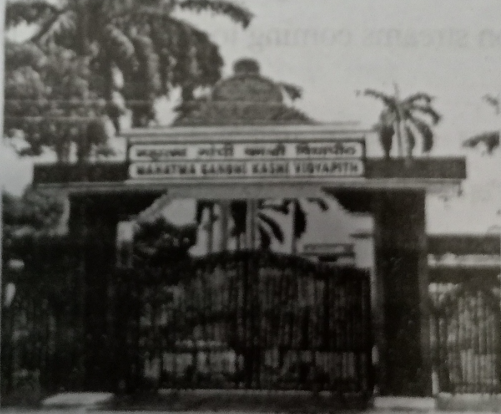
(A) Quit India Movement
(B) Non-Cooperation Movement
(C) Non-Violence Movement
(D) Civil disobedience Movement
Answer: B
35. Which leader of Assam was associated with quitting his legal practice to join the freedom struggle during the non-cooperation movement? {Kamrup R}
(A) Chabilal Upadhaya
(B) Nabinchandra Bordoloi
(C) Tirot Singh
(D) Ambikagiri Raichoudhury
Answer: B
36. Who opined for the first time that there could be an University in Assam or Guwahati? {Kamrup R}
(A) John Berry White
(B) Michael Sedler
(C) Surjya Kumar Bhuyan
(D) Fakhruddin Ali Ahmed
Answer: B
37. Assertion (A): The Assam Association remained Independent and never merged with any political party. {Kamrup R}
Reason (R): It focused only on cultural and Social reforms not on political Independence.
(A) Both A and R are true, R is the correct explanation of A.
(B) Both A and R are true, but R is not the correct explanation of A.
(C) A is true, R is false.
(D) A is false, R is true.
Answer: D
38. The student of Assam who accompanied Mahatma Gandhi in Dandi March was {Kamrup R}
(A) Hemchandra Baruah
(B) Leeladhar Baruah
(C) M(D) Tayebulla
(D) Lakhidar Sarma
Answer: B
39. The first chief commissioner of Assam was- {Kokrajhar}
(A) R. H. Keatings
(B) Andrew Fraser
(C) J. Bamfylde Fuller
(D) William E. Ward
Answer: A
40. The Association Gyan Pradayini Sabha was initiated by- {Kokrajhar}
(A) Anandaram Dhekial Phukan and Gunabhiram Barua
(B) Anandaram Dhekial Phukan and Devicharan Barua
(C) Gagannath Barua and Gunabhiram Barua
(D) Jagannath Barua and Manik Chandra Barooh
Answer: A
41. The university of Gauhati was established on. {Kokrajhar}
(A) 26th January 1948
(B) 26th January 1948
(C) 26th December 1948
(D) 26th December 1949
Answer: A
42. The president of the first session of Assam Association was- {Kokrajhar}
(A) Jagannath Barua
(B) Manik Chandra Barua
(C) Raja Prabhat Chandra Barua
(D) Chandra Nath Sarma
Answer: C
43. The Assamese Literary society was established under the leadership of- {Lakhimpur}
(i) Devicharan Boruah
(ii) Jagannath Boruah
(iii) Guna Gubinda Phukan
(iv) Manik Ch. Boruah
(A) Only (iii)
(B) (ii) and (iii)
(C) (i) and (iii)
(D) (i) and (iv)
Answer: C
44. Who among the following was not included in the trimurti of Jonaki Age? {Nagaon}
(A) Lakhminath Bezbaruah
(B) Chandra Kumar Agarwala
(C) Jyoti Prasad Agarwala
(D) Hemchandra Goswami
Answer: C
45. The reasons for the growth of Nationalism in Assam in the end of 19th century are – {Nalbari}
(i) Expansion of Education
(ii) Colonial exploitation
(iii) Establishment of National institution
(iv) Economic Development
(A) i, ii
(B) i, iii, iv
(C) i, ii, iii
(D) ii, iii, iv
Answer: C
46. On the basis of the information given in (A) and (R), choose the right answer – {Nalbari}
Assertion (A): Jonaki ushered in a new era in Assam.
Reason (R): The poems and articles published in this magazine reflected the nationalistic views of the authors.
(A) (A) is correct, (R) is incorrect
(B) (A) is incorrect, (R) is correct
(C) Both (A) and (R) are correct and (R) is the correct explanation of (A)
(D) Both (A) and (R) are correct, but (R) is not the correct explanation of (A)
Answer: C
47. The correct order of the following institutions according to the year of establishments is- {Nalbari}
(A) Assam Medical College → Gauhati Medical College → Gauhati University → Assam Agricultural university
(B) Assam Medical College → Gauhati University → Gauhati Medical College → Assam Agricultural university
(C) Assam Agricultural university → Assam Medical College → Gauhati University → Gauhati Medical College
(D) Gauhati Medical College → Gauhati University → Assam Medical College → Assam Agricultural university
Answer: B
48. Arrange the following historical events in chronological order from oldest to newest according to the year of occurance: {Sibsagar}
(i) First Session of the Ahom Sabha
(ii) 41st Session of the Congress
(iii) All Assam Ryot Sabha
(iv) Tilak Memorial School
(A) i – iii – ii – iv
(B) i – iv – ii – iii.
(C) iv – ii – iii – i
(D) iii – i – iv – ii
Answer: B
49. Assertion (A): The Cabinet Mission tried to include Assam and North-East in group- C along with East Bengal. {Sibsagar}
Reason (R): It was because of only Mahatma Gandhi’s opposition that Assam was not included in group C.
(A) The statement A is true, R is False.
(B) The statement R is true, A is false.
(C) Both A and R are true, But R is not correct explanation of A.
(D) Both A and R are true, and R is correct explanation of A.
Answer: A
50. 14 years old Kanakiata Baruah was martyred in which movement. {Sonitpur}
(A) Quit India
(B) Non-cooperation
(C) Swadeshi
(D) Satyagraha
Answer: A
51. Who is the auther of ‘Hemkosha’ {Sonitpur}
(A) Banikanta Kakati
(B) Hemchandra Baruah
(C) Hemchandra Goswami
(D) Banikanta Baruah
Answer: B
52. Who was the first editor of Jonaki? {Sonitpur}
(A) Hemchandra Baruah
(B) Hamchandra Goswami
(C) Jagannath Baruah
(D) Chandra Kumar Agarwala
Answer: D
53. Match the following and choose the correct answer. {Sonitpur}
i) Ambikagiri Rai Choudhury
ii) Padınanath Gohain Baruah
iii) Laxminath Bezbaruah
iv) Anandaram Dhekiai Phukan
a) Gyan Pradayini Sabha
b) Bandini Bharat
c) Ahom Sabha
d) Bin Boragi
(A) (i) (b), (ii) (c), (iii) (d), (iv) (a)
(B) (i) (d), (ii) (a), (iii) (c), (iv) (b)
(C) (i) (b), (ii) (c), (iii) (a), (iv) (d)
(D) (i) (d), (ii) (a), (iii) (c), (iv) (b)
Answer: A
54. The main function of Ahom Sabha established in 1893 – {Sribhumi}
(A) Aroused a sense of unity amongst the Assamese.
(B) To enrich the mother tongue.
(C) Anti opium campaign.
(D) Reduce land tax.
Answer: C
55. The first medical college in North-East India was established {Sribhumi}
(A) Guwahati
(B) Dibrugarh
(C) Titabar
(D) Jorhat
Answer: B
56. Berry White Medical school was established at – {Sribhumi}
(A) Kamrup
(B) Silchar
(C) Dibrugarh
(D) Tezpur
Answer: C
57. Who was the first editor of the magazine “Jonaki”? {Sribhumi}
(A) Jagannath Barua
(B) Ramakanta Barkakati
(C) Laxminath Bezbaruah
(D) Chandra Kumar Agarwalla
Answer: D
58. Match the following and choose the correct answer. {Salmara}
i) Yandaboo Treaty
ii) Asomiya Bhasa Unnati Sadhini Sabha
iii) Assam chatra Sanmilan
iv) All Assam Rayot Sabha
a) 1888
b) 1933
c) 1826
d) 1916
(A) i-c, ii-a, iii-d, iv-b
(B) i-c, ii-d, iii-a, iv-b
(C) i-c, ii-b, iii-a, iv-d
(D) i-c, ii-a, iii-d, iv-b
Answer: A
59. Match the following and choose the correct answer: {Salmara}
i. Gauhati University
ii. Assam Agriculture University
iii. Silchar Medical College
iv. Assam Medical College
(A) 1969
(B) 1968
(C) 1947
(D) 1948
(A) i-c, ii-a, iii-d, iv-b
(B) i-d, ii-b, iii-a, iv-c
(C) i-d, ii-c, iii-a, iv-b
(D) i-d, ii-a, iii-b, iv-c
Answer: D
60. Which three of the following are the Trimurti of Jonaki age. {Salmara}

i. Lakshminath Bezbaruah
ii. Hemchandra Goswami
iii. Chandrakumar Agarwala
iv. Padmanath Gohain Baruah
(A) i, ii, iii,
(B) ii, iii, iv,
(C) i, iii, iv,
(D) i, ii, iv,
Answer: A
61. Two statements are given in the question below as Assertion (A) and Reason (R).
Read the statements and choose the correct option: {Salmara}
Assertion (A) In the late 19th Century the Rayat Sabha was born in Tezpur and Nagaon.
Reason (R) The Rayat Sabha opposed the land revenue Policy introduced by the British government in Assam.
(A) (A) is true, (R) is false.
(B) (A) is false, (R) is true.
(C) Both (A) and (R) are true
(D) Both (A) and (R) are false
Answer: C
62. Which of the following pairs is correctly matched? {Udalguri}
(A) Ambikagiri Raychowdhury – Bandini Bharat
(B) Padmanath Gohain Baruah – Jorhat Public Meeting
(C) Jagannath Baruah – Ahom Sabha
(D) Rayat Sabha – Hemchandra Goswami
Answer: A
63. During the Non-Cooperation Movement, the primary slogan used by the garden workers in protest against various demands was “Gandhi Maharaj ki Jai”.
Which of the following is not correct {Udalguri}
(A) Protest against colonial rule.
(B) Demand for wage increase.
(C) Protest through Strike/Hartal.
(D) All garden workers made this movement a success.
Answer: D
64. Under whose leadership was the first organisation named “Assamese Literary Society” formed in 1872 in Calcutta? {Udalguri}
(A) Debicharan Baruah and Gunagobinda Phukan
(B) Jagannath Baruah and Manik Chandra Baruah
(C) Anandaram Dhekial Phukan and Gunaviram Baruah
(D) Ambikagiri Ray Chowdhury and Gobinda Lahiri
Answer: A
Probable Multiple Choice Questions with Answers for HSLC 2027
1. In which year was the Assamese language replaced by Bengali as the official language in the schools and courts of Assam?
(A) 1826
(B) 1836
(C) 1873
(D) 1888
Answer: B
2. Who submitted a memorandum to (A) J. Moffatt Mills strongly advocating for the reinstatement of the Assamese language?
(A) Hemchandra Barua
(B) Lakshminath Bezbaroa
(C) Anandaram Dhekial Phukan
(D) Gunabhiram Barua
Answer: C
3. What was the name of the first socio-cultural organization formed by the Assamese students in Calcutta in 1872?
(A) Asamiya Bhasa Unnati Sadhini Sabha
(B) Asamiya Literary Society
(C) Assam Chatra Sanmilan
(D) Assam Association
Answer: B
4. In which year was the ‘Asamiya Bhasa Unnati Sadhini Sabha’ (ABUSS) established?
(A) 1872
(B) 1884
(C) 1888
(D) 1903
Answer: C
5. Who among the following was the first editor of the famous Assamese magazine ‘Jonaki’?
(A) Lakshminath Bezbaroa
(B) Hemchandra Goswami
(C) Chandrakumar Agarwala
(D) Padmanath Gohain Barua
Answer: C
6. The first session of the Asam Sahitya Sabha was held in 1917 at:
(A) Guwahati
(B) Jorhat
(C) Sivasagar
(D) Tezpur
Answer: C
7. Who founded the ‘Jorhat Sarvajanik Sabha’ in 1884?
(A) Manik Chandra Barua
(B) Jagannath Barua
(C) Prabhat Chandra Barua
(D) Nabin Chandra Bardoloi
Answer: B
8. Who served as the first General Secretary of the Assam Association formed in 1903?
(A) Raja Prabhat Chandra Barua
(B) Manik Chandra Barua
(C) Tarun Ram Phukan
(D) Jagannath Barua
Answer: B
9. The mouthpiece (magazine) of the Assam Chatra Sanmilan was:
(A) Banhi
(B) Milan
(C) Orunodoi
(D) Jonaki
Answer: B
10. In which year was the Assam Provincial Congress Committee (APCC) formed?
(A) 1905
(B) 1916
(C) 1921
(D) 1926
Answer: C
11. Who was the President of the ad-hoc committee of the Assam Provincial Congress Committee formed in June 1921?
(A) Kuladhar Chaliha
(B) Bishnuram Medhi
(C) Tarun Ram Phukan
(D) Gopinath Bordoloi
Answer: A
12. In which session of the Indian National Congress, held in Assam in 1926, did Mahatma Gandhi participate?
(A) Guwahati (Pandu) Session
(B) Jorhat Session
(C) Tezpur Session
(D) Silchar Session
Answer: A
13. The infamous ‘Cunningham Circular’ was issued to strictly curb the participation of students in which national movement?
(A) Swadeshi Movement
(B) Non-Cooperation Movement
(C) Civil Disobedience Movement
(D) Quit India Movement
Answer: C
14. Who among the following from Assam participated in Mahatma Gandhi’s historic Dandi March?
(A) Chandranath Sarma
(B) Liladhar Barua
(C) Hemchandra Barua
(D) Tayyebulla
Answer: B
15. Kanaklata Barua and Mukunda Kakati were shot dead by the British police during the Quit India Movement at:
(A) Sarupathar
(B) Gohpur
(C) Dhekiajuli
(D) Barpeta
Answer: B
16. Kushal Konwar was hanged by the British on false charges of orchestrating a train derailment at:
(A) Sarupathar
(B) Panbari
(C) Rangiya
(D) Lumding
Answer: A
17. When was Gauhati University officially established?
(A) 26 January 1947
(B) 26 January 1948
(C) 15 August 1947
(D) 20 September 1960
Answer: B
18. The first medical college of North-East India, Assam Medical College, was established in 1947 in:
(A) Guwahati
(B) Silchar
(C) Dibrugarh
(D) Jorhat
Answer: C
19. Who was the founder of the ‘Ahom Sabha’ in 1893?
(A) Purandar Singha
(B) Padmanath Gohain Barua
(C) Jagannath Barua
(D) Haliram Dhekial Phukan
Answer: B
20. The first Assamese dictionary ‘Hemkosh’ was compiled by:
(A) Hemchandra Goswami
(B) Hemchandra Barua
(C) Miles Bronson
(D) Nathan Brown
Answer: B
21. What was the name of the socio-political organization formed by Ambikagiri Raichoudhury?
(A) Assam Association
(B) Asam Sahitya Sabha
(C) Asom Sangrakshini Sabha
(D) Ryot Sabha
Answer: C
22. Who was the Chief Minister of Assam who played a pivotal role in establishing higher educational institutions after independence?
(A) Bishnuram Medhi
(B) Bimala Prasad Chaliha
(C) Tarun Ram Phukan
(D) Gopinath Bordoloi
Answer: D
23. During which movement did the tea garden workers of Assam leave the gardens chanting “Gandhi Maharaj Ki Jai”?
(A) Quit India Movement
(B) Non-Cooperation Movement
(C) Civil Disobedience Movement
(D) Swadeshi Movement
Answer: B
24. Assam Agricultural University was established at Jorhat in the year:
(A) 1948
(B) 1960
(C) 1968
(D) 1969
Answer: D
25. Who presided over the first session of the Assam Chatra Sanmilan held in 1916?
(A) Lakshminath Bezbaroa
(B) Chandrakumar Agarwala
(C) Tarun Ram Phukan
(D) Nabin Chandra Bardoloi
Answer: A
26. Arrange the following socio-political organizations of Assam in chronological order of their establishment:
(i) Assam Association
(ii) Asamiya Bhasa Unnati Sadhini Sabha (ABUSS)
(iii) Jorhat Sarvajanik Sabha
(iv) Asam Sahitya Sabha
(A) (ii) → (iii) → (i) → (iv)
(B) (iii) → (ii) → (i) → (iv)
(C) (ii) → (i) → (iii) → (iv)
(D) (iii) → (i) → (ii) → (iv)
Answer: B
27. Match Column A (Personalities) with Column B (Organizations/Journals) and select the correct option:
Column A
(a) Padmanath Gohain Barua
(b) Jagannath Barua
(c) Manik Chandra Barua
Column B
(i) Jorhat Sarvajanik Sabha
(ii) Assam Association
(iii) Ahom Sabha
(A) (a)-iii, (b)-ii, (c)-i
(B) (a)-iii, (b)-i, (c)-ii
(C) (a)-i, (b)-ii, (c)-iii
(D) (a)-ii, (b)-iii, (c)-i
Answer: B
28. What was the primary reason for the Assam Association merging with the Assam Provincial Congress Committee in 1921?
(A) The British government banned the Assam Association.
(B) The leaders realized the need to align local aspirations with the broader national movement led by Mahatma Gandhi.
(C) The Assam Association went bankrupt and could not sustain itself.
(D) The leaders of the Association wanted to form a new armed revolutionary group.
Answer: B
29. Which of the following statements regarding the ‘Jonaki’ magazine is incorrect?
(A) It ushered in the Romantic Age in Assamese literature.
(B) It was published by the Asamiya Bhasa Unnati Sadhini Sabha.
(C) It openly published strong anti-British political manifestos from its very first issue.
(D) Its prominent writers included the ‘Trimurti’ of Assamese literature.
Answer: C
30. Arrange the establishment of the following educational institutions in chronological order:
(i) Gauhati University
(ii) Assam Agricultural University
(iii) Assam Medical College
(iv) Gauhati Medical College
(A) (iii) → (i) → (iv) → (ii)
(B) (i) → (iii) → (ii) → (iv)
(C) (iii) → (i) → (ii) → (iv)
(D) (i) → (iii) → (iv) → (ii)
Answer: A
31. Read the following statements regarding the Ryot Sabhas and select the correct option:
(i) They demanded a reduction in land revenue.
(ii) They actively supported the British grazing tax.
(iii) They played a significant role in creating political awareness among the peasants of Assam.
(A) Only (i) and (ii) are correct.
(B) Only (ii) and (iii) are correct.
(C) Only (i) and (iii) are correct.
(D) All (i), (ii), and (iii) are correct.
Answer: C
32. The primary objective behind issuing the Cunningham Circular in Assam was to:
(A) Promote western education among the youth.
(B) Force students and their parents to sign a guarantee that they would not participate in any political activities.
(C) Introduce Assamese as a compulsory subject in schools.
(D) Recruit young students into the British army.
Answer: B
33. Which of the following was a highly successful anti-colonial campaign undertaken by the Assamese people during the Non-Cooperation Movement?
(A) The armed uprising at Patharughat.
(B) The massive anti-opium (Kani) eradication drive.
(C) The establishment of a parallel provincial government.
(D) The derailment of military trains across the state.
Answer: B
34. Which of the following leaders is NOT considered a part of the “Trimurti” (Trinity) of the Jonaki Age?
(A) Lakshminath Bezbaroa
(B) Hemchandra Goswami
(C) Padmanath Gohain Barua
(D) Chandrakumar Agarwala
Answer: C
35. Match the national movements with their prominent features/events in Assam:
(a) Non-Cooperation Movement
(b) Civil Disobedience Movement
(c) Quit India Movement
(i) Cunningham Circular
(ii) Mrityu Bahini (Death Squads)
(iii) Anti-Opium Campaign
(A) (a)-iii, (b)-i, (c)-ii
(B) (a)-i, (b)-ii, (c)-iii
(C) (a)-iii, (b)-ii, (c)-i
(D) (a)-ii, (b)-i, (c)-iii
Answer: A
36. Consider the following statements about the Jorhat Sarvajanik Sabha:
Statement 1: It was the first public socio-political organization in Assam.
Statement 2: It openly demanded complete independence (Purna Swaraj) from British rule in 1884.
(A) Statement 1 is correct, and Statement 2 is incorrect.
(B) Statement 1 is incorrect, and Statement 2 is correct.
(C) Both statements are correct.
(D) Both statements are incorrect.
Answer: A
37. Which of the following played the most crucial role in laying the foundation of political awakening in Assam during the late 19th century?
(A) The outbreak of the 1857 revolt in North India.
(B) The language and literary movement led by western-educated Assamese middle-class intelligentsia.
(C) The arrival of Christian missionaries in Sivasagar.
(D) The rapid industrialization of Assam by the British.
Answer: B
38. Choose the correct statement regarding the role of women in Assam during the Quit India Movement:
(A) They were strictly confined to their homes by the Congress leaders.
(B) They solely engaged in peaceful spinning of khadi yarn.
(C) They actively led processions, faced police bullets, and formed ‘Mrityu Bahinis’ (Death Squads).
(D) They participated only in the anti-opium campaigns.
Answer: C
39. What was the historical significance of the Indian National Congress session held at Pandu (Guwahati) in 1926?
(A) It was the first time the Congress demanded the partition of India.
(B) It successfully integrated the local leaders of Assam into mainstream national politics.
(C) It marked the beginning of the Swadeshi Movement in Assam.
(D) It was the session where Subhas Chandra Bose formed the Forward Bloc.
Answer: B
40. Who among the following Assamese leaders bravely advocated for the cause of Assamese identity and language while opposing the dominance of Bengali in the 19th century?
(A) Maniram Dewan
(B) Kushal Konwar
(C) Anandaram Dhekial Phukan
(D) Tarun Ram Phukan
Answer: C
41. Assertion (A): The Assamese language was reinstated as the official language of schools and courts in Assam in 1873.
Reason (R): American Baptist Missionaries and prominent Assamese intellectuals like Anandaram Dhekial Phukan continuously pressured the British government with logical arguments and memorandums.
(A) Both A and R are true, and R is the correct explanation of A.
(B) Both A and R are true, but R is not the correct explanation of A.
(C) A is true, but R is false.
(D) A is false, but R is true.
Answer: A
42. Assertion (A): The ‘Jonaki’ magazine played a pivotal role in the Assamese cultural renaissance.
Reason (R): The magazine heavily focused on writing active political manifestos urging the masses to take up arms against the British.
(A) Both A and R are true, and R is the correct explanation of A.
(B) Both A and R are true, but R is not the correct explanation of A.
(C) A is true, but R is false.
(D) A is false, but R is true.
Answer: C
43. Assertion (A): The student community of Assam vehemently protested against the Cunningham Circular in 1930.
Reason (R): The circular mandated that students and their guardians sign a written bond promising not to participate in any political activities.
(A) Both A and R are true, and R is the correct explanation of A.
(B) Both A and R are true, but R is not the correct explanation of A.
(C) A is true, but R is false.
(D) A is false, but R is true.
Answer: A
44. Assertion (A): The Assam Association merged itself into the newly formed Assam Provincial Congress Committee (APCC) in 1921.
Reason (R): The leaders of the Assam Association realized that without aligning with the broader national movement, securing local political rights would be impossible.
(A) Both A and R are true, and R is the correct explanation of A.
(B) Both A and R are true, but R is not the correct explanation of A.
(C) A is true, but R is false.
(D) A is false, but R is true.
Answer: A
45. Assertion (A): Kushal Konwar was awarded the death penalty by hanging during the Quit India Movement.
Reason (R): The British government found concrete evidence that he was the mastermind behind the assassination of the Chief Commissioner of Assam.
(A) Both A and R are true, and R is the correct explanation of A.
(B) Both A and R are true, but R is not the correct explanation of A.
(C) A is true, but R is false.
(D) A is false, but R is true.
Answer: D
46. Assertion (A): Mahatma Gandhi’s first visit to Assam in 1921 generated an unprecedented wave of patriotism.
Reason (R): Following his visit, thousands of Assamese men and women burnt foreign clothes, boycotted government schools, and actively took up Khadi spinning.
(A) Both A and R are true, and R is the correct explanation of A.
(B) Both A and R are true, but R is not the correct explanation of A.
(C) A is true, but R is false.
(D) A is false, but R is true.
Answer: A
47. Assertion (A): The establishment of Gauhati University in 1948 was a monumental achievement for the people of Assam.
Reason (R): Prior to its establishment, students from Assam had to rely entirely on Calcutta University for pursuing higher education.
(A) Both A and R are true, and R is the correct explanation of A.
(B) Both A and R are true, but R is not the correct explanation of A.
(C) A is true, but R is false.
(D) A is false, but R is true.
Answer: A
48. Assertion (A): The Jorhat Sarvajanik Sabha was the first fully political organization in Assam to fight for independence.
Reason (R): It was formed by Jagannath Barua in 1884 to represent the hopes and aspirations of the people before the British administration.
(A) Both A and R are true, and R is the correct explanation of A.
(B) Both A and R are true, but R is not the correct explanation of A.
(C) A is true, but R is false.
(D) A is false, but R is true.
Answer: D
49. Assertion (A): The anti-opium campaign achieved remarkable success in Assam during the Non-Cooperation Movement.
Reason (R): The British government voluntarily banned the sale of opium recognizing its harmful effects on public health.
(A) Both A and R are true, and R is the correct explanation of A.
(B) Both A and R are true, but R is not the correct explanation of A.
(C) A is true, but R is false.
(D) A is false, but R is true.
Answer: C
50. Assertion (A): Kanaklata Barua became a legendary martyr of the Quit India Movement in 1942.
Reason (R): She fearlessly faced police bullets while leading a procession to hoist the Tricolour at the Gohpur police station.
(A) Both A and R are true, and R is the correct explanation of A.
(B) Both A and R are true, but R is not the correct explanation of A.
(C) A is true, but R is false.
(D) A is false, but R is true.
Answer: A
HSLC PYQs (2016–2026): Important 4/5 Marks Long Questions
HSLC PYQs (2016–2026): Important 2‑ and 3‑Mark Short Questions
1. There was disagreement over the conduct of the agenda of Civil Disobedience in Assam.{2026}
(i) What was the announcement made by the Congress leadership in Assam at that time?
(ii) How did the committed workers continue their organizational work in such situation?
(iii) What were the objectives of the newly formed committees to look into the various matters of the movement?
2. Discuss the role and activities of Asomiya Bhasa Unnati Sadhini Sabha. {2026}
3. Chandra Kumar Agarwala, the editor of Jonaki, in its inaugural issue made it clear that the politics of the rulers was beyond the purview of ‘Jonaki’. {2025}
(a) Who are being referred to as ‘rulers’ in the statement
(b) Which association published Jonaki?
4. Discuss the role and activities of Asomiya Bhasa Unnati Sadhini Sabha. {2024}
5. Give an account on the role of Assam in the Civil Disobedience Movement. {2024}
6. Who was the first editor of ‘Jonaki’? {2023}
7. Give an account on the role of Assam in the Quit India movement.{2023}
8. Write the objectives and activities of Jorhat Sarbajani Sabha. {2023}
9. Discuss the contribution of Asomiya Bhasa Unnati Sadhini Sabha in Assam. {2022)
10. Who formed the Ahom Sabha? What was its most important activity? {2020}
11. How did the Non Co-Operation Movement in Assam? {2020}
12. How did Assamese Nationalism grow in Assam during the freedom movement. {2020}
13. Discuss in brief the role played by the people of Assam in “Quit India” Movement. {2019}
14. How were the Ryot Sabhas formed in different parts of Assam. {2019}
15. Give a brief description about the educational institutions established in Assam under the leadership of Bordoloi Ministry. {2018}
16. Give an account of the Jorhat Sarbajanik Sabha {2018}
17. Give an account of the activities and influence of the ‘Quit India Movement’ in Assam. {2018}
18. How were the Ryot Sabha formed in different parts of Assam against the British? {2017}
19. How did the people of Assam take part in the Civil Disobedience Movement? {2017}
20. Write on the contribution of Assam Association towards social reforms in British-ruled Assam. {2016}
21. Write briefly on how the programmes of the Non-Cooperation Movement were fulfilled in Assam. {2016)
22. Write how the people of Assam took part in the Civil Disobedience Movement launched by Mahatma Gandhi. {2016}

District Pre Board (2025–26): Important 2 Marks Short Questions
1. What is the main content of Cunningham Circular? {Kamrup R}
2. What was the primary objective of the All Assam Ahom Association? {Kamrup R}
3. Write the names of two organisations associated with protecting the uniqueness of the Assamese language, re-establishing Assamese as the medium of instruction and promoting Assamese language and literature. {Udalguri}
District Pre Board (2025–26): Important 3 Marks Long Questions
4. To give an account of how the Quit India movement was conducted in Assam in comparison to the rest of India. {Barpeta}
5. ‘The anti-opium campaign during the Non-Cooperation Movement achieved maximum success in Assam.’ How did this impact the British administration? {Darrang}
6. “Discuss the circumstances leading to the martyrdom of Kushal Konwar and Kanaklata Barua” in the context of Quit India Movement and Assam. {Hailakandi}
7. Do you think Jorhat Sarbajanik Sabha and Assam Association took any steps in the field of partition of Bengal. {Kamrup M}
8. Name the persons associated with the Asomiya Bhasa Unnati Sadhini Sabha. {Kokrajhar}
9. Discuss the contribution of Jonaki magazine to the development of Assamese nationalism. {Nalbari}
District Pre Board (2025–26): Important 4 Marks Long Questions
10. Highlight the role of Assam in the Civil Disobedience movement? {Jorhat}
11. Briefly write about the contribution of ‘Jorhat Sarbajanik Sabha’ towards the development of Assamese society in British ruled Assam. {Majuli}
12. Discuss the role and activities of the Asomiya Bhasa Unnati Sadhini Sabha. {Sribhumi}
13. Discuss the role of Assam in the Non-cooperation movement. {Sribhumi}
14. Discuss the role of activities of Asomiya Bhasa Unnati Sadhini Sabha. {Salmara}
District Pre Board (2025–26): Important 5 Marks Long Questions
15. Write the objectives and activities of Jorhat Sarbajonik Sabha. {Bajali}
16. Give an account on the role of Assam in the Non co-operation Movement. {Bajali}
17. Give an account on the role of Assam in 1920-22 Non-Cooperation Movement. {Baksa}
18. Discuss regarding the role and activities of Asomiya Bhasha Unnati Sadhini Sabha. {Baksa}
19. “The Assam Association served as the ‘mouth piece’ of the people of Assam”. {Biswanath}
(a) When was the Assam Association born and under whose leadership? (2 Marks)
(b) What works were done by the Assam Association as a spokesperson of the people of Assam? (3 Marks)
20. Discuss the history of the establishment of medical colleges in Assam. {Cachar}
21. Discuss the expansion of higher educational institutions for agriculture in Assam. {Cachar}
22. Give an account on the role of Assam in civil Disobedience Movement. {Dhubri}
23. Discuss the role and activities of Asomiya Bhasa Unnoti Sadhini Shabh(A) {Dhubri}
24. The renaissance of Assamese literature came the pages of Jonaki- Discuss on the basis of reasoning. {Sibsagar}
25. Write about the contribution of Assam Association to social reforms in British ruled Assam. {Sonitpur}
26. Discuss the contributions and activities of Asomiya Bhasha Unnati Sadhini Sabha. {Sonitpur}
27. In which year was the Cunningham Circular published? What were the subjects included in this circular? What role did this circular play in the Civil Disobedience Movement? Analyze. {Tamulpur}
Some Important Most Probable 2 Marks Questions for HSLC 2027
1. Mention any two major objectives of the Asamiya Bhasa Unnati Sadhini Sabha (ABUSS).
2. Name the three literary giants who are collectively known as the ‘Trimurti’ (Trinity) of the Jonaki Age.
3. Who founded the Jorhat Sarvajanik Sabha and in which year was it established?
4. What was the ‘Cunningham Circular’? Mention its primary motive.
5. Name two prominent leaders from Assam who actively spearheaded the Non-Cooperation Movement.
6. State two primary demands raised by the Ryot Sabhas in Assam during the British rule.
7. In which year was the Assam Provincial Congress Committee (APCC) formed, and who served as the president of its ad-hoc committee?
8. Mention two significant contributions of the Assam Chatra Sanmilan towards the socio-cultural life of Assam.
9. Name the first medical college established in North-East India and state its year of establishment.
10. Who was Kushal Konwar? Mention the specific incident for which he was hanged by the British.
Some Important Most Probable 3 Mark Questions for HSLC 2027
11. Briefly explain the crucial role played by Anandaram Dhekial Phukan and the American Baptist Missionaries in the reinstatement of the Assamese language.
12. How did the publication of the ‘Jonaki’ magazine usher in a new era of national awakening in Assam? Discuss briefly.
13. Write a short note on the establishment of the Assam Association and its significance in the political history of Assam.
14. Briefly discuss the immense impact of Mahatma Gandhi’s visit to Assam in 1921 on the local masses.
15. How did the student community of Assam react to the imposition of the Cunningham Circular during the Civil Disobedience Movement?
16. Outline three key contributions of the Jorhat Sarvajanik Sabha in representing the grievances of the Assamese people to the British administration.
17. Write a short analytical note on the success of the anti-opium (Kani) campaign in Assam during the Non-Cooperation Movement.
18. Briefly describe the heroic sacrifice of Kanaklata Barua during the Quit India Movement.
19. Why was the establishment of Gauhati University in 1948 considered a major milestone in the educational history of Assam? Explain.
20. Write a brief note on the formation of the Ahom Sabha and its primary objectives.
Some Important Most Probable 4 Mark Questions for HSLC 2027
21. Discuss in detail the formation, objectives, and major socio-cultural achievements of the Asamiya Bhasa Unnati Sadhini Sabha (ABUSS).
22. Critically analyze the role and activities of the Assam Association as the premier political mouthpiece of the people of Assam prior to the advent of the Indian National Congress.
23. “The Quit India Movement of 1942 witnessed unprecedented mass participation and brutal suppression in Assam.” Justify this statement highlighting key events, mass uprisings, and the role of martyrs.
24. Evaluate the extraordinary role of women in Assam during the various phases of the Indian National Movement. Give suitable examples.
25. Describe the progress of higher education in Assam during the immediate post-independence perio(D) Highlight the specific efforts and achievements of the Gopinath Bordoloi ministry.
26. Give a detailed account of how the Civil Disobedience Movement was carried out in Assam. What were its major programs and outcomes?
27. How did the Non-Cooperation Movement take shape in Assam? Discuss the major constructive and destructive programs undertaken by the people.
28. Discuss the growth of political consciousness in Assam during the late 19th century, focusing specifically on the functions of the Ryot Sabhas and the Jorhat Sarvajanik Sabha.
29. “The 19th-century Assamese literary renaissance was the direct precursor to the political awakening in the state.” Analyze this statement in the context of the language movement and the birth of various socio-literary organizations.
30. Imagine you are an enthusiastic student leader in Assam in 1930. Draft a passionate and persuasive speech appealing to your fellow students to defy the draconian Cunningham Circular and actively join the national freedom struggle.