
Class 8 Social Science Chapter 18 – The Establishment of British Rule – All Textual Solutions | ASSEB Assam (English Medium)
Class 8 Social Science History Chapter 18 – The Establishment of British Rule Complete Textual Question Answers and Solutions (ASSEB / SEBA Assam – English Medium)
Chapter 18 of the Class 8 Social Science (History) curriculum, titled ‘The Establishment of British Rule’, details the critical historical turning points that led to the transformation of the British East India Company from a simple trading body into the paramount political power in India. Prepared strictly according to the current syllabus of the ASSEB (Assam State School Education Board) and the guidelines of the National Education Policy (NEP), these comprehensive textual solutions cover every textbook exercise in detail. This core study resource includes Very Short Answers (VSA), Short Questions, Long Answers, and important extra examination notes. Brought to you strictly by Ospin Academy, these solutions are designed to be historically accurate, highly structured, and perfectly optimized for school examinations.
This chapter explores major events such as the decisive Battle of Plassey (1757) and the Battle of Buxar (1764), the acquisition of Diwani rights, and the introduction of the Dual System of Government in Bengal by Robert Clive. It further analyzes the expansionist and annexationist policies deployed by subsequent British Governors-General, including Lord Wellesley’s Subsidiary Alliance and Lord Dalhousie’s Doctrine of Lapse. Understanding these strategic maneuvers is essential for Class 8 students as it provides deep insights into how Indian kingdoms progressively lost their sovereignty. Our expertly crafted study notes present complex historical dates, battles, and policies in simple, point-wise formats to ensure effortless learning and excellent exam preparation.
What you will learn and find in these Textual Solutions:
- Detailed causes, key figures (like Siraj-ud-Daulah and Mir Qasim), and profound consequences of the Battle of Plassey and the Battle of Buxar.
- Flawless answers for 1-mark objective questions (VSA) and concise historical notes for 2-3 mark short questions.
- Comprehensive, step-by-step point-wise solutions for 4-5 mark descriptive questions detailing the working and impact of the Subsidiary Alliance and the Doctrine of Lapse.
- Analysis of the administrative consolidation and economic exploitation under early British rule in India.
- Important extra practice questions and multiple-choice questions (MCQs) aligned directly with the current syllabus evaluation patterns.
Key Benefits of Ospin Academy’s Chapter 18 Solutions:
- 100% authentic and strictly mapped to the latest ASSEB/SEBA History syllabus guidelines.
- Written in highly accessible, straightforward English language ensuring students easily grasp underlying colonial strategies and write scoring answers.
- Systematically organized study notes ideal for completing daily assignments and executing rapid revisions before examinations.
- Includes frequently asked and highly probable examination questions curated specifically to boost student confidence.
Ospin Academy is dedicated to providing superior educational resources that make studying history engaging and straightforward. Master your Class 8 Social Science History syllabus today with our expertly structured solutions and achieve outstanding academic success.

Class 8 Social Science (English Medium) PDF Solutions 2026-27 | SCERT Assam
Download Class 8 Social Science (English Medium) PDF with chapter-wise MCQs, textbook answers, and extra questions for SCERT Assam 2025-26.
Class 18 Social Science
Chapter – 6 Ospin Academy
The Establishment, Expansion and Consolidation of British Rule in India
|
Exercise |
|---|
Answer the following questions:
(a) What is the competition between the British and the French?
Ans: The English and French competed for control of trade routes and resources, such as wool, wine, and spices. This economic rivalry was a major source of tension, and led to various trade wars and embargoes. Cultural differences also played a role in the competition between England and France.
(b) Who was the French governor during the time of the first and the second Carnatic Wars?
Ans: Joseph François DupleixJoseph François Dupleix was the French governor during the time of the first and second carnatic wars.
(c) Who was the chief commander of Siraj-Ud-Daullah?
Ans: Mir Zafar.
(d) Who was the first Governor General of Bengal?
Ans: Warren Hastings.
(e) Who introduced the Doctrine of Lapse?
Ans: Lord Dalhousie.
2. Choose the Correct Answer.
(a) Pondicherry was the trading hub of the British.
Ans: False.
(b) The French made Salabat Jung the nizam of Hyderabad
Ans: True.
(c) Siraj-Ud-Daullah was the son of Alivardi Khan’s eldest daughter.
Ans: True.
(d) Plassey was situated near the river Bhagirathi.
Ans: True.
(e) The Regulating Act promoted the Governor Governor General. Bengal to Governor General.
Ans: True.
(f) Lord Wellesley had introduced the Doctrine of Lapse.
Ans: True.
3. Arrange in sequence:
(i) Siraj-Ud-Daullah.
Ans: Siraj-Ud-Daullah (1733-1757): He succeeded Alivardi Khan as the Nawab of Bengal in 1756 and ruled until 1757.
(ii) Mir Zafar.
Ans: Mir Jafar (1691-1765): He was the commander-in-chief of the Nawab’s army under Siraj-Ud-Daullah. After the Battle of Plassey in 1757, Mir Jafar became the puppet Nawab of Bengal under British influence.
(iii) Alivardi Khan.
Ans: Alivardi Khan (1671-1756): He was the Nawab of Bengal from 1740 to 1756. He was the predecessor of Siraj-Ud-Daullah.
4. Give Short Answers:
(a) The first Carnatic War.
Ans: The first Carnatic War began in 1746 and would last until 1748. This conflict was caused by the death of the Nawab of Arcot, who was a key ally of the British East India Company. The death of the Nawab led to a power struggle between his two sons, Muhammed Ali and Dost Ali.
(b) Dupleix.
Ans: Dupleix was made the Governor General of all French territorial holdings in India in 1742. He dreamt of establishing a French colonial empire in India, and to that end, he started to make alliances with many local rulers. Hyder Ali, the ruler of Mysore was trained in the army by Dupleix.
(c) The Battle of Plassey.
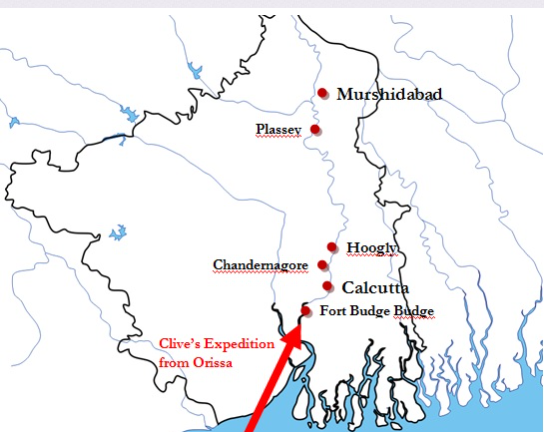
Ans: The Battle of Plassey was fought in north-eastern India on 23 June 1757. Troops of the British East India Company, led by Robert Clive, came up against the forces of Siraj-ud-Daulah, the last Nawab of Bengal, and his French allies.
(d) Regulating Act.
Ans: To make the rule of the East India Company more secure, the British parliament had passed a law called the Regulating act. Under this Act, the post of the Governor of Bengal was upgraded to Governor General. Atour member committee was also formed to assist the Governor General in his work. The governors of Madras and Bombay were brought under the authority of the Governor General of Bengal.
The Regulating Act Itad constitutional penvers. Under this Act, the political activities of the East India Company were recognized by the British parliament. This Act also marked the permanent rule of the British in India. However, this Act did not ment on the limitation of the power of the Governor General and so could not be implemented successfully
(e) Pit’s India Act.
Ans: Pit’s india Act after the british prime minister william pits the younger . it was passed in august 1784. Under thus Act a six members controlling committee was formed in india to after the company activities and the four members committee of governors of bengal was lowed to lowed three.This act increased the power of the general governors and brought India under general governors .pits india Act actually founded british imperial in India.
(f) Permanent Settlement.
Ans: The Permanent Settlement was brought into effect by the Lord Cornwallis in 1793. This was an agreement between the East India Company and the zamindars to fix the land revenue. This settlement was made with the zamindars of Bengal, Bihar, and Orissa.
5. The internal discord of Bengal was the main reason for British occupation of Bengal’. How true is this statement?
Ans: (i) Strategic Military Considerations: The British were not only interested in Bengal’s wealth but also in its strategic location and ports, which could enhance their trade and military capabilities in the region.
(ii) European Rivalries: The geopolitical context of the time involved competition among European powers, including the French and Dutch, for dominance in the Indian subcontinent. British expansion in Bengal was partly driven by the desire to outmanoeuvre their rivals.
(iii) Military Confrontation: The Battle of Plassey in 1757, where the British, under Robert Clive, defeated Siraj-ud- Daulah’s forces with the support of dissident Bengal nobles, was a crucial turning point. This military victory allowed the British to establish themselves as the dominant power in Bengal.
6. Which activities of the East India Company had angered Siraj Ud Daullah?
Ans: The British were plotting a conspiracy with some of Siraj-ud-Daulah’s court members to oust the Nawab. This allegation angered Siraj-ud-Daulah, who also blamed the British for the following: Gross abuse of trade privileges that were given to them by Mughal rulers.
7. Discuss the actions of the East India Company that reflected their imperialistic designs.
Ans: The actions of the East India Company that reflected their imperialistic designs are mentioned below:
(i) Political Control:
(a) Treaties and Alliances: The EIC used treaties and alliances with Indian rulers to extend its influence. These agreements often placed Indian states under Company control in exchange for protection or financial support.
(b) Administrative Control: After the 1757 victory at Plassey, the EIC started to assume administrative control, especially in Bengal. The Regulating Act of 1773 and the India Act of 1784 further formalised its political power, making the Company a quasi-governmental authority.
(ii) Economic Policies:
(a) Taxation and Revenue Collection: The EIC imposed heavy taxes on Indian peasants and landowners, leading to widespread poverty and famine. The Permanent Settlement of Bengal in 1793, for instance, aimed to maximise revenue collection but had devastating effects on local farmers.
(b) Commercial Policies: The Company imposed restrictive commercial policies that favoured British products and industries. This led to the deindustrialization of traditional Indian crafts and industries, particularly the textile industry
8. Make a list of the kingdoms that Lord Dalhousie had annexed under the Doctrine of Lapse.
Ans: The list of the kingdoms Lord Dalhousie had annexed under the Doctrine of lapse are mentioned below:
(i) Satara (1848).
(ii) Jaitpur, Sambalpur (1849).
(iii) Baghat (1850).
(iv) Udaipur (Chhattisgarh State) (1852).
(v) Jhansi (1854), Nagpur (1854).
(iv) Tanjore and Arcot (1855).
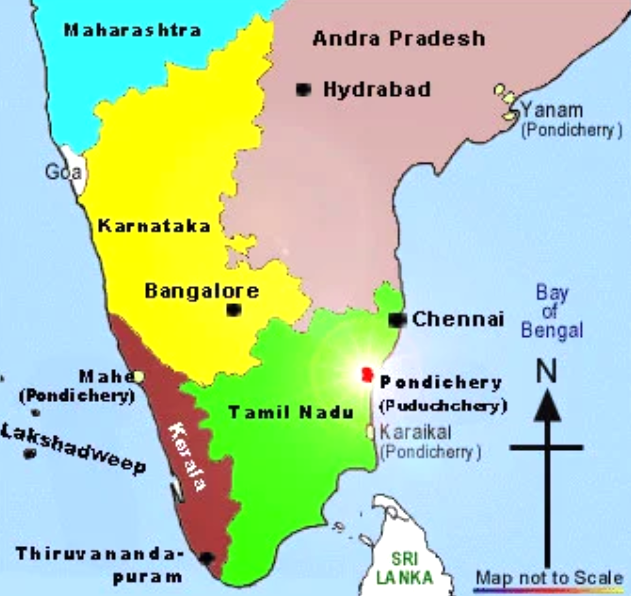
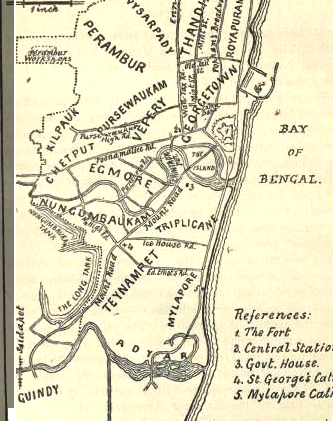
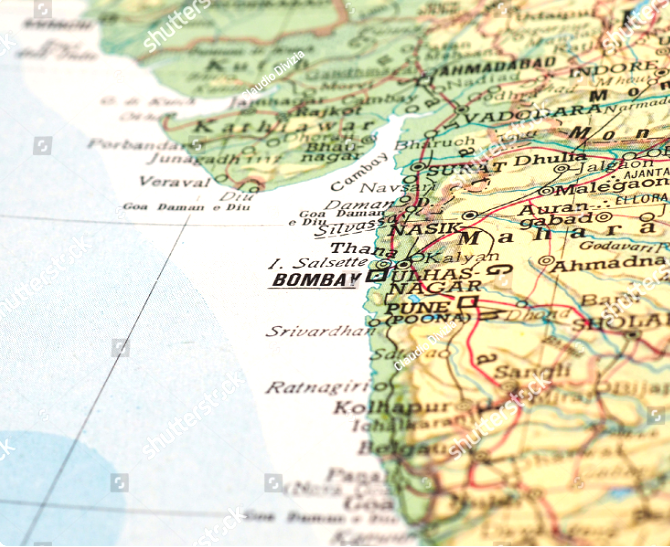
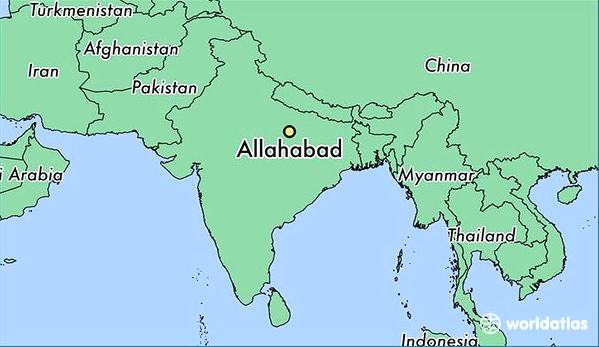
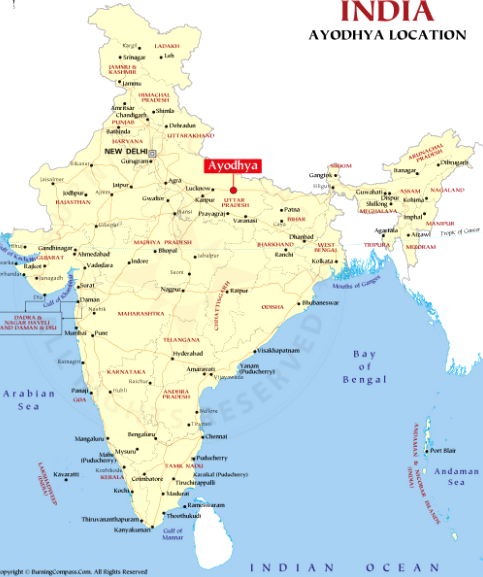
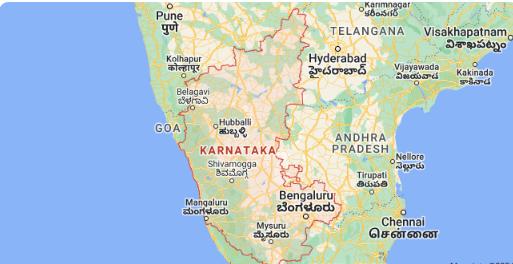
9. Draw a map of India and plot the places given below:
(i) Pondicherry.
Ans:
(ii) Madras.
Ans:
(iii) Bombay.
Ans:
(iv) Allahabad.
Ans:
(v) Ayodhya.
Ans:
(vi) Plassey.
Ans:
(vii) Karnataka.
Ans:
10. With the help of your teacher, find out Austria, England, France, Germany, etc. in a map of Europe.
Ans: Do yourself .
