Animals – Class 10 English Chapter 9 Complete Question Answers and Solutions | ASSEB / SEBA
Class 10 English Chapter 9 – Animals (Poem) Complete Question Answers and Exam Solutions (ASSEB / SEBA Assam)
The ninth chapter of the Class 10 English ‘First Flight’ textbook, the poem ‘Animals’ written by Walt Whitman, is a highly important chapter. For the upcoming HSLC 2027 examination, the complete question answers for this poem have been prepared based on the new ASSEB (Assam State School Education Board) syllabus and the latest National Education Policy (NEP) blueprint. This special collection includes Very Short Answers (VSA / MCQ), Short Questions, Long Answers, and literary device analysis, along with a detailed solution of Previous Years’ Board Exam Questions (PYQ). At Ospin Academy, these solutions are provided in a simple, accurate, and completely exam-oriented manner.
This profoundly reflective poem highlights the stark contrast between the peaceful, content nature of animals and the greedy, restless, and complaining nature of human beings. Walt Whitman expresses his desire to turn away from humans and live with animals because they have retained their innate “tokens” of innocence and goodness, which humans seem to have carelessly dropped. It is essential for HSLC candidates to understand the core theme, the philosophical meaning of ‘tokens’, and the significance of this poem. Our Question Bank covers not only the textbook exercises but also includes extra probable board questions and answers to ensure 100% preparation for the students.
What you will learn and get from this chapter:
- Detailed analysis of the poem’s theme and the comparison between human vices and animal virtues.
- Word meanings, perfect answers for 1-mark objective (VSA), and 2-3 marks short questions.
- Easy and standard solutions for descriptive questions explaining the deeper meaning of the stanzas.
- Identification and explanation of poetic devices used by Whitman.
- Pattern analysis of frequently asked board questions and solutions to the latest MCQ models.
Special Features by Ospin Academy for HSLC 2027 Exam:
- Complete Question Bank prepared based on the latest ASSEB blueprint for HSLC 2027.
- Detailed solutions for the Previous 10 Years’ Questions (PYQ) and 27 Districts Pre-Board Exam Papers (2026).
- 100% accurate, high-quality notes written in simple English for easy memorization.
- Specially designed PDF format for last-minute quick revision before the exams.
- A curated list of 100% common board suggestions and expected questions from this poem.
Ospin Academy offers this specialized course keeping in mind the academic growth of the students. Start your HSLC 2027 preparation now and step towards securing the highest marks in the English subject.
Class 10 English Question Bank ASSEB HSLC 2027 | Complete Chapter-wise Solutions PDF
Save Up To 50% OFF – Instant Download!
(For ASSEB, HSLC 2027)
Get the ultimate preparation toolkit for Class 10 English (First Flight & Supplementary) with this comprehensive Question Bank PDF.
Includes 2400+ practice questions, 2026 Pre-Board Papers from 27 Districts, Solved PYQs, and Complete Grammar updated as per the new ASSEB syllabus Blueprint and New Education Policy.
Perfect for mastering Assertion-Reasoning, Sequencing, and scoring top marks in HSLC 2027!
 Class 10th English
HSLC Board Previous Year MCQs with Answers
1. “Which of the following set of qualities does the poet attribute to animals ? {2026}
(A) Contented, equal, non-acquisitive
(B) Happy, self serving, intelligent
(C) Discontented, furious, respectful
(D) Fearless, materialistic, reputable”
Answer: A
2. “With reference to the poem “Animals” read the following statements and choose the correct answer. {2026}
Assertion (A): The poet brings out the hypocrisy of humans.
Reason (R) : Humans pretend to be dutiful, yet they are sinful.
(A) Both (A) and (R) are true, but (R) is not the correct explanation of(A).
(B) Both (A) and (R) are true and (R) is the correct explanation of (A).
(C) (A) is true and (R) is false.
(D) (A) is false and (R) is true.”
Answer: B
3. In the poem “Animals” the poet claims that he live with {2025}
(A) machines
(B) plants
(C) friends
(D) animals
Answer: D
4. In the poem “Animals” the poet claims that he live with {2025}
(A) machines
(B) plants
(C) friends
(D) animals
Answer: D
5. Identify the literary device used in this line from Animals”{2025}
I think I could turn and live with animals….
(A) alliteration
(B) simile
(C) assonance
(D) metaphor
Answer: A
6. In the poems ‘Animals’, the speaker wonders where the animals got The from. {2024}
(A) Laughter
(B) lokens
(C) Food
(D) Strength
Answer: B
7. In the poem ‘Animals’, Walt Whitman writes that animals do not discuss their duty to {2024}
(A) parents
(B) Society
(C) God
(D) Fellow animals
Answer: C
Common Pre-Board MCQs (2025–26) with Answers
1. “They do not sweat and whine about their condition” (Hint: Animals). Choose the correct synonym for the word underlined in the above sentence: {Bajali}
(A) To creep
(B) To yield
(C) To yelp
(D) To grumble
Answer: D
2. Which of the following is true about animals? {Bajali}
(A) Animals are not true to nature
(B) Animals are discontented with what they have
(C) Animals have nothing to mourn for
(D) Animals practise inequality among them
Answer: C
3. Name the book from where the poem ‘Animals’ has been taken. {Baksa}
(A) Leaves of grass
(B) Song of the open Road
(C) Passage to India
(D) Song of Myself
Answer: A
4. Who is the poet of the poem ‘Animals’? {Baksa}
(A) Leslie Norris
(B) Robert Frost
(C) John Berryman
(D) Walt Whitman
Answer: D
5. Why can the poet’s admiration of animals be considered a critique of modern human behaviour? {Barpeta}
(A) It highlights the need to study animals.
(B) It compares physical strength.
(C) It exposes the moral decline in human society.
(D) It praises science and technology.
Answer: C
6. Based on the poem “Animals” by Walt Whitman, read the line carefully and select the option that best explains the meaning of the word “tokens.” {Bongaigaon}
Extract: “ They bring me tokens of myself .”
(A) Gifts made by animals
(B) Signs of the poet’s childhood
(C) Qualities humans once had but lost
(D) Proof that animals love the poet
Answer: C
7. The poem “Animals” generally uses animals to reflect human qualities (or the lack thereof), attributing human-like traits or the absence of human flaws to them. This is an example of: {Bongaigaon}
(A) Allusion
(B) Personification
(C) Symbolism
(D) Hyperbole
Answer: B
8. In the animal world no one is {Cachar}
(A) respectable
(B) unhappy
(C) popular
(D) respectable or unhappy.
Answer: D
9. ‘Tokens’ stands for {Cachar}
(A) symbols
(B) qualities
(C) greetings
(D) proofs.
Answer: B
10. Walt Whitman’s poem ‘Animals’ is a – {Charaideo}
(A) Sonnet
(B) Ballad
(C) Epic
(D) Free verse
Answer: D
11. “Not one is dissatisfied, not one is demented with the mania of owning things.” Choose the word which is similiar in meaning as the underlined word. {Darrang}
(A) happy
(B) satisfied
(C) insane
(D) worried
Answer: C
12. Why does the poet prefer animals over humans? {Darrang}
(A) Animals live a luxurious life
(B) Animals live in natural habitat
(C) They never complain about their condition
(D) Animals are stronger than humans
Answer: C
13. “They bring me tokens of myself, they evince them plainly in their possession.” Choose the option that does not reflect ‘tokens’ referred to by Walt Whitman. {Darrang} 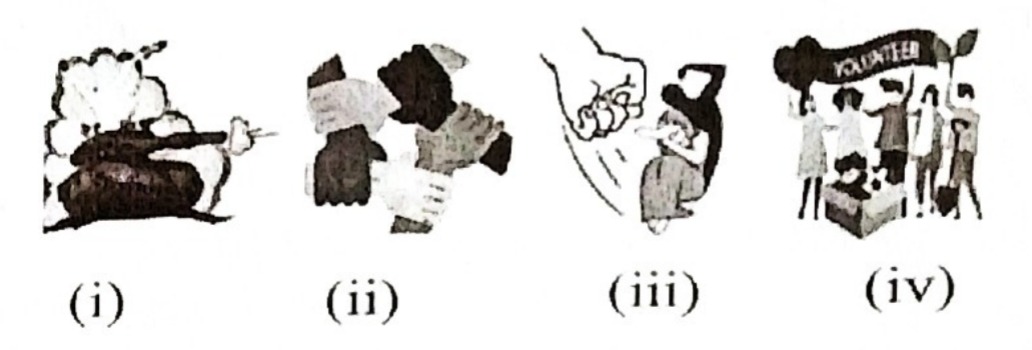
(A) (i) and (ii)
(B) (i) and (iii)
(C) (iii) and (iv)
(D) (ii) and (iv)
Answer: B
14. “They do not sweat……” By this line, Walt Whitman wants to say that animals– {Dhubri}
(A) Are always ferocious.
(B) Do not like to work.
(C) Are hardworking and never tired.
(D) Are lazy and love to rest.
Answer: C
15. An ultimate solution fixes the boy. (Hint: The Ball poem) {Dhubri}
(A) Joy
(B) Tension
(C) Wind
(D) Grief
Answer: D
16. In the poem ‘Animals’, what does the poet admire the most about animals? {Golaghat}
(A) Their ability to hunt efficiently
(B) Their ability to live in the forest
(C) Their ability to be simple and self-satisfied
(D) Their ability to see in the dark
Answer: C
17. According to the poet, walt whitman which quality of animals does he admire the most?{Hailakandi}
(A) Their simplicity and contentment
(B) Their obedience to humans
(C) Their physical strength
(D) Their intelligence
18. If a person begins to live without greed, jealousy, or complaints, which idea from the poem ‘Animals’ is being applied?{Hailakandi}
(A) Humans are superior to animals
(B) Animals represent a model of peaceful and honest living
(C) Society needs strict rules
(D) Animals should live in forests
Answer: B
19. Whom does Walt Whitman find complicated and false?{Hojai}
(A) The human beings.
(B) The animals around us.
(C) Our forefathers.
(D) The almighty.
Answer: A
20. What qualities have the humans given up? (Hint: Animals) {Hojai}
(A) Innocence
(B) Kindness
(C) Truthfulness
(D) All of the above
Answer: D
21. Identify the literary device used in the following lines from the poem “Animals”: “They do not sweat and whine about their condition, They do not lie awake in the dark and weep for their sins.” {Jorhat}
(A) Metaphor
(B) Assonance
(C) Anaphora
(D) Alliteration
Answer: C
22. In the poem “Animals”, Walt Whitman writes that animals do not discuss their duty to {Jorhat}
(A) parents
(B) God
(C) fellow animals
(D) society
Answer: B
23. Did you _____ the reference from Wordsworth’s poem? Fill in the blank. {Kamrup R}
(A) site
(B) cite
(C) sited
(D) cited
Answer: B
24. In the poem, ‘Animals’, what is the attitude of the animals towards their sins?{ Kamrup M}
(A) Confused and peaceful.
(B) Calm, Peaceful and self-confident.
(C) Confused and sad.
(D) Neglecting and calm.
Answer: B
25. With reference to the poem, “Animals”, which statement is false as mentioned the options-{ Kamrup M}
(A) Animals do not sweat and whine about their conditions.
(B) Animals do not lie awake in the dark and weep for their sins.
(C) Animals do not make anyone sick discussing their duty to God.
(D) Animals kneel to another of its kind, which lived thousands of years ago.
Answer: D
26. Which of the following characterises the poet’s attitude towards animals in the poem “Animals”? {Kokrajhar}
(A) Admiration
(B) Nostalgia
(C) Jealousy
(D) Enthusiasm
Answer: A
27. ‘Which of the following set of qualities does the poet Walt Whiteman attribute to animals in the poem “Animals”? {Kokrajhar}
i) discontented, furious, respectful.
ii) fearless, materialistic, reputable.
iii) contented, equal, non-acquistive.
iv) happy, selfserving, intelligent.
(A) (i)
(B) (ii)
(C) (iii)
(D) (iv)
Answer: C
28. The poet in the poem ‘Animals’ by Walt Whitman says animals do not ‘weep for their sins’. What deeper meaning does this convey? {Lakhimpur}
(A) They have no sense of right and wrong
(B) They live guilt-free lives without hypocrisy
(C) They do not believe in religion
(D) They act without thinking
Answer: B
29. The poet, Walt Whitman in the poem ‘Animal’ wants to live with animals because they- {Lakhimpur}
(A) are clever
(B) are calm and content
(C) pray regularly
(D) follow humans
Answer: B
30. The poet could turn and live with animals because– {Udalguri}
(A) The animals are ferocious
(B) The animals do not whine about their conditions
(C) The animals cannot speak
(D) The animals love to play
Answer: B
31. “They are so placid and self-contained, I stand and look at them long and long” Choose the correct synonym for the underlined word in the following sentence from “Animals” (placid) {Udalguri}
(A) unexcitable
(B) happy
(C) temperamental
(D) rude
Answer: A
32. As per the poem “Animals”, human beings suffer from the– {Tamulpur}
(A) mania of eating food.
(B) mania of sleeping.
(c) mania of owning things.
(D) mania of stealing things.
Answer: C
33. Whitman says animals “do not sweat and whine about their condition” In real life this criticises– {Tamulpur}
(A) people exercising too much.
(B) Animals hiding their emotions
(C) Constant complaining about life instead of acceptance.
(D) Working heavily under sweating conditions.
Answer: C
34. Identify the literary device used in this line from “Animals” {SSM}
“They bring me tokens of myself”
(A) Anaphora
(B) Assonance
(C) Metaphor
(D) Alliteration.
Answer: C
35. I think I could turn and live with animals, they are so placid and self-contained; {SSM}
Here the antonym of placid is (Hint: “Animals”)
(A) Calm
(B) Peaceful
(C) Serene
(D) Temperamental.
Answer: D
36. Name the literary device used in ‘They bring no tokens of myself’. {Sribhumi}
(A) Anaphora
(B) Assonance
(C) Metaphor
(D) Alliteration
Answer: C
37. Human beings have the mania of owning : (Hint : Animals) {Sribhumi}
(A) things
(B) charts
(C) money
(D) health
Answer: A
38. “They bring me tokens of myself.” here ‘tokens’ means- {Sonitpur}
(A) Virtues
(B) Morals
(C) Speciality
(D) Consideration
Answer: A
39. In the poem “Animals”, the poet feels more at home with {Sonitpur}
(A) Himself
(B) His friends
(C) Animals
(D) Human beings
Answer: C
40. Assertion(A): The poet Walt Whitman wishes to live with animals.
Reasoning(R): Animals never become crazy with the mental illness of possessing things. {Sibsagar}
(A) Both A and R are true. R is the correct explanation of A.
(B) Both A and R are true but R is not the correct explanation of A.
(C) A is true but R is false.
(D) A is false but R is true.
Answer: A
41. Walt Whitman was a nonconformist in all respects, including his social life. What is the synonym of ‘nonconformist’? {Sibsagar}
(A) Orthodox.
(B) Conventional.
(C) Conformist.
(D) Bohemian.
Answer: D
42. What does the poet mean when he says, “…they are so placid and self-contain’d,” in the poem, “Animals”? {Nalbari}
(A) Animals are calm and independent
(B) Animals are dependent on humans for food
(C) Animals are afraid of God
(D) Animals are selfish
Answer: A
43. The word synonym with ‘evince’ is – {Nalbari}
(A) deactivate
(B) devastate
(C) deteriorate
(D) demonstrate
Answer: D
44. “Not one is dissatisfied, not one is demented with the mania of owning things,” The underlined word refers to: {Nalbari}
(A) Human’s emotional instability
(B) Capitalism and material possession
(C) Mental illness in society
(D) Poverty and hunger
Answer: B
45. How does the boy lose his ball? {Nalbari}
(A) It rolls onto the road
(B) It falls into the water
(C) It bursts suddenly
(D) It is taken by another boy
Answer: B
46. Name the literary device used in ‘And no one buys a ball back.’ {Nalbari}
(A) Metaphor
(B) Simile
(C) Alliteration
(D) Anaphora
Answer: C
47. The line, “He senses first responsibility” of “The Ball Poem,” indicates the boy’s : {Nalbari}
(A) Fear of punishment
(B) Realisation of life’s harsh realities
(C) Desire to grow up quickly
(D) Regret for disobediance
Answer: B
48. The word synonym with ‘evince’ is – (Hint : Animals) {Morigaon}
(A) deactivate
(B) devastate
(C) deteriorate
(D) demonstrate
Answer: D
49. Who is the poet of the poem ‘Animals’? {Morigaon}
(A) Walt Whitman
(B) Ogden Nash
(C) John Berryman
(D) Robin Klein
Answer: A
50. Antonym of the word ‘tranquil’ is – {Morigaon}
(A) calm
(B) mild
(C) noisy
(D) quiet
Answer: C
51. Animals do not kneel to others or to God. This shows they are {Majuli}
(A) Proud
(B) Self-reliant
(C) Confused
(D) Lazy
Answer: B
52. Read the following statement with reference to Animals and choose the correct option – {Majuli}
Statement I: Animals do not sweat and whine about their condition.
Statement II: The poet suggests this as completely similar to human behavior.
(A) Both Statement I and Statement II are true.
(B) Both Statement I and II are false.
(C) Statement I is true and statement II is false.
(D) Statement I is false and statement II is true.
Answer: C
50 Most Important Model MCQs for HSLC 2027
1. What does the poet mean by the word “turn” in the very first line, “I think I could turn and live with animals…”?
(A) To physically turn his body around.
(B) To turn away from the complex, hypocritical human society and return to a natural state.
(C) To turn into an animal through magic.
(D) To turn the pages of a book about animals.
Answer: B
2. The poet states, “I stand and look at them long and long.” What does the repetition of the word “long” indicate?
(A) The physical distance between the poet and the animals.
(B) The poet’s deep, spellbound fascination and profound contemplation of the animals.
(C) The sheer size and length of the animals.
(D) How much time he has wasted in the forest.
Answer: B
3. According to the poem, why do humans “lie awake in the dark”?
(A) Because they are afraid of the dark and wild animals.
(B) Because they suffer from insomnia due to physical illness.
(C) Because they are plagued by a guilty conscience and weep for their sins.
(D) Because they are busy plotting ways to earn more money.
Answer: C
4. What does the phrase “self-contain’d” imply about the animals in the context of the poem?
(A) They are locked inside a container or cage.
(B) They are emotionally independent, self-sufficient, and at peace with themselves.
(C) They are selfish and do not share their food.
(D) They keep their emotions hidden from other animals.
Answer: B
5. What specific emotion does the poet feel when humans discuss their “duty to God”?
(A) Deep spiritual inspiration
(B) Guilt for his own lack of faith
(C) Physical and emotional disgust (“makes me sick”)
(D) Joy and respect
Answer: C
6. How does Whitman view the human concept of being “respectable”?
(A) As the highest moral goal a person can achieve.
(B) As an artificial social construct that leads to inequality and unhappiness.
(C) As a virtue that animals should learn from humans.
(D) As a synonym for being wealthy.
Answer: B
7. “Not one is respectable or unhappy over the whole earth.” What does this line reveal about the animal kingdom?
(A) Animals do not have emotions.
(B) Animals live in a completely egalitarian society without class divisions or hierarchy.
(C) Animals are universally depressed.
(D) Animals only respect humans.
Answer: B
8. Who are the beings that lived “thousands of years ago” to whom animals do not kneel?
(A) Dinosaurs and extinct creatures
(B) Their ancestors, prophets, or historical figures of the same species
(C) Ancient human kings
(D) The early gods of the forest
Answer: B
9. What does the word “negligently” mean in the final line: “Did I pass that way huge times ago and negligently drop them?”
(A) Carefully and purposefully
(B) Carelessly or through neglect
(C) Violently and angrily
(D) Secretly and quietly
Answer: B
10. What are the animals showing “plainly in their possession”?
(A) Their physical strength and sharp teeth
(B) The food they have hunted
(C) The innate virtues, goodness, and innocence (tokens) that humans once possessed
(D) Their territory and offspring
Answer: C
11. The phrase “huge times ago” refers to what concept?
(A) The poet’s own early childhood
(B) The distant evolutionary past when humans and animals shared pure, uncorrupted traits
(C) The era of the dinosaurs
(D) The time before the Earth was created
Answer: B
12. Why does the poet juxtapose the words “sweat” and “whine”?
(A) To show how physically unfit humans are.
(B) To illustrate the restless physical agitation and constant verbal complaining characteristic of humans.
(C) To describe the animals working in the sun.
(D) To explain how humans exercise.
Answer: B
13. In the poem, animals do not have to “weep for their sins” primarily because:
(A) They do not commit moral wrongs out of malice, greed, or hypocrisy.
(B) They are too unintelligent to understand what a sin is.
(C) They do not have tear ducts.
(D) They hide their sins perfectly.
Answer: A
14. Which of the following best describes the structure and form of “Animals”?
(A) A sonnet with a strict rhyming couplet at the end
(B) Free verse with varied line lengths and no fixed rhyme scheme
(C) A ballad meant to be sung
(D) A haiku with strict syllable counts
Answer: B
15. What does the “dark” symbolically represent in the line “lie awake in the dark”?
(A) Blindness
(B) Isolation, secrecy, and the time when a guilty conscience attacks
(C) A power outage in the city
(D) The beauty of the night sky
Answer: B
16. What is the fundamental difference in how humans and animals handle their “condition”?
(A) Humans try to improve it, while animals try to destroy it.
(B) Humans complain and fret about it, while animals peacefully accept it.
(C) Humans write poems about it, while animals sing about it.
(D) Humans ignore it entirely, while animals obsess over it.
Answer: B
17. The act of “kneeling” in the poem is used as a symbol for:
(A) Resting and sleeping
(B) Drinking water from a stream
(C) Subservience, hero-worship, and unequal power dynamics
(D) Apologizing to a friend
Answer: C
18. By saying “Not one is demented with the mania of owning things,” the poet implies that the desire to hoard material possessions is a form of:
(A) High intelligence
(B) Economic progress
(C) Mental illness or madness
(D) Spiritual awakening
Answer: C
19. What exactly is the poet accepting from the animals when he says “I accept them”?
(A) The physical gifts they bring him
(B) The natural reflection of his own lost innocence and true inner self
(C) Their invitation to live in a cave
(D) Their apology for being wild
Answer: B
20. What makes the poet “sick” about human religious practices?
(A) That humans don’t pray enough.
(B) The performative, hypocritical nature of discussing religious duties without living a truly moral, peaceful life.
(C) That humans build too many temples and churches.
(D) That humans try to teach religion to animals.
Answer: B
21. The poem implies that human intellectual “progress” and civilization have actually resulted in:
(A) Complete global peace
(B) Moral regression and the loss of basic happiness
(C) Humans becoming immortal
(D) Animals learning how to speak
Answer: B
22. Which word best describes the poet’s view of the human world in contrast to the animal world?
(A) Superior
(B) Joyful
(C) Complicated and false
(D) Simple and brave
Answer: C
23. “They bring me tokens of myself.” What pronoun is deliberately used here to personify the animals?
(A) “It”
(B) “They”
(C) “He”
(D) “We”
Answer: B
24. The poet’s tone when questioning “Did I pass that way huge times ago…?” is best described as:
(A) Angry and aggressive
(B) Humorous and joking
(C) Nostalgic, reflective, and slightly mournful
(D) Confused and forgetful
Answer: C
25. If an animal were to act like a human according to the poem, what would it start doing?
(A) Sleeping peacefully
(B) Hunting for food
(C) Collecting and hoarding objects unnecessarily
(D) Ignoring other animals
Answer: C
26. According to the poem, humans have a habit of making others sick by:
(A) Spreading physical diseases
(B) Discussing their duty to God endlessly
(C) Complaining about the weather
(D) Eating too much food
Answer: B
27. What does the absence of “unhappiness over the whole earth” for animals suggest?
(A) Animals do not feel physical pain.
(B) Unhappiness is largely a product of human overthinking and societal pressures.
(C) Animals have discovered the secret to eternal life.
(D) The earth is a paradise where nothing goes wrong.
Answer: B
28. What does the word “possession” refer to in the line “they evince them plainly in their possession”?
(A) Demonic possession
(B) The animals’ ownership of the land
(C) The natural embodiment and holding of innocent virtues
(D) A legal document
Answer: C
29. The poem “Animals” is an extract from which larger work by Walt Whitman?
(A) The Waste Land
(B) Song of Myself
(C) O Captain! My Captain!
(D) Paradise Lost
Answer: B
30. Which human behavior does Whitman NOT explicitly criticize in the poem?
(A) Complaining about life
(B) Weeping in guilt
(C) Worshipping ancestors
(D) Developing modern technology
Answer: D
31. The poet implies that the human race has traded its natural “tokens” for:
(A) Immense physical strength
(B) Materialistic obsessions and social hierarchies
(C) The ability to fly
(D) Perfect universal peace
Answer: B
32. What is the poet’s ultimate conclusion about the virtues of animals versus humans?
(A) Animals learned their virtues by watching humans.
(B) Humans originally had these virtues but carelessly lost them, while animals retained them.
(C) Humans and animals are completely identical in their behavior.
(D) Animals are evil, and humans are entirely good.
Answer: B
33. The line “They do not sweat and whine” targets which specific human flaw?
(A) Lack of hygiene
(B) Ingratitude and chronic dissatisfaction
(C) Overworking in factories
(D) The inability to swim
Answer: B
34. What does the phrase “not one is dissatisfied” highlight about the animal mind?
(A) It lacks the ambition that causes human misery.
(B) It is too foolish to realize its problems.
(C) It is constantly heavily medicated.
(D) It only cares about eating.
Answer: A
35. In the context of the poem, why is the concept of “equality” strictly an animal trait?
(A) Because animals vote for their leaders.
(B) Because no animal bows to another or elevates one class above another.
(C) Because all animals are exactly the same size.
(D) Because humans are legally forced to be unequal.
Answer: B
36. Assertion (A): The poet wishes to turn away from human society and live with animals.
Reason (R): He finds humans to be overly complicated, guilty, hypocritical, and excessively materialistic.
(A) Both Assertion (A) and Reason (R) are true, and (R) is the correct explanation of (A).
(B) Both Assertion (A) and Reason (R) are true, but (R) is not the correct explanation of (A).
(C) Assertion (A) is true, but Reason (R) is false.
(D) Assertion (A) is false, but Reason (R) is true.
Answer: A
37. Assertion (A): Animals spend their nights weeping loudly for their sins.
Reason (R): They are deeply religious creatures who fear God’s punishment.
(A) Both Assertion (A) and Reason (R) are true, and (R) is the correct explanation of (A).
(B) Both Assertion (A) and Reason (R) are true, but (R) is not the correct explanation of (A).
(C) Assertion (A) is true, but Reason (R) is false.
(D) Both Assertion (A) and Reason (R) are false.
Answer: D
38. Assertion (A): The poet stands and looks at the animals for a very long time.
Reason (R): He is trying to decide which animal to capture and take home as a pet.
(A) Both Assertion (A) and Reason (R) are true, and (R) is the correct explanation of (A).
(B) Both Assertion (A) and Reason (R) are true, but (R) is not the correct explanation of (A).
(C) Assertion (A) is true, but Reason (R) is false.
(D) Assertion (A) is false, but Reason (R) is true.
Answer: C
39. Assertion (A): The poet feels physically and emotionally sickened by humans.
Reason (R): Humans constantly boast about their religious duties and morality while acting hypocritically in real life.
(A) Both Assertion (A) and Reason (R) are true, and (R) is the correct explanation of (A).
(B) Both Assertion (A) and Reason (R) are true, but (R) is not the correct explanation of (A).
(C) Assertion (A) is true, but Reason (R) is false.
(D) Assertion (A) is false, but Reason (R) is true.
Answer: A
40. Assertion (A): There is no concept of a “respectable” animal in the wild.
Reason (R): Animals do not create artificial social hierarchies based on wealth, class, or ancestry.
(A) Both Assertion (A) and Reason (R) are true, and (R) is the correct explanation of (A).
(B) Both Assertion (A) and Reason (R) are true, but (R) is not the correct explanation of (A).
(C) Assertion (A) is true, but Reason (R) is false.
(D) Assertion (A) is false, but Reason (R) is true.
Answer: A
41. Assertion (A): Humans carelessly dropped their “tokens” of innocence a huge time ago.
Reason (R): Evolutionary progress in human intellect and civilization led to a tragic loss of basic moral simplicity and contentment.
(A) Both Assertion (A) and Reason (R) are true, and (R) is the correct explanation of (A).
(B) Both Assertion (A) and Reason (R) are true, but (R) is not the correct explanation of (A).
(C) Assertion (A) is true, but Reason (R) is false.
(D) Assertion (A) is false, but Reason (R) is true.
Answer: A
42. Assertion (A): Animals suffer from a severe mania of owning things.
Reason (R): They constantly fight over territory and hoard material wealth for the winter.
(A) Both Assertion (A) and Reason (R) are true, and (R) is the correct explanation of (A).
(B) Both Assertion (A) and Reason (R) are true, but (R) is not the correct explanation of (A).
(C) Assertion (A) is true, but Reason (R) is false.
(D) Both Assertion (A) and Reason (R) are false.
Answer: D
43. Assertion (A): The poet states that animals are completely self-contained.
Reason (R): Animals rely heavily on humans to provide them with food, shelter, and emotional support.
(A) Both Assertion (A) and Reason (R) are true, and (R) is the correct explanation of (A).
(B) Both Assertion (A) and Reason (R) are true, but (R) is not the correct explanation of (A).
(C) Assertion (A) is true, but Reason (R) is false.
(D) Assertion (A) is false, but Reason (R) is true.
Answer: C
44. Assertion (A): Animals do not kneel to their ancestors who lived thousands of years ago.
Reason (R): Animals live fully in the present moment and do not engage in historical hero-worship or religious subservience.
(A) Both Assertion (A) and Reason (R) are true, and (R) is the correct explanation of (A).
(B) Both Assertion (A) and Reason (R) are true, but (R) is not the correct explanation of (A).
(C) Assertion (A) is true, but Reason (R) is false.
(D) Assertion (A) is false, but Reason (R) is true.
Answer: A
45. Assertion (A): Humans lie awake in the dark.
Reason (R): They are plagued by a guilty conscience over their misdeeds and cannot find inner peace.
(A) Both Assertion (A) and Reason (R) are true, and (R) is the correct explanation of (A).
(B) Both Assertion (A) and Reason (R) are true, but (R) is not the correct explanation of (A).
(C) Assertion (A) is true, but Reason (R) is false.
(D) Assertion (A) is false, but Reason (R) is true.
Answer: A
46. How does Whitman use the concept of “respectability” ironically in the poem?
(A) By showing that humans who are respectable are always the happiest.
(B) By showing that what humans consider a high social virtue (respectability) actually leads to systemic pressure and unhappiness, whereas animals lack it and are universally content.
(C) By proving that animals are highly respected by humans.
(D) By suggesting that only wealthy people deserve respect.
Answer: B
47. The phrase “evince them plainly in their possession” suggests what about the nature of true virtues?
(A) That genuine virtues are inherent, naturally displayed, and lived daily, not artificially proclaimed through words or sermons.
(B) That virtues can only be purchased with a lot of money.
(C) That animals stole their virtues from humans.
(D) That virtues must be hidden from others to remain pure.
Answer: A
48. What is the philosophical implication of the poet asking “Did I pass that way huge times ago and negligently drop them?”
(A) It implies that the poet is very old and literally walked through the forest thousands of years ago.
(B) It posits that humanity’s moral decay is a result of careless evolution, where fundamental goodness and innocence were lost in the pursuit of complex civilization.
(C) It suggests that gravity causes people to drop things.
(D) It means the poet lost his wallet in the woods.
Answer: B
49. By stating that animals do not “make me sick discussing their duty to God,” what specific aspect of human religion is the poet critiquing?
(A) The lack of beautiful churches in the world.
(B) The atheistic nature of modern society.
(C) The performative, boastful, and hypocritical nature of religious devotion that lacks true spiritual contentment and moral action.
(D) The fact that religious texts are too difficult to read.
Answer: C
50. The poem powerfully challenges the traditional anthropocentric (human-centered) worldview by implying what?
(A) That humans are the absolute masters of the universe and animals are our servants.
(B) That human “progress,” societal rules, and intellectual superiority are actually forms of moral regression compared to the pure, uncorrupted natural state of animals.
(C) That humans should build more zoos to protect animals.
(D) That eventually, humans will evolve into animals.
Answer: B
SEBA HSLC Previous Year Questions (1/2/3 Marks)
1. “Why does the poet Walt Whitman show a preference for living with the animals ?” {2026}
2. How does Walt Whitman conclude in the poem ‘Animals’ that animals are superior to humans? {2025}
3. Why would the poet like to turn and live with animals? {2023}
4. Choose the meaning of the underlined words from the alternatives given in the brackets: {2020}
(a) ………. they are so placid and self-contained. (irritated/trouble some/unruffled)
(b) ……not one is demented with the mania (mad/dishonest/displeased)
5. Why does the poet feel more at home with animals than with humans?
{2019}
6. Who is the poet of the poem ‘Animals’? {2023}
Common Pre-Board 2 Mark Questions (2025–26)
1. How are animals different from humans regarding acceptance of their condition and possession of things? {Bajali}
2. Why does the poet want to ‘turn and live with animals’? {Baksa}
3. Why does the poet, Walt Whitman, feel more at home with animals than humans? {Bongaigaon}
4. What are the good qualities the poet finds among animals? {Darrang}
5. What are the tokens that the poet Walt Whitman says, humans have dropped long ago? {Dhubri}
6. Mention two ways how animals are different from humans in their attitude towards life with reference to the poem ‘Animals’. {Golaghat}
7. Do you agree that animals are placid and self-contained? Give reasons for your answer. {Hojai}
8. Why does the poet, Walt Whitman feel more at home with animals? {Hojai}
9. Discuss the good qualities of animals as described in the poem Animals. {Jorhat}
10. Mention the things that humans do and animals don’t, in the poem, ‘Animals’.{Kamrup M}
11. Do you agree with the poet’s Idea that animals live a more honest life? Support your answer with examples from daily life. {Lakhimpur}
12. Mention two things that human do and animals don’t [Hint “Animals”) {SSM}
13. “I think I could turn and live with animals.” The poet Walt Whitman wishes to live with animals. Do you think the poet has taken a right decision? Justify your answer. {Sribhumi}
14. “I think I could turn and live with animals” what is the poet turning from in the poem “Animals”? {Sonitpur}
15. How do animals show their relations to the poet? {Sibsagar}
16. What lesson do humans need to learn from animals, according to the poet? {Nalbari}
17. How are animals superior to human beings according to the poet in the poem ‘Animal’? {Morigaon}
19. Why does the poet feel more at home with animals than with humans? {Majuli}