Class 10 Science Chapter 4 – Carbon and Its Compounds – All Textual Solutions | ASSEB Assam (English Medium)
Class 10 Science Chapter 4 (Carbon and Its Compounds) – Frequently Asked Questions (FAQs)

Class 10 Maths (English Medium) PDF Solutions 2026-27 | SEBA Assam
Download Class 10 Mathematics (English Medium) PDF with MCQs, textbook solutions, and extra practice questions for SEBA Assam 2025-26.
Out of stock
 Class 10 Science
Carbon and its compounds
Textual Questions and Answers
1. What would be the electron dot structure of carbon dioxide which has the formula CO2?
Answer:
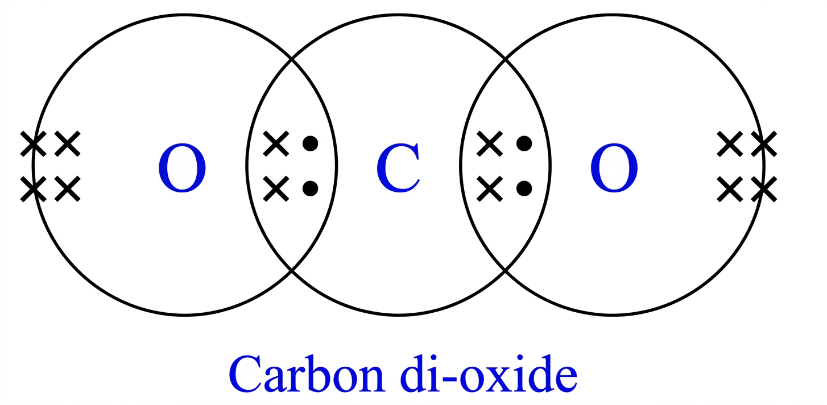
Carbon dioxide is a covalent molecule consisting of three atoms, where a carbon atom is bonded to two oxygen atoms. Both carbon and oxygen have p orbitals that can interact due to their symmetrical compatibility. According to the valence bond theory, carbon forms four bonds, while oxygen forms two.
2. What would be the electron dot structure of a molecule of sulphur which is made up of eight atoms of sulphur? [Hint: the eight atoms of sulphur are joined together in the form of a ring]
Answer: The atomic number of sulfur is 16 and its electronic configuration is 2,8,6.
The sulfur atom has six valence electrons. S8 is the chemical formula for a sulfur molecule, and each sulfur atom is bonded to identical atoms on each side by single covalent connections, completing its octet.
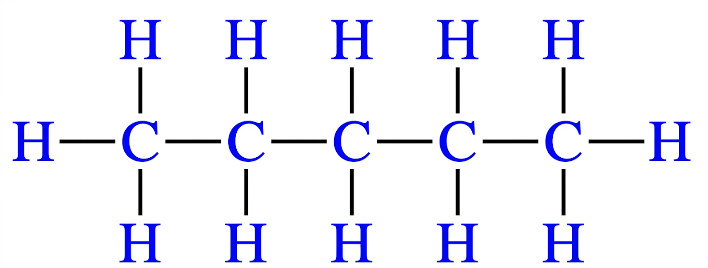
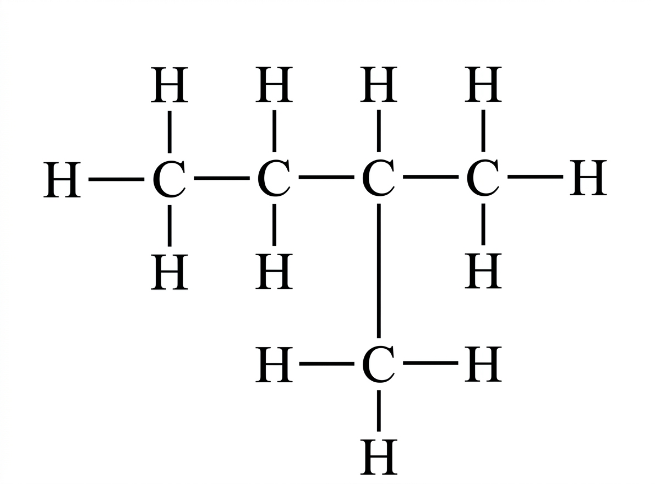
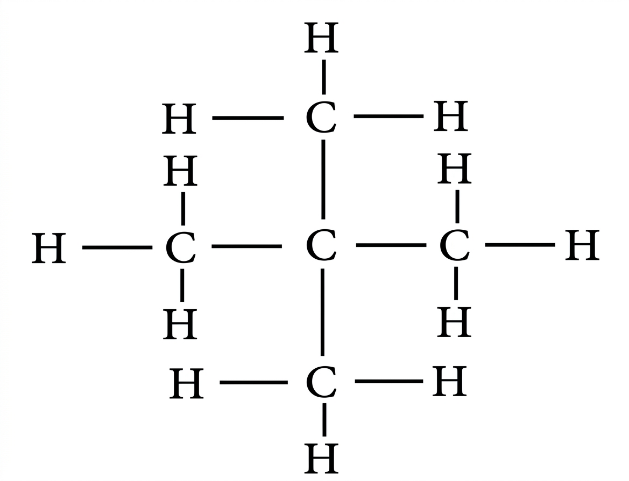
3. How many structural isomers can you draw for pentane?
Answer: Three structural isomers of pentane are:
(i) n – pentane:
(ii) Iso – Pantane:
(iii) Neopentane:
4. What are the two properties of carbon which lead to the huge number of carbon compounds we see around us?
Answer:
(i) Catenation.
(ii) Tetravalency.
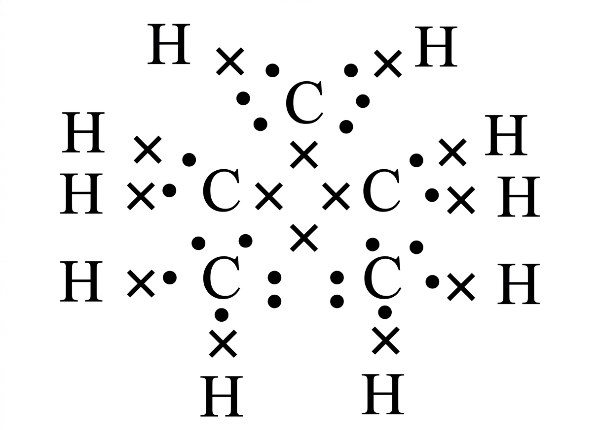
5. What will be the formula and electron dot structure of cyclopentane?
Answer: The chemical formula for cyclopentane is C5H10, and it is an acyclic molecule.
Structure:
6. Draw the structure for the following compounds:
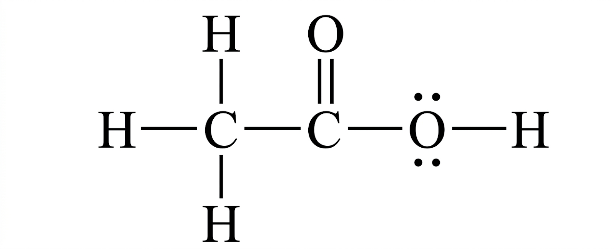
(i) Ethanoic acid.
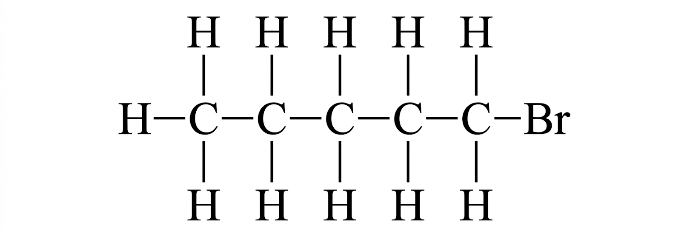
(ii) Bromopentane.
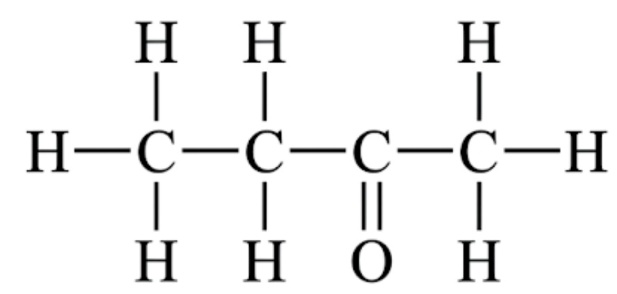
(iii) Butanone.
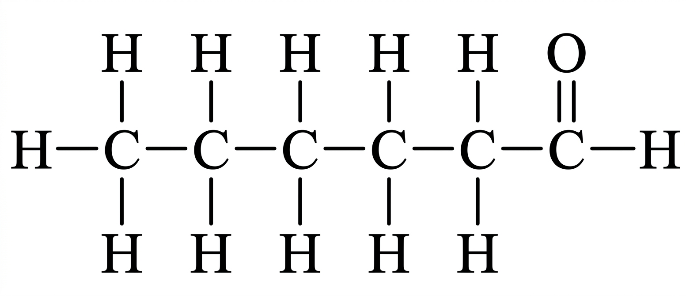
(iv) Hexanol.
Answer:
(i) Ethanoic acid:
(ii) Bromopentane:
(iii) Butanone:
(iv) Hexanal:
7. How would you name the following compounds?
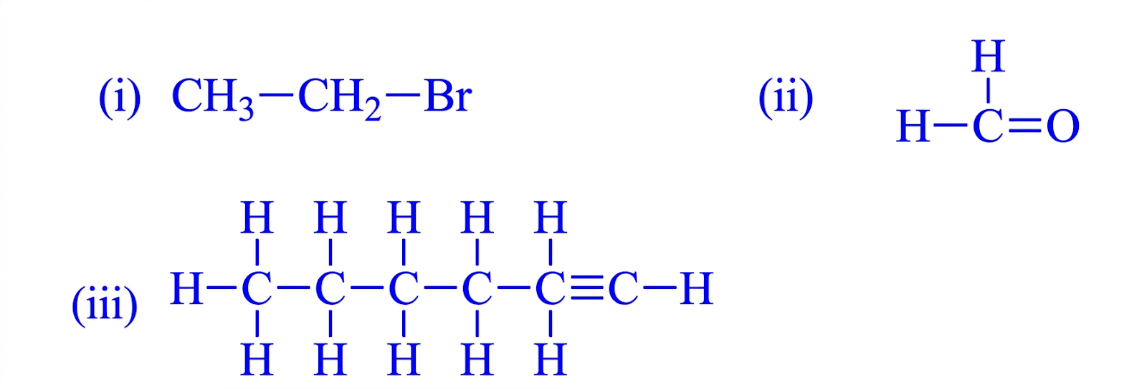
Answer:
(i) Bromoethane
(ii) Methanal.
(iii) Hexyne.
8. Why is the conversion of ethanol to ethanoic acid an oxidation reaction?
Answer: Alkaline potassium permanganate or acidified potassium dichromate are oxidising ethanol to ethanoic acid, that is adding oxygen. So conversion of ethanol to ethanoic acid is an oxidation reaction.
9. A mixture of oxygen and ethyne is burnt for welding. Can you tell why a mixture of ethyne and air is not used?
Answer: The oxygen-ethyne flame is extremely hot and produces a very high temperature which is used for welding metals. A mixture of ethyne and air is not used for welding because burning of ethyne in air produces a sooty flame due to incomplete combustion, which is not hot enough to melt metals for welding. But a mixture of ethyne and oxygen gives enough heat that can be used for welding.
10. How would you distinguish experimentally between an alcohol and a carboxylic acid?
Answer: On reaction with Sodium Carbonate, Carboxylic acids produce carbon dioxide gas which turns lime water milky whereas alcohols do not give this reaction. This experiment can be used to distinguish between alcohol and carboxylic acid.
Reaction of Carboxylic acid with sodium carbonate:
2CH3COOH + Na2CO3 → 2CH3COONa + H2O + CO2
11. What are oxidising agents?
Answer: Oxidising agents are substances that add oxygen or remove hydrogen from another substance during a chemical reaction and themselves get reduced.
Example Reaction: CuO + H2 → Cu + H2O
12. Would you be able to check if water is hard by using a no. detergent?
Answer: Detergents cannot be used to check the hardness of the water, as they lather easily in both soft and hard water. However, the hardness of water can be detected using soaps, as soaps don’t lather easily in hard water.
13. People use a variety of methods to wash clothes, usually after adding the soap, they ‘beat’ the clothes on a stone, or beat it with a paddle, scrub with a brush or the mixture is agitated in a washing machine. Why is agitation necessary to get clean clothes?
Answer: It is necessary to agitate to get clean clothes because the soap micelles which entrap oily or greasy particles on the surface of dirty cloth have to be removed from its surface. When the cloth washed in soap solution is agitated or beaten, the micelles containing any or greasy dirt particles get removed from the surface of dirty cloth and go into water. And the dirty cloth gets cleaned.
1. Ethane, with the molecular formula C2H₆ has
Exercise Questions and Answers
(a) covalent bonds.
(b) 7 covalent bonds.
(c) 8 covalent bonds.
(d) 9 covalent bonds.
Answer: (b) 7 covalent bonds.
2. Butane is a four carbon compound with the fundamental group:
(a) carboxylic acid
(b) aldehyde
(c) ketone
(d) alcohol
Answer: (c) ketone
3. While cooking, if the bottom of the vessel is getting blackened on the outside, it means that:
(a) The food is not cooked completely.
(b) The fuel is not burning completely.
(c) The fuel is wet.
(d) The fuel is burned completely.
Answer: (b) The fuel is not burning completely.
4. Explain the nature of the covalent bond using the bond formation in CH3CI.
Answer: Covalent bond is formed by sharing of electrons so that the combining atoms complete their outermost shell. In CH3CI, this happens as follows.
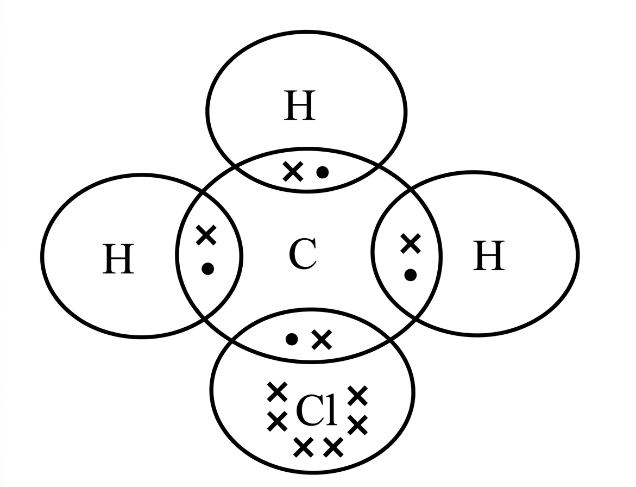
There hydrogen atoms complete their outermost shells by sharing three electrons of carbon atoms. Chlorine completes its outermost shell by sharing its one out of seven electrons with one electron of carbon atom. Thus the carbon atom shares in all its four electrons with three of three hydrogen atoms and one of chlorine atoms and completes its outer shell.
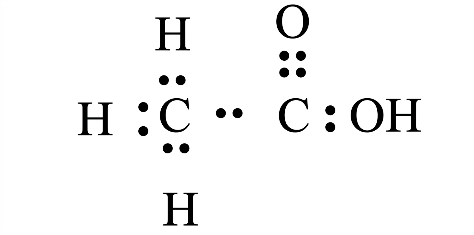
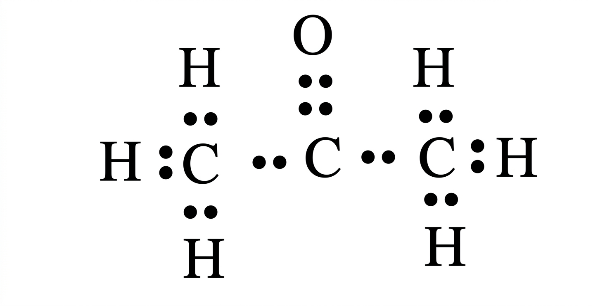
5. Draw the electron dot structures for
(a) ethanoic acid
(b) H2S
(c) propanone
(d) F2
Answer: (a) Ethanoic acid:
(b) H2S

(c) Propanone
(d) F2

6. What is a homologous series? Explain with an example.
Answer: A homologous series is a group of organic compounds with the same general formula, similar chemical properties, and a gradual change in physical properties. Each member differs by a CH₂ group.
Example: Alkanes
General formula: CₙH₂ₙ₊₂
Methane (CH₄), Ethane (C₂H₆), Propane (C₃H₈).
Each differs by CH₂ and shows a gradual increase in boiling point.
7. How can ethanol and ethanoic acid be differentiated on the basis of their physical and chemical properties?
Answer:
(a) Ethanol has a pleasant smell whereas ethanoic acid has the smell of vinegar.
(b) Ethanol has a burning taste whereas ethanoic acid has a sour taste.
(c) Ethanol has no action on litmus paper whereas ethanoic acid turns blue litmus paper to red.
(d) Ethanol has no reaction with sodium hydrogen carbonate but ethanoic acid gives brisk effervescence with sodium hydrogen carbonate.
8. Why does micelle formation take place when soap is added to water? Will a micelle be formed in other solvents such as ethanol also?
Answer: Micelle formation takes place when soap is added to water because the hydrocarbon chains of soap molecules are hydrophobic which are insoluble in water, but the ionic ends of soap molecules are hydrophilic and then soluble in water.
Micelle formation does not take place when soap is added to organic solvents like ethanol because the hydrocarbon chains of soap molecules are soluble in organic solvents like ethanol.
9. Why are carbon and its compounds used as fuels for most applications?
Answer: Carbon and its compounds used as fuels for most applications because they give a large amount of heat per unit weight.
10. Explain the formation of scum when hard water is treated with soap.
Answer: Hard water contains salts of calcium and magnesium. Calcium and magnesium in reaction with soap forms an insoluble substance called scum.
11. What change will you observe if you test soap with litmus paper (red or blue)?
Answer: Red litmus paper turns blue.
12. What is hydrogenation? What is its industrial application?
Answer: The addition of hydrogen to unsaturated hydrocarbons in the presence of a catalyst is called hydrogenation.
Ghee on an industrial scale is made by hydrogenation of naturally available vegetable oils.
13. Which of the following hydrocarbons undergo addition reactions: C2H₆, C3H₈, C3H₆, C2H2 and CH4
Answer: C3H8 and C2H6
14. Give a test that can be used to differentiate chemically between butter and cooking oil.
Answer: When a drop of bromine is added to cooking oil, its colour disappears whereas when a drop of bromine is added to butter, it becomes brown.
15. Explain the mechanism of the cleaning action of soap.
Answer: Mechanism of the cleaning action of soap:
When soap is dissolved in water, it forms a colloidal suspension, creating spherical structures called micelles. A soap molecule has two parts:
The hydrophobic (non-polar) tail: This part is water-repelling and is attracted to grease or oil.
The hydrophilic (polar) head: This part is water-attracting and faces outward towards the water.
In micelles, the hydrocarbon tails cluster inward around the grease or oil, while the ionic heads remain on the outside, interacting with water. This forms an emulsion, allowing the grease or dirt to be lifted and washed away with water.
Class 10 Science Chapter 4 – Carbon and Its Compounds Complete Textual Solutions (ASSEB / SEBA Assam – English Medium)
The fourth chapter of the Class 10 Science curriculum, ‘Carbon and Its Compounds’, is one of the most conceptual and important topics for students. These complete textual solutions (Class 10 Science Chapter 4 Textual Question Answer) have been prepared based on the latest ASSEB (Assam State School Education Board) syllabus and the newest guidelines of the National Education Policy (NEP) for the upcoming board exams. This comprehensive collection includes Very Short Answers (VSA), Short Questions, Long Answers, and detailed explanations of organic chemistry basics. At Ospin Academy, these solutions are provided in a simple, accurate, and completely exam-oriented format.
This chapter explores the versatile nature of carbon, covalent bonding, homologous series, functional groups, nomenclature, and the chemical properties of important carbon compounds like ethanol and ethanoic acid, along with the cleansing action of soaps and detergents. It is highly essential for matric candidates to understand these concepts clearly. Our textual solutions cover all textbook exercise questions, in-text questions, and additional exam-focused questions to ensure students are fully prepared for their examinations.
What you will learn and get from these textual solutions:
- Clear explanations of covalent bonding and the versatile nature of carbon.
- Flawless answers for 1-mark VSA (objective type) and 2-3 mark short questions regarding functional groups and homologous series.
- Standard and easy-to-understand solutions for drawing electron dot structures and IUPAC nomenclature.
- Detailed explanations of the chemical properties of carbon compounds (combustion, oxidation, addition, substitution) and the cleansing action of soaps.
- Solutions to all important questions along with the latest pattern MCQ questions as per the new syllabus.
Special features of these textual solutions by Ospin Academy:
- Complete textual solutions prepared strictly according to the latest ASSEB new syllabus.
- 100% accurate, high-quality notes written in simple English, making it easy for students to understand and memorize (Class 10 Science Notes).
- Simplified answers specially designed for Quick Revision right before the examinations.
- A special compilation of extra important questions that are highly likely to appear in the exam from this chapter.
Keeping in mind the academic upliftment of students, Ospin Academy has brought forward these special textual solutions. Start your matric exam preparation now and step forward towards scoring the highest marks in Science.